大洋科学钻探

Search documents
获取多项成果!“海洋地质六号”科考在深海探测关键技术等领域取得新进展
Yang Shi Wang· 2025-12-10 07:09
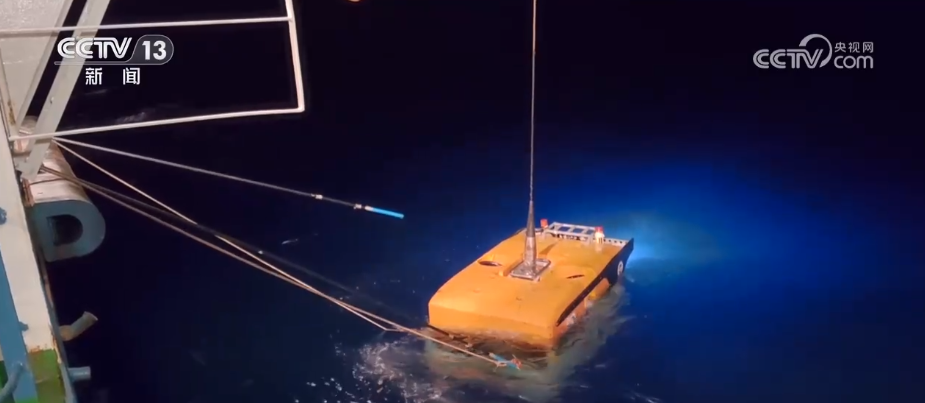
Core Insights - The "Marine Geological No. 6" research vessel has successfully completed its 15th voyage, marking significant advancements in deep-sea geological research and data collection [1][3][21] Group 1: Mission Overview - The 15th voyage's second phase began on August 29, 2025, lasting 95 days and covering a total distance of 12,673 nautical miles [1] - The mission collected valuable data and samples, including deep-sea environmental data, seawater samples, seabed sediments, polymetallic nodules, and deep-sea biological samples [1][3] Group 2: Technological Advancements - The team utilized a self-developed 6000-meter deep-sea remotely operated vehicle and domestically produced underwater robots for high-precision tests and operations in deep-water areas [3][21] - The mission achieved new progress in deep-sea detection technologies and equipment applications [1][3] Group 3: Geological Discoveries - A new resource-rich area of polymetallic nodules was discovered, expanding the potential for seabed metal resources [3][12] - The polymetallic nodules, primarily found at depths of 4,000 to 6,500 meters, are significant for their high resource potential and are crucial for China's resource security [10][12] Group 4: Future Research Directions - Scientists will conduct further testing and analysis of geological samples to study the area's structural evolution, providing essential data for global ocean scientific drilling site selection [5][24] - The "Marine Geological No. 6" vessel is scheduled to return to the Pacific in the first half of 2026 for more in-depth geological and environmental investigations [7] Group 5: Electromagnetic Measurements - The mission completed the first electromagnetic profile measurement of the Pacific abyss, obtaining high-quality electromagnetic observation data [17][22] - This data will assist in future ocean drilling site selection and enhance understanding of deep Earth structure and evolution [19][22]

中船集团第七〇八研究所首席专家、“梦想”号总设计师:“梦想”号大洋钻探船——挺进地球深部的“国之重器”
Huan Qiu Wang Zi Xun· 2025-05-18 23:01
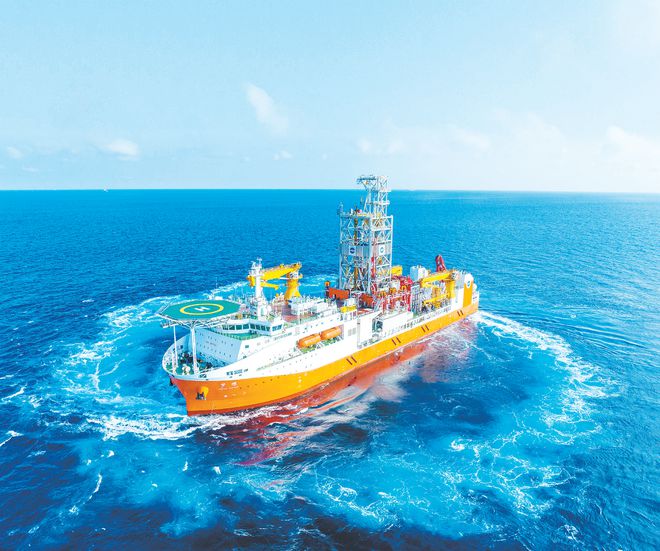
Core Viewpoint - The successful launch of China's first independently designed and built deep-sea drilling vessel "Dream" marks a significant advancement in the country's deep-sea exploration technology and capabilities, breaking multiple world records and establishing a new benchmark in the industry [1][7]. Group 1: Vessel Specifications and Capabilities - "Dream" has a maximum drilling depth capability of 11,000 meters, making it the only deep-sea drilling vessel globally capable of penetrating the Mohorovičić discontinuity (Moho) [3][4]. - The vessel's total length is 179.8 meters, width is 32.8 meters, and height is 81.2 meters, equivalent to a 25-story building, with a maximum variable load of 15,000 tons [3][4]. - It can operate for 120 days without resupply and withstand super typhoons of up to level 16, improving operational efficiency by 60% compared to foreign counterparts [4][5]. Group 2: Technological Innovations - "Dream" features a modular design that integrates functions for ocean scientific drilling, deep-sea oil and gas exploration, and natural gas hydrate investigation, which is a significant challenge globally [1][4]. - The vessel includes the world's first hydraulic lifting drilling machine that combines oil and gas exploration with core drilling capabilities, enhancing drilling efficiency and hard rock penetration [4][5]. - It houses a comprehensive onboard laboratory with nine experimental functions, making it the largest and most versatile "mobile laboratory" at sea, with nearly 40% more space than foreign vessels [4][5]. Group 3: Strategic Importance - The construction of "Dream" breaks the long-standing foreign monopoly in the deep-sea drilling vessel sector, positioning China as a leader in this field [5][6]. - The vessel's capabilities allow China to independently organize ocean drilling expeditions, transitioning from a participant to a leader in global ocean exploration [7]. - "Dream" is expected to significantly contribute to the understanding of Earth's internal structure and support global scientific endeavors to explore the unknown [7].