
大语言模型图形界面(LLM GUI)

Search documents
大模型的2025:6个关键洞察
3 6 Ke· 2025-12-23 11:39
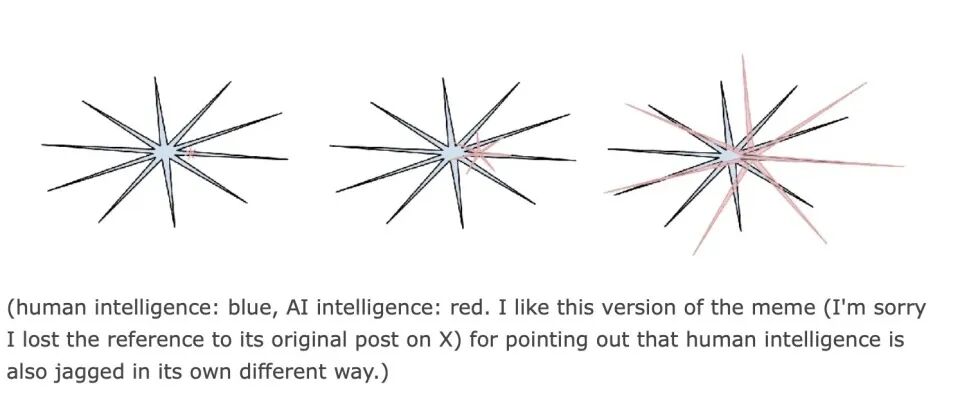
Core Insights - The report titled "2025 LLM Year in Review" by Andrej Karpathy highlights a significant paradigm shift in the field of large language models (LLMs) from mere "probabilistic imitation" to "logical reasoning" [1][2] - The driving force behind this transition is the maturity of Reinforcement Learning with Verifiable Rewards (RLVR), which encourages models to generate reasoning traces similar to human thought processes [1][2] - Karpathy emphasizes that the potential of this new computational paradigm has yet to be fully explored, with current utilization estimated at less than 10% [2][15] Technological Developments - In 2025, RLVR emerged as the core new phase in the training stack for production-grade LLMs, allowing models to autonomously develop reasoning strategies through training in verifiable environments [4][5] - The year saw a significant extension in the training cycles of models, although the overall parameter scale remained largely unchanged [5] - The introduction of the o1 model at the end of 2024 and the o3 model in early 2025 marked a qualitative leap in LLM capabilities [5] Nature of Intelligence - Karpathy argues that LLMs should be viewed as "summoned ghosts" rather than "evolving animals," indicating a fundamental difference in their intelligence structure compared to biological entities [2][6] - The performance of LLMs exhibits a "zigzag" characteristic, excelling in advanced areas while struggling with basic common knowledge [2][8] New Applications and Trends - The rise of "Vibe Coding" and the practical trend of localized intelligent agents are discussed, indicating a shift towards more user-centric AI applications [2][9] - The emergence of tools like Cursor highlights a new application layer for LLMs, focusing on context engineering and optimizing model interactions for specific verticals [9] User Interaction and Development - The introduction of Claude Code (CC) showcases the capabilities of LLM agents, emphasizing local deployment for enhanced user interaction and access to private data [10][11] - The concept of "atmospheric programming" allows users to create powerful programs using natural language, democratizing programming skills [12][13] Future Outlook - The report suggests that the industry is on the brink of a transition from simulating human intelligence to achieving pure machine intelligence, with future competition focusing on efficient AI reasoning [2][15] - The potential for innovation in the LLM space remains vast, with many ideas yet to be explored [15]

大模型的2025:6个关键洞察
腾讯研究院· 2025-12-23 08:33
Core Insights - The article discusses a significant paradigm shift in the field of large language models (LLMs) in 2025, moving from "probabilistic imitation" to "logical reasoning" driven by the maturity of verifiable reward reinforcement learning (RLVR) [2][3] - The author emphasizes that the potential of LLMs has only been explored to less than 10%, indicating vast future development opportunities [3][25] Group 1: Technological Advancements - In 2025, RLVR emerged as the core new phase in training LLMs, allowing models to autonomously generate reasoning traces by training in environments with verifiable rewards [7][8] - The increase in model capabilities in 2025 was primarily due to the exploration and release of the "stock potential" of RLVR, rather than significant changes in model parameter sizes [8][9] - The introduction of the o1 model at the end of 2024 and the o3 model in early 2025 marked a qualitative leap in LLM capabilities [9] Group 2: Nature of Intelligence - The author argues that LLMs should be viewed as "summoned ghosts" rather than "evolving animals," highlighting a fundamental difference in their intelligence compared to biological entities [10][11] - The performance of LLMs exhibits a "sawtooth" characteristic, excelling in advanced fields while struggling with basic common knowledge [12][13] Group 3: New Applications and Interfaces - The emergence of Cursor represents a new application layer for LLMs, focusing on context engineering and optimizing prompt design for specific verticals [15] - The introduction of Claude Code (CC) demonstrated the core capabilities of LLM agents, operating locally on user devices and accessing private data [17][18] - The concept of "atmospheric programming" allows users to create powerful programs using natural language, democratizing programming skills [20][21] Group 4: Future Directions - The article suggests that the future of LLMs will involve a shift towards visual and interactive interfaces, moving beyond text-based interactions [24] - The potential for innovation in the LLM space remains vast, with many ideas yet to be explored, indicating a continuous evolution in the industry [25]

大模型的2025:6个关键洞察,来自OpenAI创始人、AI大神“AK”
3 6 Ke· 2025-12-22 04:22
Core Insights - The report by Andrej Karpathy highlights a significant paradigm shift in the field of large language models (LLMs) from "probabilistic imitation" to "logical reasoning" in 2025, driven by the maturation of Reinforcement Learning with Verifiable Rewards (RLVR) [1][2] - The industry is at a critical juncture, transitioning from "simulating human intelligence" to "pure machine intelligence," with a focus on how to make AI think efficiently rather than just competing on computational power [2][4] Group 1: Technological Advancements - RLVR has emerged as the core new phase in LLM training, allowing models to autonomously generate reasoning traces by training in environments with verifiable rewards [4][5] - The year 2025 saw a significant extension in the training cycles of LLMs, with the ability to optimize for longer reasoning traces and increased "thinking time," leading to qualitative leaps in model capabilities [5][6] Group 2: Nature of Intelligence - Karpathy argues that LLMs should be viewed as "summoned ghosts" rather than "evolving animals," indicating a fundamental difference in the nature of AI intelligence compared to biological intelligence [6][7] - The performance of LLMs exhibits a "zigzag" characteristic, excelling in specialized areas while struggling with basic common knowledge, reflecting their unique intelligence structure [8] Group 3: New Applications and Interfaces - The emergence of applications like Cursor signifies a new layer in LLM usage, focusing on context engineering and optimizing the orchestration of multiple LLM calls for specific vertical domains [9][10] - The introduction of Claude Code (CC) demonstrates the potential of LLM agents to operate locally on user devices, accessing private data and providing a new paradigm of AI interaction [10][11] Group 4: Programming and Development - The concept of "vibe coding" has gained traction, allowing individuals to create powerful programs using natural language, thus democratizing programming skills beyond trained professionals [11][12] - The shift towards atmosphere programming is expected to transform the software development ecosystem, making coding more accessible and flexible for everyday users [12][13] Group 5: Future Prospects - Despite the rapid advancements, the industry has only tapped into less than 10% of the potential of LLMs, indicating vast opportunities for future exploration and innovation [14][15] - The report emphasizes the need for foundational work to continue alongside the rapid development of LLM technologies, suggesting a sustained period of transformation ahead [14][15]