大麻合法化

Search documents
你不知道的美国:甜蜜陷阱 美国大麻“糖果”背后的儿童健康危机
Xin Lang Cai Jing· 2026-01-25 13:04
Core Insights - The legalization and commercialization of cannabis in the U.S. have significantly lowered the barriers to access cannabis products, leading to a public health crisis with increasing cases of cannabis poisoning among children and adolescents [1][2][3] Group 1: Market Overview - Cannabis is now legal for medical use in 40 states and for recreational use in 24 states, creating a market for marijuana edibles such as gummies, chocolates, and beverages [2] - Reports of cannabis poisoning among children have surged from 930 cases in 2009 to over 22,000 in 2024, with more than 75% of these cases involving minors [2][3] Group 2: Health Implications - The design of cannabis products to resemble popular snacks, often in eye-catching packaging, has contributed to the rise in accidental ingestion among children [4] - Exposure to cannabis during critical developmental years (ages 12 to 16) can lead to declines in learning ability, permanent IQ damage, and impairments in coping with stress and emotions [5] Group 3: Call to Action - There is a call for urgent intervention from the U.S. government to educate the public about the risks associated with cannabis products [6] - Collaboration among cannabis product companies, communities, and parents is essential to protect children from the harms of cannabis [6]
Do These 2 Cannabis Stocks Have a Future?
The Motley Fool· 2025-12-29 04:09
Industry Overview - Cannabis stocks, including Canopy Growth and Aurora Cannabis, have seen a decline over the past five years despite initial popularity [1] - Recent regulatory changes, specifically President Trump's executive order rescheduling cannabis from Schedule 1 to Schedule 3, may provide new opportunities for the industry [3][4] Regulatory Changes - Cannabis is now classified as a Schedule 3 drug, indicating accepted medical benefits and lower potential for abuse compared to Schedule 1 and 2 substances [4] - This change could facilitate easier access to banking services and allow cannabis companies to deduct normal business expenses, potentially leading to increased revenue and profits [6] Company-Specific Insights - Canopy Growth has a market cap of $407 million, with a current price of $1.19 and a gross margin of 18.74% [5][6] - Aurora Cannabis has a market cap of $255 million, with a current price of $4.49 and a gross margin of -86.45% [8][9] - Despite the potential market size in the U.S., both companies face significant challenges, including federal illegality and competition [7][10] Market Challenges - Cannabis remains illegal at the federal level in the U.S., complicating interstate commerce for growers [7] - Aurora Cannabis lacks a retail or distribution presence in the U.S., which may hinder its ability to capitalize on market opportunities [7][9] - Canopy Growth, while having a subsidiary in the U.S., still faces similar federal and competitive challenges [10]




Cannabis use among seniors is up 46% as Trump moves to reclassify marijuana. Here's what it could mean for pot stocks
Yahoo Finance· 2025-12-22 17:30
Core Insights - President Trump signed an executive order on December 18, 2025, to expedite the reclassification of marijuana, potentially making it a Schedule III drug, which would facilitate research and access for Medicare and Medicaid recipients [1][3] - The reclassification could lead to increased investment opportunities in the cannabis industry, which has experienced volatility [1][4] Industry Trends - Cannabis use among Americans aged 65 and older has significantly increased, rising from 4.8% in 2021 to 7% in 2023, marking a 46% increase [2] - The demand for cannabis is growing among seniors, particularly those with chronic diseases, indicating a shift in consumer demographics [6] Regulatory Environment - Marijuana is currently classified as a Schedule I substance, alongside drugs like heroin and LSD, but the executive order aims to change this classification to Schedule III, which includes drugs with recognized medical uses [3] - There is a complex legal landscape across states regarding marijuana use, with support for legalization rising from 36% in 2005 to 70% in 2023, reflecting changing consumer sentiment [5]
密集游说后,特朗普签了!大麻和泰诺同类
Guan Cha Zhe Wang· 2025-12-19 04:12
Core Viewpoint - The signing of the executive order by President Trump on December 18 aims to reclassify cannabis from a Schedule I controlled substance to a Schedule III controlled substance, which will facilitate medical research and exploration of cannabis's benefits and potential harms [1][3]. Group 1: Regulatory Changes - The reclassification will lower the barriers for medical research on cannabis, allowing it to be recognized for certain medical uses [3]. - Schedule III substances are defined as having a moderate to low risk of physical and psychological dependence, which includes some common medications like Tylenol with codeine [3]. - The executive order mandates the U.S. Attorney General to expedite the process of relaxing federal restrictions on cannabis, although no specific timeline is provided [3]. Group 2: Political and Industry Support - The cannabis industry has engaged in extensive lobbying efforts to encourage the Trump administration to ease cannabis regulations, receiving significant support from various political factions [4][5]. - The "American Rights and Reform Political Action Committee," backed by the cannabis industry, has made substantial donations to Trump's campaign, including $1 million to the "Make America Great Again" super PAC [5]. - Key executives from major cannabis companies have met with Trump to discuss the potential for job creation and the need for regulatory changes [6]. Group 3: Public Perception and Criticism - Critics warn that lowering the classification of cannabis may send a misleading message about its dangers, potentially normalizing its use among the public, especially youth [9]. - The cannabis industry is viewed as a multi-billion dollar sector, with increasing accessibility and potential for growth, despite ongoing federal restrictions [10].
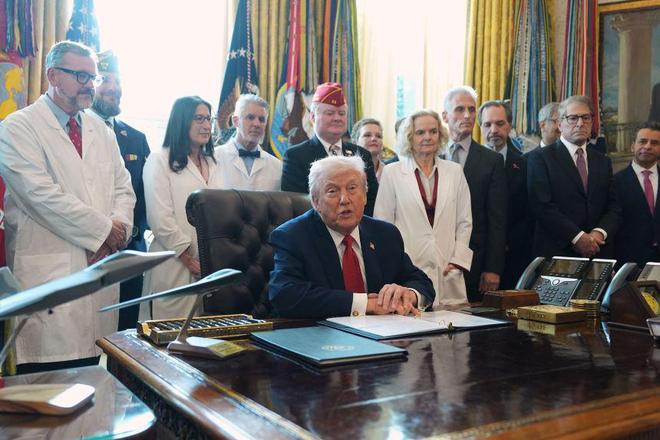
Trump signs executive order on marijuana reclassification; cannabis shares rally
Invezz· 2025-12-18 19:49
Core Viewpoint - President Donald Trump signed an executive order to reclassify marijuana from Schedule I to Schedule III, significantly impacting the cannabis industry and leading to a surge in US cannabis stocks [1] Group 1: Executive Order Impact - The executive order directs federal agencies to change the classification of marijuana, which could lead to increased research and development opportunities within the cannabis sector [1] - This reclassification is expected to reduce regulatory burdens on cannabis companies, potentially enhancing their operational capabilities and market access [1] Group 2: Market Reaction - Following the announcement, US cannabis stocks experienced a sharp increase, indicating strong investor optimism regarding the future of the cannabis market [1] - The market response reflects a growing acceptance of cannabis and its potential for commercialization, which may attract more investment into the sector [1]

Tilray stock prints bullish candle ahead of Trump cannabis executive order
Invezz· 2025-12-17 14:27
Core Insights - Tilray's stock price surged nearly 30% on Tuesday, reaching a high of $14.40, in anticipation of Donald Trump's executive order to reschedule cannabis into a lower drug classification [1] Company Impact - The significant increase in Tilray's stock price reflects investor optimism regarding potential regulatory changes that could benefit the cannabis industry [1] Industry Implications - The rescheduling of cannabis could lead to broader market acceptance and increased investment in the cannabis sector, potentially transforming the landscape for cannabis-related companies [1]

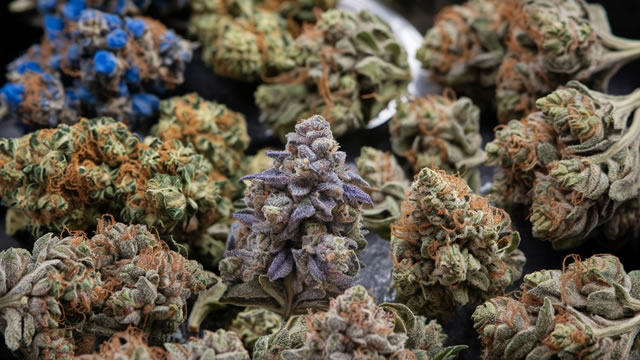
美媒:特朗普称美政府正“考虑”对大麻重新分类,将其列为“危害性较低毒品”
Huan Qiu Wang· 2025-12-16 02:24
Core Viewpoint - The U.S. government is considering reclassifying marijuana as a "lower-risk drug," which could significantly benefit the multi-billion dollar cannabis industry by easing research restrictions [1][3]. Group 1: Government Actions and Implications - President Trump indicated that the government is contemplating the reclassification of marijuana to facilitate research, which has been hindered under its current classification as a Schedule I drug [3]. - The reclassification would not legalize marijuana or decriminalize its use but would lower research barriers and enhance the legal operating environment for businesses in the cannabis sector [4]. - The potential shift in regulation aligns with a broader trend of states legalizing medical and recreational marijuana, reflecting changing societal attitudes towards cannabis [5]. Group 2: Industry Impact and Lobbying - The cannabis industry has seen significant lobbying efforts, with over $22.4 million spent on political lobbying related to cannabis products from 2018 to 2022 [5]. - The push for legalization and reclassification is closely tied to financial interests and political lobbying, indicating a strong influence of interest groups in shaping cannabis policy [5]. - Despite the potential benefits of reclassification, concerns remain regarding the health impacts of marijuana use, including addiction and mental health issues [4].
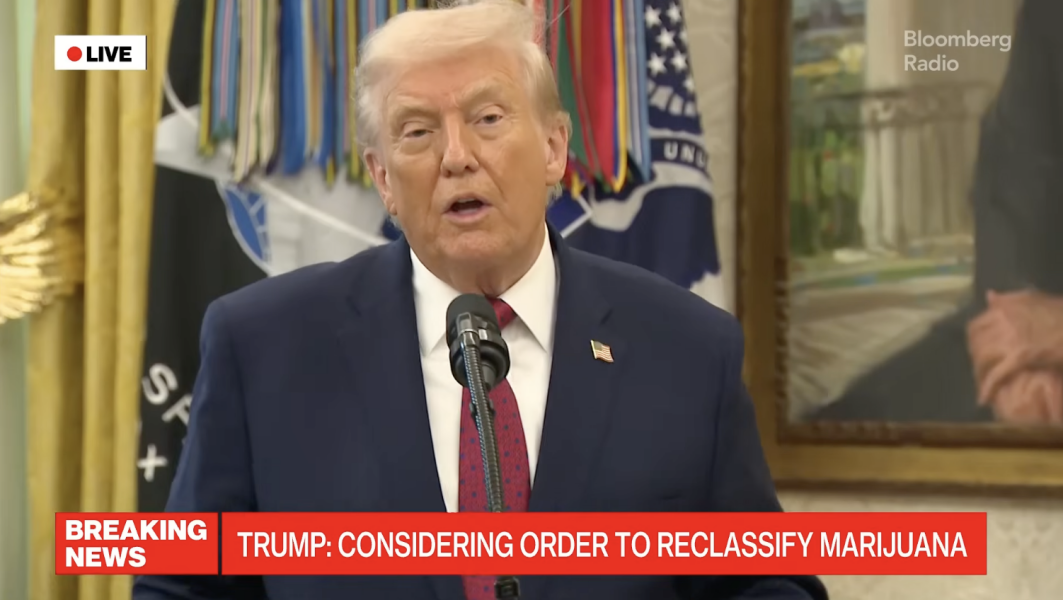
Tilray's stock takes off on hope that cannabis will soon be treated more like steroids than heroin
MarketWatch· 2025-12-12 22:22
Core Insights - Tilray's stock, along with shares of other cannabis companies, experienced a significant increase following reports suggesting that President Trump may consider reclassifying marijuana as a less dangerous drug [1] Group 1: Market Reaction - The stock prices of Tilray and other cannabis firms soared, indicating a positive market sentiment driven by potential regulatory changes [1] - Investors are optimistic about the implications of reclassification on the cannabis industry, which could lead to increased market opportunities [1] Group 2: Regulatory Environment - The potential move by President Trump to reclassify marijuana could signify a shift in the regulatory landscape for cannabis, impacting both current and future investments in the sector [1] - Reclassification may reduce legal barriers and enhance the legitimacy of cannabis products, fostering growth within the industry [1]

美媒爆:美政府计划通过行政令放宽对大麻管制,白宫官员称“尚未最终决定”
Huan Qiu Wang· 2025-12-12 05:32
Core Viewpoint - The U.S. government is expected to significantly relax federal regulations on cannabis, aligning its oversight with that of certain common prescription pain medications and other drugs [1][3]. Group 1: Regulatory Changes - President Trump discussed plans to reclassify cannabis during a call with House Speaker Mike Johnson, aiming to ease access restrictions through an upcoming executive order [1][3]. - The reclassification would not legalize cannabis or decriminalize it but would lower research barriers and enhance the legal operating baseline for businesses [3]. Group 2: Political Dynamics - Speaker Johnson expressed skepticism about the reclassification, citing various studies and data against it, while industry executives present during the call attempted to counter his arguments [3]. - The push for cannabis legalization at the federal level is gaining momentum, influenced by interest groups that have spent over $22.4 million on political lobbying related to cannabis from 2018 to 2022 [4]. Group 3: Societal Implications - The increasing legalization of cannabis reflects deeper societal issues related to drug use and abuse in the U.S., with concerns that the normalization of cannabis could exacerbate substance abuse problems [4].
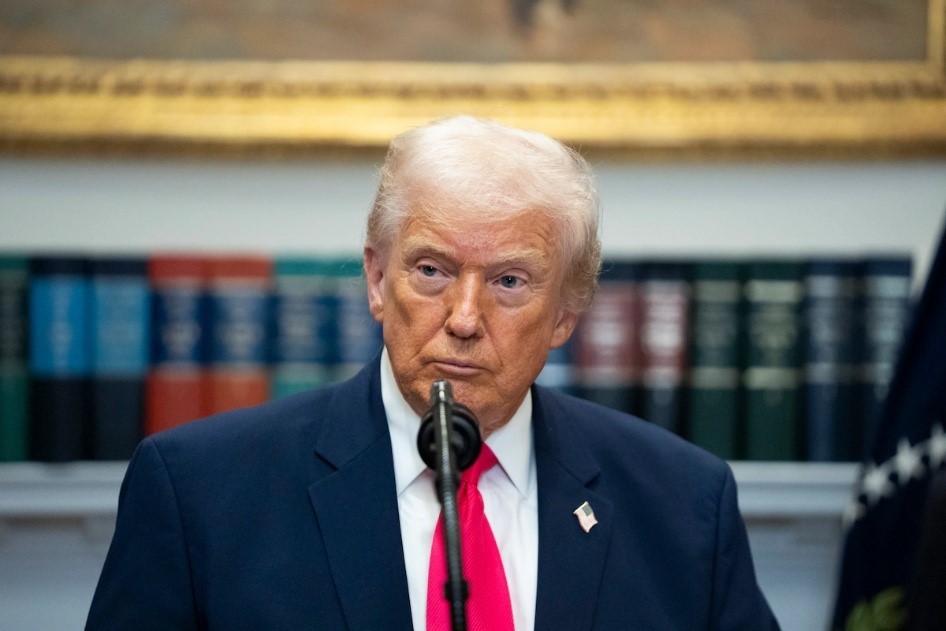
Why Investors Were Buzzing About Curaleaf Stock Today
The Motley Fool· 2025-12-04 23:13
Core Insights - Curaleaf is expanding its operations by opening a new dispensary in Cape Canaveral, Florida, marking its 70th outlet in the state, which is significant given Florida's large population and GDP ranking [2][3] - The stock price of Curaleaf increased by 9% following the announcement of the new dispensary and a new marijuana reform resolution in Congress, indicating positive investor sentiment [1][5] - The potential for Florida to transition from a medical marijuana market to a recreational one is gaining traction, which could significantly enhance market opportunities for companies like Curaleaf [3][4] Company Developments - Curaleaf has opened its 70th dispensary in Florida, a state that ranks third in population and fifth in GDP in the U.S., highlighting the company's growth strategy in a key market [2] - The company's stock performance reflects investor optimism, with a notable increase of 9% in a single trading session [1][5] Industry Context - The marijuana industry is witnessing ongoing efforts for legalization, with a new resolution submitted by Democrats in the U.S. House of Representatives aimed at promoting equity in the industry and influencing international drug policy [4][7] - Despite the positive developments, the overall impact on struggling companies like Curaleaf may remain limited until full legalization occurs, indicating a cautious outlook for the industry [6][7]