
大麻

Search documents
Village Farms(VFF) - 2025 Q4 - Earnings Call Transcript
2026-03-12 13:32
Financial Data and Key Metrics Changes - Village Farms reported a net income from continuing operations of $21 million or $0.19 per share, a $49 million improvement compared to the prior year [5] - Adjusted EBITDA from continuing operations reached $50 million, an increase of $48 million, while cash flow from continuing operations improved to $58 million, up $44 million compared to 2024 [5][26] - The company achieved a year-over-year growth in net sales of 9%, totaling just shy of $50 million for Q4 [13][25] Business Line Data and Key Metrics Changes - Canadian cannabis sales grew by 10% year-over-year, with international export sales increasing nearly 400% [15][27] - Retail branded sales in Canada were flat compared to Q4 last year, but gross margins improved year-over-year, reaching 43% [15][28] - The Netherlands operations contributed $3.3 million in sales for Q4, with adjusted EBITDA of $700,000 [31] Market Data and Key Metrics Changes - The company maintained a top five overall market share position in Canada and held the number one position in dried flower as of the end of last month [15] - International export sales increased more than six-fold, benefiting from the company's leadership position as one of the largest EU GMP-certified cannabis operators [4] Company Strategy and Development Direction - Village Farms is focused on improving margin performance, profitability, and cash generation to enable additional growth investments [5] - The company is investing in capacity expansion projects in Canada and the Netherlands, with expectations of significant increases in production and revenue [20][23] - The transition to privatize the legacy produce business reflects confidence in the cannabis business's ability to stand on its own [12] Management's Comments on Operating Environment and Future Outlook - Management expressed confidence in the strong demand fundamentals domestically and internationally, expecting to drive profitable growth in 2026 and beyond [19] - The company anticipates returning to sequential growth in international exports in Q1 and plans to ship to multiple new jurisdictions [19] - Management acknowledged temporary supply constraints but emphasized the underlying strength of the business [19] Other Important Information - The company ended the year with approximately $86 million in cash and completed a $3 million share repurchase during Q4 [24][34] - The ongoing share repurchase program reflects a balanced approach to capital allocation aimed at driving returns to shareholders [34] Q&A Session Summary Question: Share repurchases and capital allocation - Management indicated that share repurchases reflect confidence in cash generation and do not impact operational opportunities [40] Question: Growth in the German market - Management noted that regulatory uncertainties had caused a decline in imports but expected growth to return in Q1, with increasing demand anticipated [42][43] Question: Capacity constraints and market share aspirations - Management clarified that Canada remains the primary market, balancing international demand with commitments in Canada [49] - The company regained its number one flower share position in January and expects continued growth in 2026 [50]

Does Marijuana Rescheduling in the U.S. Make Canopy Growth a Good Buy in 2026?
Yahoo Finance· 2026-01-14 12:20
Core Viewpoint - Canopy Growth has experienced a significant decline in value, losing over 99% in the past five years, and is now considered one of the worst-performing stocks in that period [1] Company Overview - Canopy Growth, once a leading Canadian marijuana company, is currently facing challenges and has shifted focus towards cost-cutting and limiting cash burn [6] - The company has a market capitalization of $500 million, which has garnered attention due to recent news regarding the U.S. rescheduling of marijuana [2] Industry Developments - The U.S. government has rescheduled marijuana from a Schedule I to a Schedule III substance, which will facilitate research and reduce tax burdens for multi-state operators [3][4] - This rescheduling is seen as a potential first step towards broader marijuana legalization, although it does not directly benefit Canopy Growth as a Canadian producer [7] Financial Performance - In the most recent quarter ending September 30, Canopy Growth reported an operating loss of CA$16.9 million (approximately $12.2 million), an improvement from CA$45.9 million in the same quarter the previous year [8] - The company's cash burn rate has decreased significantly, with CA$28.3 million used in the last six months compared to CA$105.6 million in the same period a year ago [8]

奶茶,成瘾品和“毒品擦边”
虎嗅APP· 2026-01-03 03:13
Core Viewpoint - The article discusses the distinction between legal and illegal addictive substances, emphasizing that legality does not equate to safety, and highlights the historical context and societal acceptance of various addictive products [4][6][11]. Group 1: Legal Addictive Substances - Alcohol, tobacco, tea, and coffee are identified as the three most common legal addictive substances, which, while having similarities in addiction potential with illegal drugs, differ fundamentally in legal status, social acceptance, health impacts, and addiction mechanisms [9][16]. - Legal addictive substances are regulated to varying degrees, with alcohol and tobacco being classified as carcinogens, while caffeine, although less harmful, is also recognized as a controlled substance under certain conditions [11][19]. - The consumption of caffeine through beverages like coffee and tea is generally safe within recommended limits, but excessive intake can lead to health issues and addiction, necessitating consumer awareness and caution [13][14]. Group 2: Distinction Between Legal and Illegal Addictive Substances - Legal addictive substances are characterized by their social acceptance and regulatory frameworks, while illegal drugs are strictly prohibited due to their severe health risks and societal impacts [16][20]. - The health implications of legal substances can be managed with moderate use, whereas illegal drugs often lead to irreversible health damage and severe addiction [16][24]. - The societal roles of legal substances can facilitate social interactions, while illegal drugs typically disrupt social functions and contribute to crime and instability [16][19]. Group 3: Historical Context and Commercialization - The historical trajectory of legal addictive substances shows a pattern of acceptance and commercialization, often linked to economic activities and societal norms, which can lead to their widespread use [22][23]. - The article notes that the commercialization of addictive substances has evolved over centuries, with advancements in production and consumption methods increasing their addictive potential [22][24]. - The rise of illegal drugs is similarly tied to their commercialization and the development of more efficient consumption methods, leading to increased addiction rates [24][25]. Group 4: Future Considerations - The article warns against the potential normalization and legalization of new addictive substances, advocating for proactive measures to control existing legal substances and prevent the emergence of new ones [28][29]. - It emphasizes the importance of historical awareness in addressing addiction issues, suggesting that society must remain vigilant against the risks associated with both legal and illegal addictive substances [27][28].


President Trump Just Reclassified Marijuana. Are Green Thumb, Tilray, and Trulieve Stocks No-Brainer Buys?
Yahoo Finance· 2025-12-23 10:04
Core Viewpoint - The reclassification of marijuana from Schedule I to Schedule III by President Trump on December 18, 2025, represents a significant shift in federal cannabis policy, acknowledging its medical uses and impacting the cannabis industry positively [1][3]. Industry Implications - The executive order allows cannabis companies to deduct more business expenses, which was previously restricted under IRS Code Section 280E, benefiting companies like Green Thumb Industries, Tilray Brands, and Trulieve Cannabis [5][6]. - The reclassification reflects the reality that 40 U.S. states, three territories, and the District of Columbia have legalized medical cannabis, indicating a broader acceptance of marijuana's medical applications [3]. Company Impact - Green Thumb, Tilray, and Trulieve have expressed support for the reclassification, which is expected to provide them with financial advantages and operational flexibility [4][5]. - The exemption from IRS Code Section 280E is particularly critical, as it allows these companies to deduct expenses related to payroll and rent, which were previously non-deductible [6].
Cannabis use among seniors is up 46% as Trump moves to reclassify marijuana. Here's what it could mean for pot stocks
Yahoo Finance· 2025-12-22 17:30
Core Insights - President Trump signed an executive order on December 18, 2025, to expedite the reclassification of marijuana, potentially making it a Schedule III drug, which would facilitate research and access for Medicare and Medicaid recipients [1][3] - The reclassification could lead to increased investment opportunities in the cannabis industry, which has experienced volatility [1][4] Industry Trends - Cannabis use among Americans aged 65 and older has significantly increased, rising from 4.8% in 2021 to 7% in 2023, marking a 46% increase [2] - The demand for cannabis is growing among seniors, particularly those with chronic diseases, indicating a shift in consumer demographics [6] Regulatory Environment - Marijuana is currently classified as a Schedule I substance, alongside drugs like heroin and LSD, but the executive order aims to change this classification to Schedule III, which includes drugs with recognized medical uses [3] - There is a complex legal landscape across states regarding marijuana use, with support for legalization rising from 36% in 2005 to 70% in 2023, reflecting changing consumer sentiment [5]
Cannabis stocks rise ahead of potential Trump order to ease marijuana restrictions
Reuters· 2025-12-18 14:14
Core Viewpoint - Shares of cannabis firms experienced an increase in premarket trading due to expectations that U.S. President Donald Trump will sign an executive order to ease federal regulations on marijuana [1] Group 1 - Cannabis firms' stock prices rose in premarket trading [1] - The rise in stock prices is attributed to anticipated regulatory changes from the federal government [1] - The potential executive order is expected to have a significant impact on the cannabis industry [1]

特朗普拟签署大麻重新分级行政令 美加大麻股反弹
Zhi Tong Cai Jing· 2025-12-17 16:07
Group 1 - U.S. cannabis-related stocks rebounded after reports that President Trump is expected to sign an executive order on cannabis rescheduling, boosting market sentiment [1][2] - The executive order aims to address the long-delayed rescheduling of cannabis, which has not served Americans who could benefit from its medical use [1] - The White House plans to reclassify cannabis from a Schedule I controlled substance to a Schedule III substance, which includes drugs with recognized medical uses [1] Group 2 - If the rescheduling is implemented, cannabis companies are expected to benefit from tax reductions and face fewer restrictions on interstate product distribution, improving profitability and operating conditions [2] - Following Trump's confirmation to advance the cannabis rescheduling plan, cannabis stocks like MSOS experienced a quick recovery in market sentiment [2] - Notable multi-state operators in the U.S. cannabis market include Ascend Wellness, Curaleaf Holdings, Cresco Labs, Green Thumb Industries, Trulieve Cannabis, Ayr Wellness, Verano Holdings, and Jushi Holdings [3]
Tilray stock prints bullish candle ahead of Trump cannabis executive order
Invezz· 2025-12-17 14:27
Core Insights - Tilray's stock price surged nearly 30% on Tuesday, reaching a high of $14.40, in anticipation of Donald Trump's executive order to reschedule cannabis into a lower drug classification [1] Company Impact - The significant increase in Tilray's stock price reflects investor optimism regarding potential regulatory changes that could benefit the cannabis industry [1] Industry Implications - The rescheduling of cannabis could lead to broader market acceptance and increased investment in the cannabis sector, potentially transforming the landscape for cannabis-related companies [1]

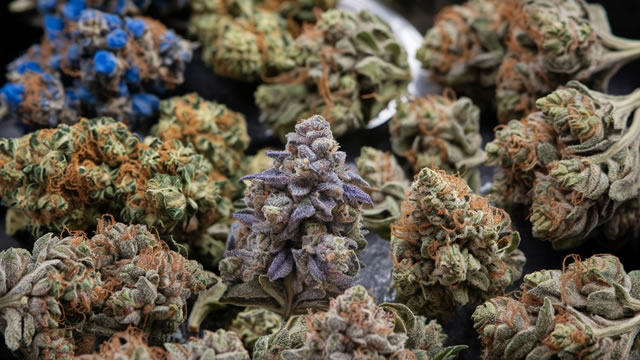
Pot stocks keep blazing, after Trump says he's ‘very strongly' looking at rescheduling cannabis
MarketWatch· 2025-12-16 17:06
Core Viewpoint - U.S. and Canadian cannabis stocks are experiencing a rally following President Trump's indication of considering an executive order to reschedule cannabis, which could reduce regulations on the substance [1] Group 1: Market Reaction - Shares of cannabis stocks in the U.S. and Canada continued to rise on Tuesday, reflecting positive market sentiment [1]

美军“禁毒战”再炸三船,特朗普定性芬太尼为“大规模杀伤性武器”
Jin Rong Jie· 2025-12-16 06:27
Group 1 - The U.S. Southern Command reported that the military attacked three boats suspected of drug trafficking, resulting in eight deaths [1][2] - The operation was conducted under the direction of Defense Secretary Pete Hegseth in the Eastern Pacific, with a video showing the boats being destroyed [1][2] - The attacks are part of a broader strategy by the Trump administration to pressure Venezuelan President Nicolás Maduro and combat drug trafficking in the region [2][4] Group 2 - Trump has classified fentanyl as a "weapon of mass destruction" to intensify efforts against drug smuggling from Latin America [5] - This classification allows the Department of Homeland Security to utilize funds allocated for detecting and eliminating weapons of mass destruction [5][6] - The administration is considering expanding its operations from maritime to land-based targets related to drug production [5][6] Group 3 - There is growing scrutiny from both Democratic and Republican lawmakers regarding the legality of these military actions, with calls for briefings from Secretary Hegseth [2][3] - Legal experts question whether the attacks violate international law and the legitimacy of the claims regarding the boats' intentions [4] - Maduro has threatened a "full uprising" if his country faces foreign attacks, indicating potential geopolitical ramifications [4]