天基太阳能

Search documents
中国光伏行业_太空之旅_天基太阳能有望继续上行-China Solar Industry_ A journey to space_ more upside expected for space-based solar
2026-01-29 10:59
Summary of the Conference Call Transcript Industry Overview - **Industry**: China Solar Industry - **Focus**: Space-based solar energy and its potential growth Key Points and Arguments 1. **SpaceX's Ambitious Plans**: SpaceX aims to construct 100GW capacity for space-based solar energy over the next three years, with a focus on AI satellites. This could indicate a significant increase in demand for space-based solar energy due to its potential for higher efficiency and continuous generation capabilities compared to terrestrial solar [2][4] 2. **Technology Roadmap**: - **Current Technologies**: GaAs technology is currently leading with over 30% efficiency but is costly at above US$60/W. P-type HJT is more cost-effective at US$20/W and has advantages in weight reduction [3] - **Future Technologies**: Perovskite-silicon tandem cells are expected to become the mainstream technology due to their high efficiency (above 33%) and longer lifespan in space environments [3] 3. **Market Size Potential**: - The demand for space-based solar is projected to grow from 0.3GW in 2026 to 115GW by 2035. The global market size for space-based solar could reach US$1.1 trillion by 2035, assuming P-type HJT and Perovskite technologies capture significant market shares [4][7] 4. **Valuation Upside**: - While immediate earnings contributions may be limited, the market is expected to reward companies with advanced technologies in space solar, leading to potential valuation increases. Key beneficiaries include firms specializing in GaAs, Perovskite, and P-HJT technologies [5] 5. **Equity Opportunities**: - Several companies are highlighted as having exposure to the space solar theme, including Ming Yang, Risen Energy, and Jinko, which are involved in developing advanced solar technologies [8] Important but Overlooked Content 1. **Risks to the Industry**: - Major downside risks include slower-than-expected growth in domestic renewable energy capacity, larger-than-expected tariff cuts, and competition from other power resources [9] - Conversely, upside risks include faster growth in renewable energy capacity and smaller tariff cuts than anticipated [10] 2. **Market Forecasts**: - Detailed forecasts for satellite volume and power demand indicate a significant increase in both metrics, with annual satellite volume expected to rise from 5,420 units in 2026 to 96,614 units by 2035 [7] 3. **Technological Advancements**: - The report emphasizes the importance of continuous technological improvements and cost reductions in driving the growth of the space-based solar market [4][5] This summary encapsulates the critical insights from the conference call, focusing on the potential growth of the space-based solar industry, technological advancements, market forecasts, and associated risks.

天基太阳能开启清洁能源新赛道
Ke Ji Ri Bao· 2025-11-03 23:55
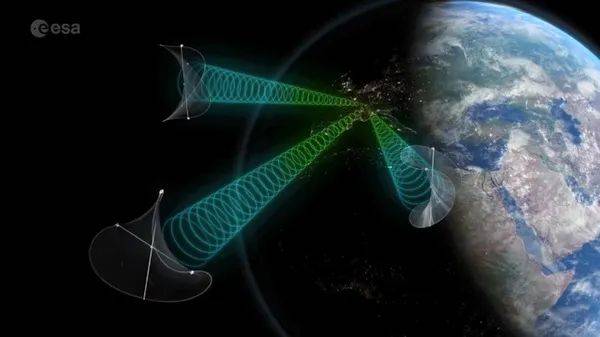
Core Viewpoint - The increasing electrification of human life and advancements in big data and AI are driving unprecedented global energy demand, positioning space-based solar power (SBSP) as a potential pathway to a clean and abundant energy future [1][2]. Group 1: Advantages of Space-Based Solar Power - SBSP can provide stable and reliable baseload power, which has traditionally relied on fossil fuels or nuclear energy [3]. - The intensity of sunlight in space is 5-10 times greater than on Earth, allowing for higher energy generation efficiency and significant land resource savings [2][3]. - A NASA study predicts that a model of SBSP could generate power 99% of the time in a year [3]. Group 2: Global Developments and Investments - A global "space race" for sustainable energy is underway, with countries and private enterprises increasing investments in SBSP [4]. - In August 2023, the California Institute of Technology successfully demonstrated a prototype for space-based solar energy transmission [4]. - China aims to achieve breakthroughs in SBSP by 2028, with ongoing projects in Chongqing and Xi'an [4]. - The European Space Agency has initiated the SOLARIS pre-research program with a budget of €60 million to develop core technologies for SBSP [4]. Group 3: Technological Challenges - Key challenges include high launch costs, as building a large SBSP system will require numerous launches despite decreasing satellite launch costs [7]. - Efficiently transmitting gigawatt-level power back to Earth remains a significant technical hurdle [7]. - The need for autonomous robots to assemble and maintain large space structures in orbit is another critical challenge [7].
科技创新世界潮 | 天基太阳能开启清洁能源新赛道
Ke Ji Ri Bao· 2025-11-03 15:19
Core Insights - The increasing electrification of human life and rapid advancements in big data and AI technologies are driving unprecedented growth in global energy demand. Space-based solar power (SBSP) may offer a new path toward a truly clean and abundant energy future [1][3]. Technological and Economic Feasibility - With decreasing launch costs and advancements in large-scale manufacturing technologies, SBSP has become technically and economically feasible. However, key technical challenges remain, such as further reducing launch costs and improving the efficiency of power transmission to Earth [3][8]. Advantages of Space-Based Solar Power - SBSP can provide stable and reliable baseload power, which was previously only achievable through fossil fuels or nuclear energy. The intensity of sunlight in space is 5-10 times greater than on Earth, allowing for higher energy generation efficiency and significant land resource savings [4][5]. - A recent NASA study predicts that a model of SBSP could generate power 99% of the time in a year. This high energy density could also reduce material consumption, enhancing sustainability and alleviating resource pressure [5]. Global Competition and Developments - A "space race" for sustainable energy is underway, with countries and private enterprises increasing investments in SBSP. In August 2023, Caltech's SBSP prototype successfully demonstrated wireless energy transmission in space [6]. - China is advancing its kilometer-scale array construction, aiming for breakthroughs by 2028, with ongoing projects in Chongqing and Xi'an [6]. - The European Space Agency launched the SOLARIS pre-research program in January 2023, planning to invest €60 million over three years to tackle core technologies [6]. - The UK has adopted the CASSIOPeiA concept for SBSP demonstration projects, with plans to deliver commercial systems within six years [6]. - Japan is focusing on SBSP as a key development direction, successfully conducting long-distance microwave transmission experiments [7]. Technical Challenges - Despite the promising outlook for SBSP, several key technical hurdles must be overcome. The challenge of launch costs remains significant, as constructing larger SBSP stations will require numerous launches [8]. - Current wireless power transmission has achieved distances of several kilometers, but efficiently and stably transmitting gigawatt-level power back to Earth presents major technical bottlenecks [8]. - The need for autonomous robots to accurately assemble and maintain large space structures in orbit is another critical technical challenge that needs to be addressed [8].



天基太阳能:美国能源安全的新前沿
Sou Hu Cai Jing· 2025-07-02 16:52
Core Insights - Space-Based Solar Power (SBSP) is identified as a crucial component for meeting future global energy demands, with experts warning that the U.S. risks falling behind China in this emerging technology [2] - The investment required to modernize the grid and enhance its resilience is projected to be $21.4 trillion by 2050, with $17.3 trillion needed to meet new energy demands [2] - SBSP technology can provide 24/7 power unaffected by weather or nighttime, potentially generating five to six times the energy of ground-based solar panels [3] Investment and Economic Potential - The global energy market represents a multi-trillion dollar opportunity, with energy accounting for 10-11% of global GDP [2] - The U.S. East Coast grid alone will require new capacity equivalent to 15 nuclear power plants in the next decade to meet expected demand [3] - The cost of SBSP technology is expected to become competitive with other energy sources as launch costs continue to decrease [5] Technological Advancements - SBSP systems utilize satellites to collect solar energy in space and transmit it back to Earth via microwaves or infrared lasers [3] - The technology allows for precise power transmission to areas in need, potentially bypassing lengthy new transmission line construction processes [3] - Successful demonstrations of key components of SBSP technology have been conducted, indicating the feasibility of deploying gigawatt-scale systems within 10 to 15 years [5] Legislative and Strategic Developments - Recent legislative milestones have been achieved, including the introduction of provisions in the HR 1368 bill aimed at developing the necessary technologies for SBSP [6] - Advocacy efforts are ongoing to educate Congress on the potential of SBSP for the U.S. energy future and to maintain leadership in commercial space development [6] - A call for a 120-day joint technical and economic feasibility study for SBSP has been proposed to ensure the U.S. does not fall behind in this emerging market [7] National Security Implications - The ability to construct large structures in space has significant implications for national security, as it demonstrates capabilities in space logistics and power transmission [6] - SBSP is positioned as a solution to address energy independence, reliability during extreme weather events, and carbon-free power generation [7] - The urgency for the U.S. to lead in utilizing space-based energy resources is emphasized to secure both energy and national security interests [7]