
太空科创时代

Search documents
百亿商业航天创始人最新发声:太空科创时代已经到来
Zhong Guo Ji Jin Bao· 2026-01-24 10:57
Core Insights - The era of space technology innovation has arrived, with commercial space transitioning from a supplementary force to a strategic pillar in China's aerospace landscape [1] - The global space economy is projected to reach $1.8 trillion by 2035, contributing approximately $7.9 trillion to the broader economy and society by 2040, with cumulative value exceeding $80 trillion from 2025 to 2040 [1] Group 1: Space Infrastructure and Technology - The construction of space infrastructure is characterized by four new features: low orbit, low cost, scalability, and constellation [1] - The integration of satellite communication with mobile technology is expected to drive the development of 6G communication, fundamentally changing the perception of communication boundaries [2] - The current phase of the space innovation era is focused on digital infrastructure, enabling data to be transmitted to space, with over 10,000 satellites already launched globally [2] Group 2: Future Developments and Market Potential - Future developments in space may include the establishment of energy and manufacturing centers, utilizing solar energy to provide electricity and the potential for mining asteroids for resources [2] - The construction of space civilization bases is anticipated, which could lead to the establishment of spaceports and cities, expanding human civilization into the universe [2] Group 3: Company Valuation and Recognition - In 2023, the company was valued at 11 billion yuan and ranked 668th in the Hurun Global Unicorn List, while in 2024, it was valued at 11.5 billion yuan and ranked 720th [3]
百亿商业航天创始人最新发声:太空科创时代已经到来
中国基金报· 2026-01-24 10:54
Core Viewpoint - The era of space technology innovation has arrived, with commercial space transitioning from a supplementary force to a strategic pillar in China's aerospace landscape [2] Group 1: Space Infrastructure and Market Potential - The global number of operational satellites has exceeded 12,000, indicating significant growth in space infrastructure [2] - The characteristics of space infrastructure construction are defined by "new four modernizations": low orbit, low cost, large scale, and constellation [2] - The global space economy is projected to reach $1.8 trillion by 2035, with contributions to broader economic and social value expected to reach approximately $7.9 trillion by 2040, and cumulative value exceeding $80 trillion from 2025 to 2040 [2][3] Group 2: 6G Communication and Satellite Connectivity - The integration of satellite broadband and mobile direct connection is set to revolutionize 6G communication, creating a network architecture that combines terrestrial networks with satellite capabilities [3] - The current phase of the space technology innovation era is focused on space digital infrastructure, enabling data to be transmitted to space [3] - Future developments may include energy and manufacturing centers in space, utilizing solar energy and potential asteroid mining for materials [3] Group 3: Company Achievements and Valuation - Galaxy Aerospace has successfully launched over 40 advanced satellites and recently launched a second group of 19 low-orbit satellites for satellite internet [4] - In 2023, Galaxy Aerospace was valued at 11 billion yuan and ranked 668th in the "2023 Hurun Global Unicorn List," with a slight increase to 11.5 billion yuan and a ranking of 720th in 2024 [4]

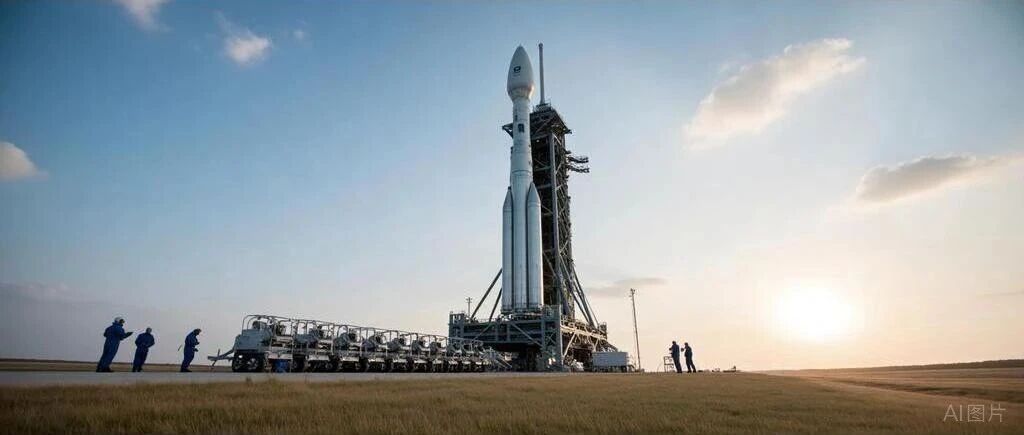
银河航天创始人董事长兼CEO徐鸣:太空科创时代的发展迎来历史机遇期
Cai Jing Wang· 2025-07-24 23:05
Industry Insights - The construction of space infrastructure is emerging as a new engine for global economic growth, with the global space economy expected to reach $1 trillion by 2040 and its broader economic and social value projected at approximately $7.9 trillion, resulting in a cumulative impact of over $80 trillion from 2025 to 2040 [1] - The number of satellites in orbit has surpassed 13,000, primarily consisting of low Earth orbit communication satellites, characterized by constellation, scale, low cost, and low orbit [1] - The integration of technology, industry, and finance is crucial for the success of technological revolutions, with a multi-layered financial innovation system providing strong momentum for the transformation of industries such as smart manufacturing and commercial aerospace [1] Company Developments - The company has consistently focused on technological innovation and rapid iteration, achieving several pioneering innovations, including the first domestic flexible solar wing flat satellite and the first batch of low Earth orbit broadband communication satellites [2] - The company has developed the world's first large-scale rollable fully flexible solar wing, which reduces the volume and weight of solar wings while increasing energy density to meet high-power energy demands for satellites [2] - The fully flexible solar wing can be deployed in orbit, expanding to over 10 meters in length and nearly 2 meters in width, while being compact enough to fit within the diameter of a thermos when rolled up [2] Financial Support and Innovation - The financial support system for innovation in China is continuously improving, with enhanced efficiency and service levels, facilitating the integration of technology and industry [3] - The company emphasizes the importance of long-term commitment to technological innovation, believing that continuous breakthroughs and the synergy between industry and finance will lead to broader development opportunities in the space technology era [3] - The company is recognized as a leading satellite internet solution provider and satellite manufacturer in China, being the first unicorn in the commercial aerospace sector, having successfully launched 25 advanced satellites [3]