姓氏文化

Search documents
寻共同的姓 过团圆的年——“话百家姓 过中国年”活动助力两岸同胞心灵契合
Xin Lang Cai Jing· 2026-02-22 21:01
Core Viewpoint - The cultural event themed "Talking about Surnames and Celebrating the Chinese New Year" serves as a bridge connecting the blood ties and cultural identity of compatriots across the Taiwan Strait, emphasizing the importance of surnames in fostering unity and shared heritage [1][5]. Group 1: Cultural Significance of Surnames - Surnames are not only markers of lineage but also foundational elements of cultural identity, acting as a bridge for emotional connections between compatriots on both sides of the Taiwan Strait [1][4]. - The event highlights the deep-rooted cultural practice of seeking one's roots, which is intrinsic to the Chinese identity, reinforcing the notion that surnames are vital in maintaining familial and cultural connections [2][3]. Group 2: Historical Context - The migration of many Taiwanese ancestors from Fujian during the Ming and Qing dynasties established a strong connection between Taiwanese surnames and their origins in mainland China, with family genealogies serving as tangible evidence of this bond [2][3]. - The historical significance of surnames is illustrated through personal anecdotes, such as the story of the Lin family, which reflects the enduring ties between Taiwan and the mainland [2]. Group 3: Contemporary Cultural Exchange - Recent years have seen surname culture exchanges become a vibrant aspect of cross-strait relations, rooted in the everyday lives and cultural upbringing of Chinese people [4][6]. - The event's enthusiastic reception underscores the unbreakable ties and shared sentiments among compatriots, with symbolic items like red envelopes and bookmarks serving as reminders of this connection [5][6]. Group 4: Future Aspirations - The phrase "Seeking Common Surnames, Celebrating Reunion" encapsulates the spirit of the event, symbolizing the hope for unity and cultural revival among Chinese people [6]. - The innovative expressions of surname culture, such as videos and music, are aimed at engaging younger generations, ensuring the continuity of this cultural heritage into the future [6].
(新春见闻)马年新春两岸交流新热点:姓氏牵闽台 隔海诉乡情
Xin Lang Cai Jing· 2026-02-19 07:38
Core Viewpoint - The article highlights the warmth and significance of surname culture exchanges between Taiwan and Fujian during the Lunar New Year, emphasizing the shared identity and emotional connections among people across the strait [1][2][3] Group 1: Surname Cultural Activities - Various surname culture-themed activities have emerged in Fujian, particularly in Fuzhou, Xiamen, and Zhangzhou, serving as a bridge for Taiwanese compatriots to connect with local clans [1] - The "Talk about Hundred Family Surnames, Celebrate Chinese New Year" theme has gained momentum, enhancing the emotional warmth of Taiwanese returning home [1] - Activities include traditional crafts like paper-cutting, where Taiwanese participants express their cultural identity through surname-related art [1] Group 2: Cross-Strait Connections - On a special flight operated by Xiamen Airlines, passengers exchanged New Year blessings using their surnames, reinforcing the idea of shared cultural roots [2] - Notable figures from both sides, such as descendants of the Zhang Sheng Wang, engaged in online exchanges to send New Year greetings, showcasing the vitality of surname-based interactions [2] - The exploration of ancestral roots and family histories has become a common practice among Taiwanese, highlighting the importance of understanding one's heritage [2] Group 3: Academic Perspective - According to Su Meixiang, a researcher at the Fujian Academy of Social Sciences, surname culture serves as a crucial link that deepens Taiwanese people's recognition of their roots and promotes closer ties between the two sides [3]
台湾同胞姓氏里的回家密码
Xin Lang Cai Jing· 2026-02-15 14:50
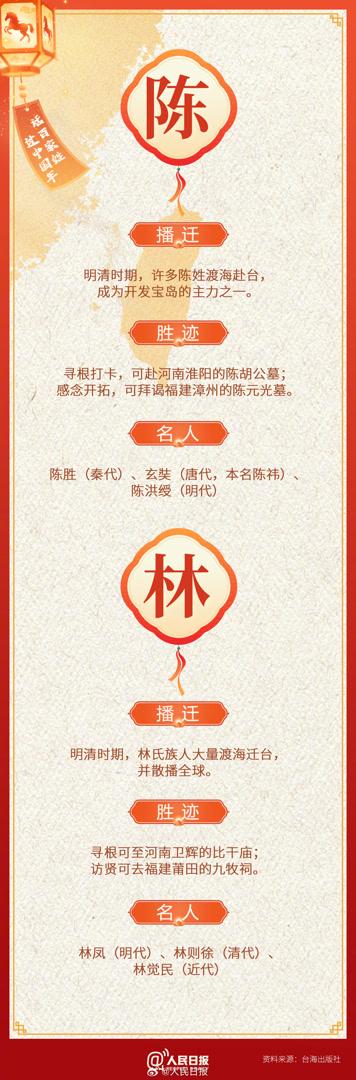
Group 1 - The article discusses the cultural significance of Chinese surnames and their historical migration patterns, particularly during the Ming and Qing dynasties, highlighting the connection between surnames and cultural heritage [1][3][4] - It emphasizes the migration of various surnames such as Huang, Zhang, Li, Wang, Wu, and others to Taiwan and beyond, showcasing their historical roots and notable figures associated with each surname [3][4][5][6] - The article provides specific locations for ancestral visits and cultural heritage sites related to each surname, such as the Huangguo ruins in Henan and the Zhangheng tomb in Nanyang, enhancing the understanding of their historical significance [3][4][5][6] Group 2 - The article mentions the migration of the Li surname from Fujian and Guangdong to Taiwan and Southeast Asia, along with notable historical figures like Li Bai and Li Shimin [4][6] - It highlights the cultural landmarks associated with the Yang surname, including the memorials in Henan and the historical significance of figures like Yang Jian and Yang Guifei [7][8] - The article also covers the migration of the Zheng surname, detailing their historical sites and notable individuals such as Zheng He and Zheng Chenggong [8][9]

短评|姓氏溯源传根脉 两岸同心赴团圆
Xin Hua She· 2026-02-14 06:37
Group 1 - The cultural event "Talking about Hundred Surnames, Celebrating Chinese New Year" is being held in various locations across the mainland, creating a warm atmosphere for cross-strait reunions during the festive season [1] - Activities include surname imprinting experiences and family photo opportunities, emphasizing the connection between Chinese people and their ancestral roots [1] - The significance of surnames as a cultural and familial link is highlighted, showcasing the shared heritage and values between people from the mainland and Taiwan [1] Group 2 - The song released by mainland musician Wang Bo reflects the deep-rooted respect for surnames and the cultural ties that bind people across the strait [2] - The event serves as a celebration of traditional Chinese culture and a heartfelt call for unity among compatriots, fostering emotional connections [2] - The hope is expressed for continued closeness between people from both sides of the strait through shared heritage and cultural transmission, aiming for a harmonious future [2]
且问一句“您贵姓”——从百家姓看两岸同胞的血脉联结
Xin Lang Cai Jing· 2026-02-13 19:33
Core Viewpoint - The article emphasizes the cultural significance of surnames in Chinese society, linking them to identity, heritage, and the continuity of familial and national ties, especially during the Chinese New Year celebrations [1][5]. Group 1: Cultural Significance of Surnames - Surnames serve as a vital cultural identity for every Chinese individual, connecting them to their ancestral roots and the broader historical narrative of the nation [2][3]. - The evolution of surnames from a marker of lineage to a symbol of cultural identity reflects the resilience of Chinese civilization, allowing individuals to trace their heritage and responsibilities through generations [2][3]. Group 2: Historical Migration and Surname Distribution - The migration history of Chinese surnames parallels the broader migration history of the Chinese people, with surnames spreading from the Central Plains to various regions, including Taiwan [4]. - The cultural exchange between the mainland and Taiwan is highlighted, showcasing how surnames act as a bridge connecting communities across the Taiwan Strait [4]. Group 3: Contemporary Relevance of Surname Culture - The recent cultural activities, such as "Talking about Surnames, Celebrating Chinese New Year," indicate a revival and re-energization of surname culture in modern society, countering fears of its decline [5][6]. - Surname culture is being adapted to contemporary contexts, transforming traditional practices into engaging experiences that foster community and cultural appreciation [5][6]. Group 4: Surnames as a Resource for Cross-Strait Relations - Surnames are positioned as a unique and enduring resource for fostering relationships between the mainland and Taiwan, transcending political fluctuations and emphasizing shared cultural heritage [6]. - The article suggests that surname exchanges during cultural celebrations strengthen the bonds among Chinese people, reinforcing a collective identity that goes beyond individual surnames [6].
(新春走基层)重庆台盟开展新春走访活动 以姓氏文化为媒共叙两岸亲情
Xin Lang Cai Jing· 2026-02-13 07:02
Core Viewpoint - The article highlights the efforts of the Taiwan Democratic Self-Government League in Chongqing to promote cultural ties between Taiwan and the mainland through the distribution of "surname culture" themed gift bags, fostering emotional connections among Taiwanese businesspeople and representatives in Chongqing [1]. Group 1: Cultural Significance - The "surname culture" gift bags serve as a bridge to connect the feelings of compatriots from Chongqing and Taiwan, emphasizing the shared cultural heritage [1]. - The initiative aims to enhance cultural exchanges between the two regions, with a focus on the historical significance of surnames as a common cultural code among Chinese people [2][5]. Group 2: Personal Testimonials - Taiwanese coffee master Tsai Shang-chun expressed appreciation for the personalized gift bag, which includes information about the origin and notable figures of the Tsai surname, highlighting the importance of cultural roots [2]. - Huang Jinsheng, a Taiwanese businessman in Chongqing, noted that the gift bag symbolizes the deep cultural imprint shared across the Taiwan Strait, reinforcing the sentiment of "two sides of the same family" [5]. - Xu Pei, a former vice president of the National Taiwan Federation, reflected on her family's migration history upon receiving the gift bag, emphasizing the significance of cultural identity and the need for more activities promoting surname and genealogy culture [6]. Group 3: Future Initiatives - The Taiwan Democratic Self-Government League in Chongqing plans to continue exploring surname and genealogy cultural resources to deepen grassroots exchanges between the two sides, aiming to strengthen the spiritual bond through traditional Chinese culture [6].
一姓一字同根脉 万家灯火共团圆
Ren Min Ri Bao· 2026-02-13 00:42
Core Viewpoint - The cultural activity themed "Talking about Surnames, Celebrating Chinese New Year" is fostering connections between people across the Taiwan Strait, emphasizing shared heritage and identity through surnames [1][2][3]. Group 1: Cultural Activities - Various cultural activities are being held in multiple locations, including Fuzhou, Xiamen, Shanghai, Hangzhou, Guangzhou, and Changsha, enhancing the festive atmosphere for travelers returning home [2][3]. - The song "What is Your Surname?" has gained popularity, creatively expressing the significance of surnames in Chinese culture [2][3]. - Activities such as surname-themed paper-cutting and name printing are attracting significant participation, highlighting the cultural connection between the two sides [2][5]. Group 2: Emotional Connections - The sense of belonging and emotional ties among people from both sides of the Strait are reinforced through surname heritage, with many individuals expressing their experiences of reconnecting with their ancestral roots [3][6]. - The cultural significance of surnames is portrayed as a bridge linking families and communities, fostering a sense of unity and shared identity [3][6]. Group 3: Modern Integration of Culture - The integration of traditional surname culture into contemporary contexts is evident, with activities designed to engage younger generations and promote cultural understanding [4][5]. - Airlines are incorporating surname cultural elements into their services, enhancing the travel experience for passengers and promoting cultural exchange [4][5]. Group 4: Family and National Identity - Surnames are depicted as carriers of family memories and national significance, with stories of prominent families in Taiwan illustrating the deep-rooted connections to their ancestral origins [6][7]. - The activities surrounding surnames during the New Year are seen as a way to honor family heritage and reinforce national identity among Chinese people [6][7].
(新春走基层)两岸同胞厦门“话百家姓 过中国年”
Zhong Guo Xin Wen Wang· 2026-02-11 01:47
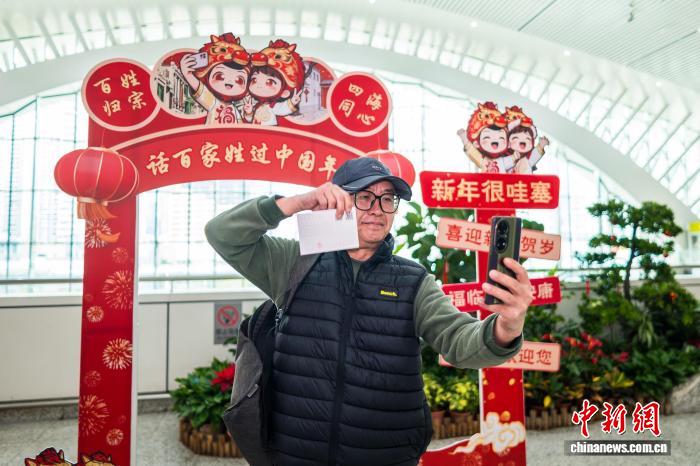
Group 1 - The event "Talking about Surnames, Celebrating Chinese New Year" was held at Xiamen Railway Station, attracting many travelers to participate in surname culture activities [1][3] - Participants shared personal stories related to their surnames, emphasizing the importance of understanding one's family history and cultural roots [1][3] - Xiamen Airlines launched a themed flight promoting Chinese surname culture, allowing passengers to share blessings related to their surnames, enhancing connections among travelers [3] Group 2 - The event highlighted the significance of surname culture as an essential part of traditional Chinese culture, fostering connections between people from both sides of the Taiwan Strait [3] - Xiamen Airlines plans to expand the surname promotion activities on multiple routes, including flights to Beijing, Singapore, and Kuala Lumpur, featuring themed decorations and gifts [3] - An interactive platform was created by Xiamen Airlines, allowing travelers to learn about the origins of their surnames and their migration history to Taiwan [3]
(新春见闻)姓氏文化添年味 两岸同胞厦门共话“根脉”
Zhong Guo Xin Wen Wang· 2026-02-11 00:10
Group 1 - The event "Talking about Surnames, Celebrating Chinese New Year" was held at Xiamen Railway Station, attracting many participants who engaged in cultural activities related to surnames [1][3] - Participants shared personal stories about their surnames, emphasizing the importance of understanding family history and cultural roots, which is particularly meaningful for the younger generation on both sides of the Taiwan Strait [1][3] - Xiamen Airlines launched a themed flight celebrating Chinese surname culture, where passengers shared blessings related to their surnames, fostering a sense of community and connection among travelers [3][4] Group 2 - The surname culture is highlighted as a significant part of traditional Chinese culture, with participants expressing that tracing surname origins and family roots exemplifies the concept of "same root, same source" [1][3] - The airline plans to expand the surname promotion activities to additional routes, including flights to Beijing, Singapore, and Kuala Lumpur, featuring themed decorations and gifts [3][4] - An interactive platform was created for travelers to learn about the origins of their surnames and their migration history, enhancing cultural engagement [3][4]
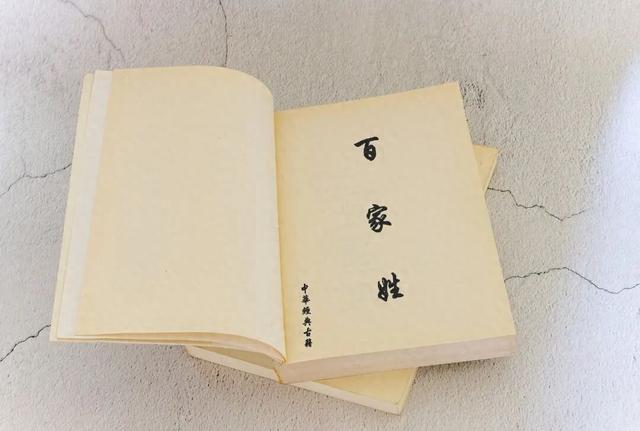
为什么《百家姓》开头是赵钱孙李?
Xin Lang Cai Jing· 2026-02-06 06:35
Group 1 - The article discusses the significance of the characters in the popular TV drama "Tai Ping Nian," particularly how their surnames correspond to the opening line of "Bai Jia Xing" (Hundred Family Surnames) [1][5] - "Bai Jia Xing" was compiled in the early Northern Song Dynasty and originally included 411 surnames, later expanded to 504, serving as an important educational text for children [3][13] - The ordering of surnames in "Bai Jia Xing," specifically "Zhao Qian Sun Li," reflects the political landscape and historical context of the Northern Song Dynasty, prioritizing royal families over noble clans [5][11] Group 2 - The surname "Qian" ranks second after "Zhao" due to historical significance, particularly the contributions of Qian Liu, the founder of the Wuyue Kingdom, who played a crucial role in maintaining stability during the chaotic Five Dynasties and Ten Kingdoms period [7][9] - The article highlights the legacy of the Qian family, noting that many prominent figures have emerged from this lineage, including over a hundred academicians in contemporary times [9][11] - The evolution of surname rankings in modern times reflects a shift from a political to a statistical significance, indicating a move towards egalitarianism in Chinese surnames [15]