存量资产精细化运营

Search documents
2025年中国内地房地产大宗交易总成交规模1448亿
Zhong Guo Xin Wen Wang· 2026-01-13 00:28
Core Insights - The report by CBRE indicates that the total transaction volume of real estate in mainland China is projected to reach 144.8 billion yuan by 2025, with Beijing's real estate transaction volume expected to be 15 billion yuan, reflecting a phase of decline in the market [1] - The expansion of public REITs to include super-grade and grade A office buildings, as well as four-star and above hotel projects, marks a significant policy breakthrough that enhances the financialization of real estate in China [1] - The shift from a reliance on development sales to a full-cycle capability in investment, financing, management, and exit is becoming increasingly important, highlighting the need for professional services and value operations [1] Group 1 - The introduction of policies by the China Securities Regulatory Commission and the National Development and Reform Commission will broaden the scope of public REITs, indicating a new phase in the financialization of real estate [1] - The real estate sector's future growth will increasingly come from the refined operation of existing assets, quality upgrades in property services, and the regulated development of the leasing market, rather than solely from new developments [2] - The retail market in Beijing is set to see the opening of 13 quality projects, adding over 1.1 million square meters of premium retail space, emphasizing the importance of consumer experience and cultural integration in driving resilient growth [2] Group 2 - REITs are evolving from single-asset products to sustainable value operation platforms, creating a robust bridge between capital and the real economy [2] - The current market dynamics indicate a transition towards a focus on enhancing the quality of existing assets and services, rather than pursuing large-scale new developments [2] - The integration of cultural elements into commercial spaces and innovative scenarios is identified as a key factor for the next phase of growth in Beijing's commercial market [2]
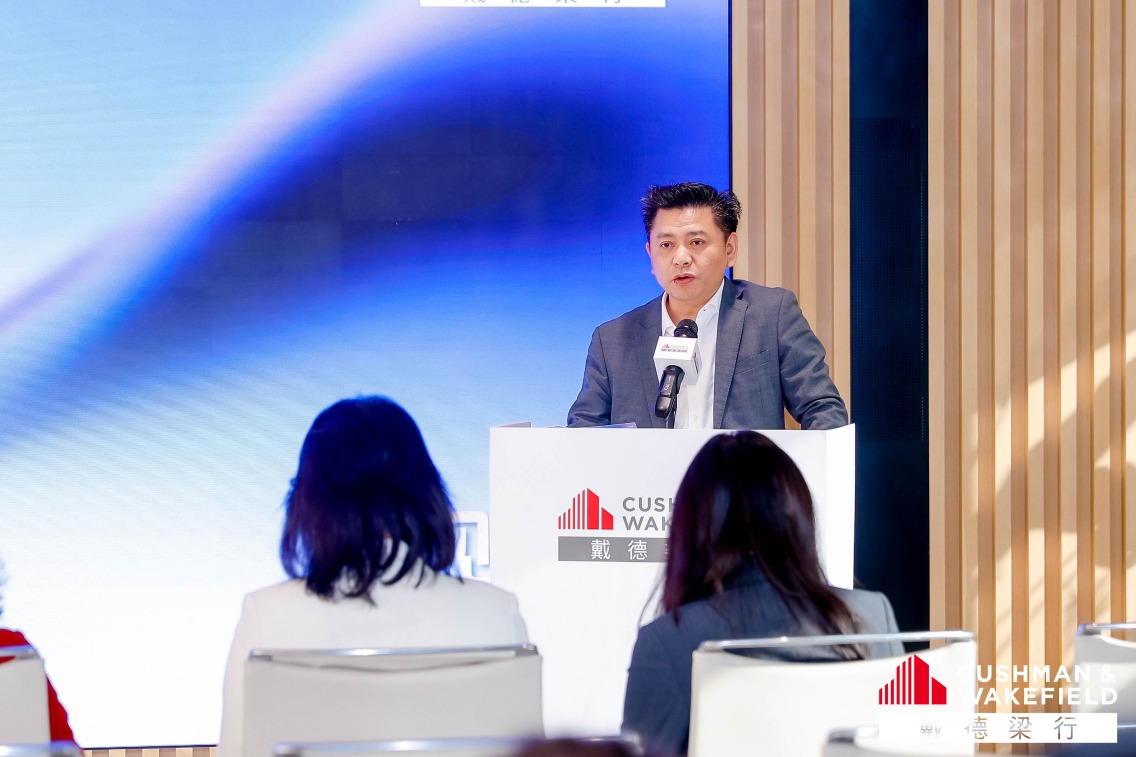
戴德梁行:以资产管理激活房地产发展新动能
Xin Hua Cai Jing· 2026-01-12 17:45
Core Insights - The event hosted by CBRE focused on the latest trends in the real estate market, with discussions on office buildings, commercial trends, bulk transactions, REITs, and asset management, aiming to provide insights into market dynamics and potential pathways for breakthroughs [1][4] Group 1: Real Estate Market Trends - The expansion of the public REITs pilot program to include office buildings and hotels marks a new phase in the financialization of real estate in China, providing standardized exit channels for existing assets and diverse investment options for institutional investors [1] - The future growth of the real estate industry will increasingly rely on the refined operation of existing assets, quality upgrades in property services, and the regulated development of the leasing market, rather than solely on new developments [1][4] Group 2: Office Market Outlook - The Beijing office market is expected to face multiple challenges in 2026, with a focus on enhancing core competitiveness and achieving breakthroughs in a competitive environment [4] - The projected scale of bulk transactions in Beijing's real estate market for 2025 is estimated at 15 billion yuan, indicating a phase of decline, with a shift in buyer structure towards self-use demand from enterprises [6] Group 3: Commercial Market Developments - In 2025, the Beijing retail market will see the opening of 13 quality projects, adding over 1.1 million square meters of premium retail space, alongside the renovation of several older commercial projects [5] - The retail market is characterized by a transformation from single consumption spaces to "urban living rooms," a shift in cultural and IP operations towards global and matrix layouts, and a transition in commercial operation philosophy from "traffic-oriented" to "long-termism" [5] Group 4: Asset Management Strategies - The core strategy of asset management at CBRE emphasizes "long-term resilience," with REITs evolving from single asset products to sustainable value operation platforms, connecting capital with the real economy [6] - The discussions highlighted the importance of capital layout and operational optimization in navigating market fluctuations and cycles [6]