
学术生态

Search documents
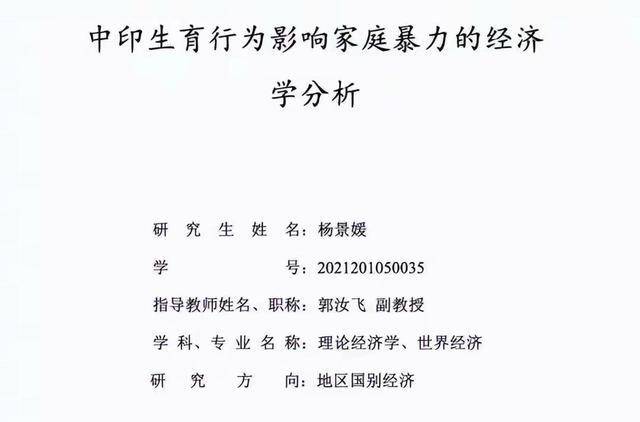
武大杨某媛的论文被31万次点击研究,结果都认为低级错误实属罕见
Sou Hu Cai Jing· 2025-09-11 17:59
Core Viewpoint - The incident surrounding the thesis by Yang Mouyuan from Wuhan University highlights significant flaws in the academic evaluation system in China, raising questions about the integrity of graduate education and the responsibilities of digital academic platforms [1][11][13]. Group 1: Thesis Quality Issues - The thesis contains numerous basic errors, such as misalignment of keywords, fictional references, and incorrect population data, which are typically rare in undergraduate papers [3][5]. - Systematic academic deficiencies are evident, including a lack of theoretical support and a failure to establish causal relationships between fertility behavior and domestic violence [3][7]. - The methodology oversimplifies complex social issues and lacks effective model validation, indicating a flawed research paradigm [7][9]. Group 2: Graduate Education System Failures - The incident reveals multiple failures in the graduate training system, where a thesis should pass through several rigorous checkpoints, yet this paper was able to progress despite its deficiencies [5][11]. - The disparity between the qualifications of the supervising professor and the quality of the thesis raises concerns about academic mentorship and oversight [5][11]. Group 3: Institutional and Regulatory Challenges - The response from CNKI (China National Knowledge Infrastructure) to the thesis's removal and reinstatement reflects the challenges faced by digital academic platforms in balancing academic integrity and data completeness [9][11]. - The lack of a clear process for academic retraction and the regulatory vacuum in the current system complicate the accountability of academic misconduct [9][11]. Group 4: Broader Implications for Academic Governance - The incident serves as a catalyst for deeper reflection on the academic landscape in China, questioning the effectiveness of the current evaluation system and the need for improved oversight mechanisms [11][13]. - The event underscores the importance of rigorous academic standards and the potential for this situation to either lead to meaningful reform or become another overlooked academic issue [13][16].

“学术蛋糕”再分配,多家学术期刊相继“官宣”入选CSSCI来源期刊
Qi Lu Wan Bao Wang· 2025-08-19 05:53
Core Insights - The recent adjustment of the CSSCI journal directory is noted as the most significant in history, reflecting new explorations in the academic evaluation system [1][2] Group 1: C Journal Directory Adjustments - The CSSCI (Chinese Social Sciences Citation Index) is recognized as one of the highest academic recognition directories in the humanities and social sciences in China [2] - Several journals, including "Contemporary Foreign Language Studies" and "Chinese Journal of Applied Law," have achieved a rating upgrade, indicating an expanding trend in the C journal directory [2] - The Nanjing University Chinese Social Science Research Evaluation Center has shifted from publicly disclosing a complete directory to issuing "inclusion certificates" to selected journals, indicating a change in the evaluation process [2] Group 2: Academic Ecosystem Reconstruction - New C journals gain higher recognition, prompting researchers to align their work with journal requirements [3] - Changes in academic talent cultivation are evident, with some universities removing rigid publication requirements for doctoral degree applications, acknowledging the challenges faced by young researchers [3] - High-level journals influence not only individual academic promotions but also the overall resource allocation for universities in terms of discipline assessment and research project approvals [3] Group 3: Quality Improvement from Quantity - The influx of new journals raises the question of how to translate quantity into genuine academic quality [4] - Continuous optimization of the peer review system and publication processes is necessary for the adjustments in the journal evaluation system to be effective [4] - The academic community is increasingly emphasizing self-regulation, as seen in the 2022 publication ethics agreement signed by 211 national academic societies in China [4] Group 4: Talent Evaluation Mechanisms - The adjustment of the journal evaluation system is seen as a starting point, with a call for the improvement of various talent evaluation mechanisms [5] - Beijing University of Aeronautics and Astronautics has implemented representative work evaluations since 2019, applying them to job assessments and performance evaluations [6]