学校关停

Search documents
城市人口,四连降
3 6 Ke· 2026-01-19 02:48
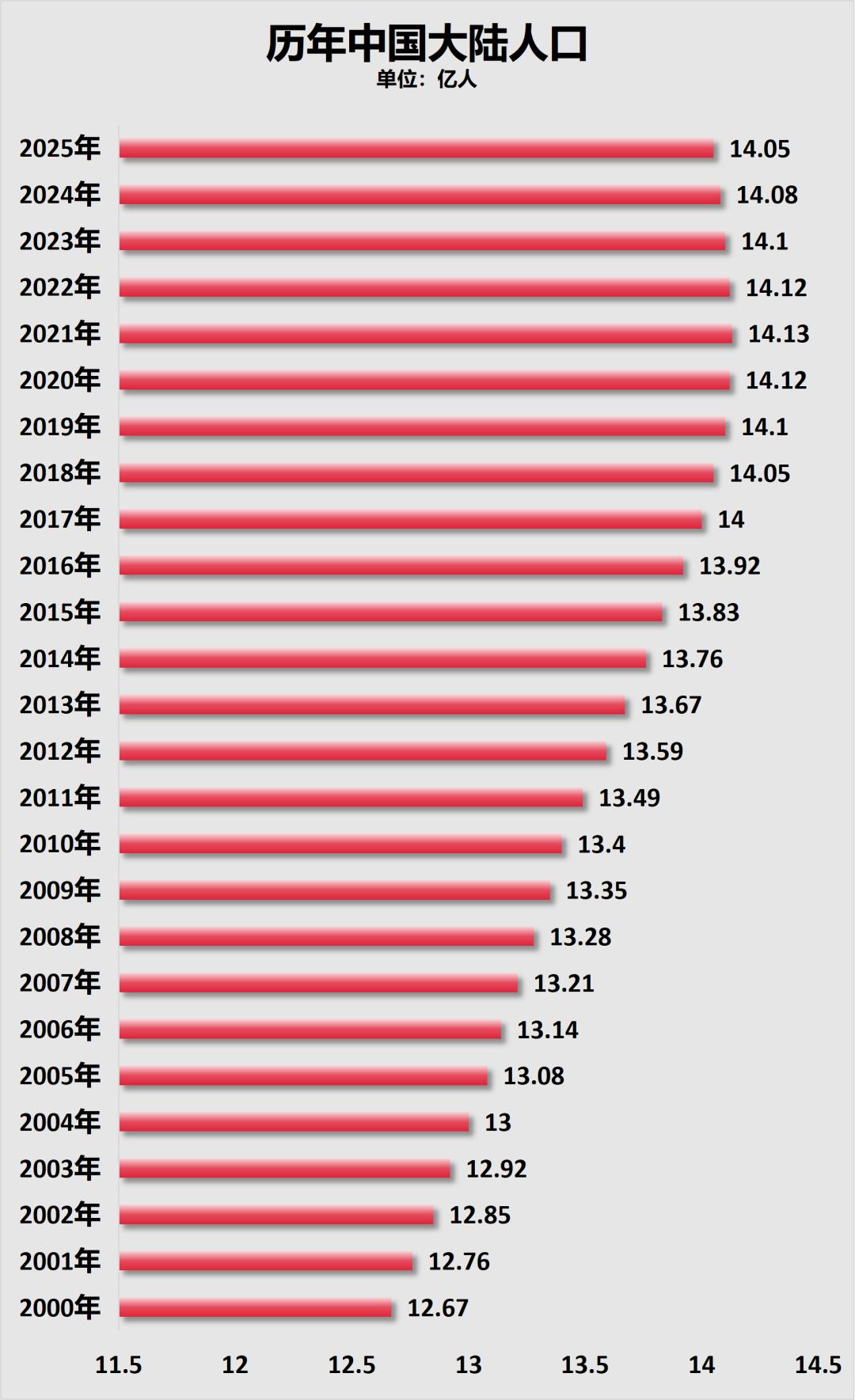
Economic Performance - The GDP for the year was reported at 140,187.9 billion yuan, achieving a growth rate of 5.0% compared to the previous year, meeting the annual target perfectly [1] - The first, second, and third industries contributed 93,347 billion yuan, 499,653 billion yuan, and 808,879 billion yuan respectively, with growth rates of 3.9%, 4.5%, and 5.4% [1] - Quarterly GDP growth rates were 5.4% in Q1, 5.2% in Q2, 4.8% in Q3, and 4.5% in Q4, with a quarter-on-quarter growth of 1.2% in Q4 [1] Population Trends - The national population at the end of the year was 1,404.89 million, a decrease of 3.39 million from the previous year, marking the fourth consecutive year of population decline [2][5] - Births fell to 7.92 million, with a birth rate of 5.63‰, while deaths reached 11.31 million, resulting in a natural population growth rate of -2.41‰ [5][11] - The decline in births is attributed to a consistent drop in birth rates, with the number of newborns falling below 8 million for the first time [7][11] Future Projections - The Central Economic Work Conference in 2025 is expected to introduce stronger measures to encourage marriage and childbirth, including potential full waivers for kindergarten fees and increased birth subsidies [9][10] - Despite potential short-term rebounds in birth rates due to marriage trends, the overall population decline is projected to continue, influenced by factors such as rising costs, decreasing eligible marriage populations, and changing marriage attitudes [11][15] Societal Impacts - The ongoing population decline is anticipated to exacerbate issues such as aging populations, educational challenges, and shifts in urban landscapes, with more regions experiencing negative population growth [21][22] - By the end of 2023, the population aged 60 and above reached 297 million, accounting for 21.1% of the total population, with projections indicating further increases in the coming years [23][24] - The education sector is already feeling the impact, with significant reductions in the number of students in kindergartens and primary schools, leading to potential school closures [38][41] Real Estate Market - The declining population is expected to negatively affect the real estate market, as decreasing birth rates lead to reduced demand for housing, compounding existing oversupply issues [43]

破防!小学生人数,开始减少了!
城市财经· 2025-03-03 03:48
Group 1 - The core viewpoint of the article highlights a significant decline in the number of elementary school students in China, marking a demographic shift influenced by decreasing birth rates and population changes [2][6][21] - In 2024, the number of elementary school students decreased by 2.516 million compared to 2023, with enrollment dropping by 2.613 million [6][7] - The decline in elementary school enrollment is part of a broader trend, as the number of students in kindergartens has also been decreasing for four consecutive years, with a reduction of 5.09 million in 2024 [16][17] Group 2 - The article discusses the implications of population decline, including increased pressure on the pension system, with the proportion of the population aged 60 and above rising to 22% in 2024 [27][28] - It notes a significant urban-rural reshuffle, with rural populations decreasing sharply, leading to the merging of villages and potential disappearance of small towns [30][31] - The education sector is facing challenges, with a reduction in the number of schools and an oversupply of teachers as student numbers decline [31][33] Group 3 - The article emphasizes the impact on the real estate market, stating that declining population will lead to reduced demand for housing, particularly in third and fourth-tier cities [26][32] - It highlights that the population decline is not just a local issue but a national trend, affecting various regions and leading to a potential "鹤岗化" of many cities [32][33] - The overall demographic changes are expected to influence economic, employment, and educational policies in the future [33]