宇宙早期演化

Search documents
“宇宙大片”看到了什么(科技大观)
Ren Min Wang· 2025-09-25 22:53
Core Insights - The COSMOS-Web project has created the largest deep-space cosmic map to date, marking the positions, speeds, and evolutionary histories of nearly 800,000 galaxies over a time span of 13.5 billion years, covering 98% of the universe's evolution history [1][4] Group 1: Project Overview - COSMOS-Web is based on data from the James Webb Space Telescope (JWST) and represents a significant advancement in cosmic mapping, providing unprecedented insights into galaxy formation and evolution [1][3] - The project involved a total observation time of 255 hours, making it the longest single project in JWST's first year, with data exceeding 1.5TB [2] Group 2: Technological Advancements - JWST's revolutionary infrared observation capabilities distinguish it from its predecessor, the Hubble Space Telescope, allowing it to observe wavelengths from 0.6 to 28 micrometers, thus enabling the study of earlier cosmic evolution stages [3] - The larger primary mirror of JWST, approximately six times that of Hubble, enhances its light-gathering ability and sensitivity, allowing it to detect fainter and more distant celestial bodies [3] Group 3: Key Discoveries - The project revealed an unexpectedly high number of galaxies in the early universe, with actual counts being about ten times higher than predictions based on Hubble data, challenging existing cosmological models [4] - The existence of supermassive black holes in the early universe, which were thought to take billions of years to form, was also confirmed, suggesting a need to rethink the relationship between galaxies and black holes [4] - These findings pose significant challenges to current cosmological theories, indicating potential unknown physical processes or the need for fundamental revisions in understanding dark matter and early universe physics [4]
130亿年前宇宙“婴儿”是何模样?中法天文卫星首批成果揭示
Huan Qiu Wang Zi Xun· 2025-04-24 04:35
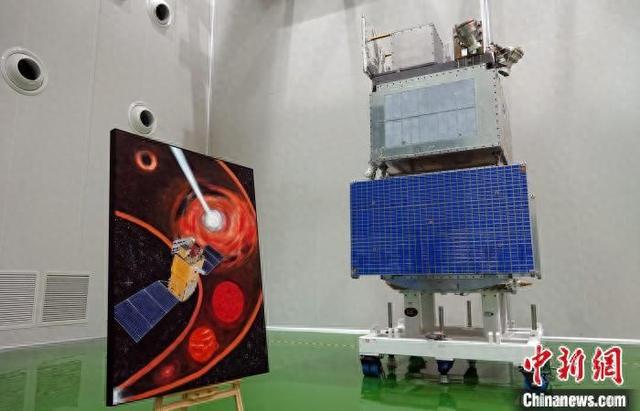
Core Insights - The China-France astronomical satellite (SVOM) has successfully captured significant scientific results, including signals from a gamma-ray burst (GRB) that occurred 13 billion years ago, marking a breakthrough in understanding the early universe [1][4][15] Group 1: Scientific Achievements - SVOM has detected over 100 gamma-ray bursts during its 10 months in orbit, including several unique types, setting a new record for the farthest observed short-duration gamma-ray bursts [2][4] - The satellite's most notable discovery is GRB250314A, which has a redshift of 7.3, indicating it originated when the universe was only 700 million years old, providing insights into the formation of the first stars and black holes [4][15] - The satellite's observations are expected to enhance understanding of cosmic phenomena such as the formation and death of the first generation of stars, the birth of black holes, and the electromagnetic counterparts of gravitational wave events [14][15] Group 2: Technical Capabilities - SVOM is equipped with a gamma-ray monitor and optical telescope from China, and hard and soft X-ray cameras from France, showcasing its multi-band detection capabilities [7][9] - The satellite demonstrates four core capabilities: multi-band coverage, autonomous rapid response, precise and stable observation, and global ground-space collaboration [7][10] - Its autonomous rapid response allows for immediate high-precision follow-up observations after detecting gamma-ray bursts, crucial for capturing transient astronomical events [9][10] Group 3: International Collaboration - The satellite project, a significant collaboration between China and France, has been in development since 2005 and represents a milestone in international space cooperation [11][14] - The satellite is expected to operate for at least three years, continuing to search for high-energy cosmic phenomena and contributing to global astrophysical research [14][15]