宗亲文化交流

Search documents
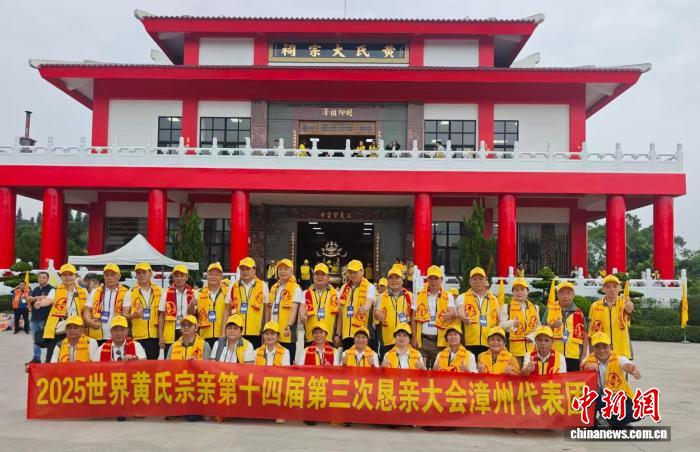
福建漳州黄氏宗亲赴台归来 感叹“亲情割不断”
Zhong Guo Xin Wen Wang· 2025-11-13 05:49
Core Points - The Fujian Zhangzhou Huang Clan delegation returned from a week-long visit to Taiwan, participating in the 14th Third Kinship Conference of the World Huang Clan Association, emphasizing the unbreakable familial ties between the two sides [1][3] - The delegation, consisting of 30 members, gathered in Kaohsiung to discuss cultural heritage and family connections, with hopes of inviting more Taiwanese Huang clan members to visit the mainland in the future [1][3] Group 1 - The Zhangzhou Huang Clan delegation shared the historical significance of Zhangzhou as one of the important origins of the Huang clan, discussing their recent achievements in cultural preservation and educational support [3] - The Taiwanese representatives shared their local Huang clan development stories, leading to a consensus on enhancing cultural exchanges and mutual visits between the Huang clans of Zhangzhou and Taiwan [3] - The visit marks the first Huang clan delegation from Zhangzhou to Taiwan in five years, following a visit from a Taiwanese delegation to Zhangzhou in October [3] Group 2 - Zhangzhou is a major ancestral home for Taiwanese residents and a key area for Taiwanese business investments, with a historical connection dating back to the late Ming and early Qing dynasties when many Huang clan members migrated to Taiwan [3] - The Huang clan, along with the Chen and Lin clans, is one of the four major surnames in Taiwan, highlighting the deep-rooted historical ties between Zhangzhou and Taiwan [3]

“中华文化深深根植于我们的DNA之中”
Ren Min Ri Bao Hai Wai Ban· 2025-06-02 22:50
Core Viewpoint - The recent Cross-Strait Chinese Culture Summit emphasizes the deep-rooted cultural connections between the two sides, asserting that cultural heritage cannot be undermined by political factors [1][5]. Group 1: Cultural Heritage and Identity - Participants at the summit highlighted the shared historical memories and cultural genes between the two sides, advocating for unity through Chinese culture [1]. - The cultural practices, such as traditional festivals and dietary customs, are seen as vital links that bind the people across the strait, showcasing a strong cultural foundation that transcends political manipulation [1][2]. - The promotion of Hanfu culture among the youth is viewed as a means to enhance cultural belonging and national identity, fostering deeper exchanges between the two sides [2]. Group 2: Creative Industry Opportunities - The summit's creative industry forum discussed the potential for cultural innovation and economic development, with a call for increased collaboration between youth from both sides in the cultural sector [2][4]. - The integration of digital technology in cultural innovation was emphasized as a way to enhance the creative industry, suggesting that collaboration could lead to significant advancements [4]. - The establishment of platforms for artistic exchange is seen as crucial for fostering dialogue and shared creativity among artists from both sides [4]. Group 3: Ancestral and Clan Culture - The ancestral culture forum highlighted the importance of clan culture as a vital component of traditional Chinese culture, serving as a natural bond between people across the strait [5]. - Discussions focused on the historical roots and contemporary value of clan culture, emphasizing its role in enhancing national identity and promoting peaceful relations [5]. - The enduring legacy of historical figures, such as Zheng Chenggong, is cited as a source of inspiration and cultural continuity among descendants [5].