中华文化传承与创新

Search documents
新春中国行丨丙午马年春节:中华文化在创新传承中走向世界
Xin Hua She· 2026-02-23 08:59
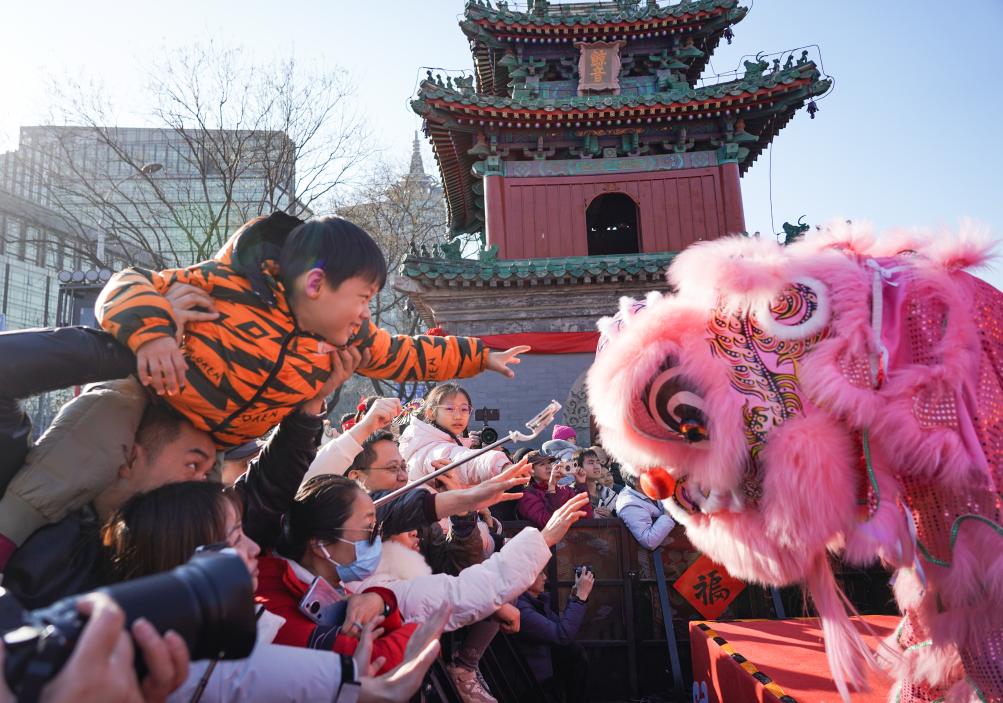
2月17日,游客在北京市朝阳区东岳庙庙会上摸狮头。新华社记者 陈钟昊 摄 1月26日晚,在甘肃省博物馆文创商店,小朋友展示刚购买的新款马踏飞燕贺岁毛绒玩偶"红运当头马"。新华社记者 郎兵兵 摄 "国潮风"焕新年味 刺绣骏马图、篆刻马印、掐丝珐琅马挂件……马年春节期间,甘肃一些手艺人基于本地丰富的马文化,用多种传统技艺制作出精巧的马年文 创产品。 位于定西市通渭县的悦心国际书画村内,青年篆刻家廉杰的作品受到很多游客喜爱。小小相框里,拓印的骏马形象背驮一个大元宝,寓意"马 上有钱"。 新华社北京2月23日电 题:丙午马年春节:中华文化在创新传承中走向世界 新华社记者褚萌萌、宋依黛、程楠 丙午马年新春,住在海南的俄罗斯自媒体博主爱丽有点忙。她依照中国传统贴春联、买年货、做年夜饭,欣赏了本地无人机焰火天幕秀,将 这些体验陆续发布在社交平台,向更多人介绍中华传统佳节。 "这个春节,我感受到了跨越国界的温暖。"爱丽说。 江苏淮安西游乐园的国潮市集、浙江乌镇的水乡科技光影秀、湖北十堰的"外国人过中国年"主题活动……春节期间一系列创意节庆活动显 示,中国年在延续传统中更具时尚感、科技味和国际范,中国文化的底蕴和魅力给世界带来 ...

“中华文化深深根植于我们的DNA之中”
Ren Min Ri Bao Hai Wai Ban· 2025-06-02 22:50
Core Viewpoint - The recent Cross-Strait Chinese Culture Summit emphasizes the deep-rooted cultural connections between the two sides, asserting that cultural heritage cannot be undermined by political factors [1][5]. Group 1: Cultural Heritage and Identity - Participants at the summit highlighted the shared historical memories and cultural genes between the two sides, advocating for unity through Chinese culture [1]. - The cultural practices, such as traditional festivals and dietary customs, are seen as vital links that bind the people across the strait, showcasing a strong cultural foundation that transcends political manipulation [1][2]. - The promotion of Hanfu culture among the youth is viewed as a means to enhance cultural belonging and national identity, fostering deeper exchanges between the two sides [2]. Group 2: Creative Industry Opportunities - The summit's creative industry forum discussed the potential for cultural innovation and economic development, with a call for increased collaboration between youth from both sides in the cultural sector [2][4]. - The integration of digital technology in cultural innovation was emphasized as a way to enhance the creative industry, suggesting that collaboration could lead to significant advancements [4]. - The establishment of platforms for artistic exchange is seen as crucial for fostering dialogue and shared creativity among artists from both sides [4]. Group 3: Ancestral and Clan Culture - The ancestral culture forum highlighted the importance of clan culture as a vital component of traditional Chinese culture, serving as a natural bond between people across the strait [5]. - Discussions focused on the historical roots and contemporary value of clan culture, emphasizing its role in enhancing national identity and promoting peaceful relations [5]. - The enduring legacy of historical figures, such as Zheng Chenggong, is cited as a source of inspiration and cultural continuity among descendants [5].