定金与订金区别

Search documents
预订年夜饭优先选可退订金商家
Xin Lang Cai Jing· 2026-02-06 23:02
Group 1 - The core message emphasizes the importance of understanding the difference between "deposit" and "advance payment" for consumers during the festive season, with deposits being non-refundable and advance payments being negotiable for refunds [1][2] - Consumers are advised to clearly outline details in written contracts when booking New Year's Eve dinners, including dish specifics, package specifications, dining times, pricing standards, cancellation terms, and liability for breaches [1] - It is recommended that consumers inquire about any additional charges such as service fees, tea fees, and takeout fees before placing orders to avoid disputes over unexpected costs [1] Group 2 - Restaurant operators are required to strictly adhere to pricing regulations, ensuring that menu prices, price tags, and ordering tools are consistent and clearly indicate different origins, specifications, and portion sizes [2] - During the festive period, market regulatory authorities in the Beijing-Tianjin-Hebei region will enhance quality and safety inspections of food and consumer goods, intensifying supervision against unfair practices and illegal pricing [2] - The authorities will facilitate complaint channels and handle consumer grievances appropriately to create a safe and reassuring consumption environment during the holiday season [2]
一字之差,法律后果截然不同!规范“双十一”促销行为 网购维权要点详解↓
Yang Shi Wang· 2025-11-11 05:17
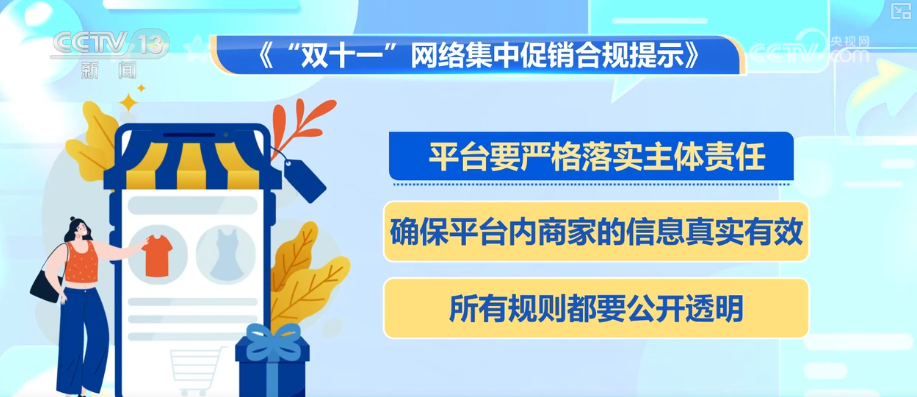
Core Viewpoint - The article discusses the regulatory measures implemented by the Market Supervision Administration to ensure compliance during the "Double Eleven" shopping festival, emphasizing the protection of consumer rights and the maintenance of fair trading practices. Group 1: Compliance Guidelines for E-commerce Platforms - E-commerce platforms must strictly implement their responsibilities, ensuring that merchant information is accurate and transparent [1] - Prohibited practices include "choose one from two" and "big data price discrimination," with clear communication of promotional conditions and refund processes required [2] - Platforms are not allowed to interfere with merchants' pricing autonomy and must avoid practices like raising prices before discounts and false price comparisons [3] Group 2: Marketing and Advertising Regulations - Platforms must regulate live marketing activities, thoroughly vetting merchant qualifications and product information, and prohibiting the sale of counterfeit or restricted goods [5] - Advertising content, especially in sensitive areas like medical beauty and pharmaceuticals, must undergo strict review, with platforms held accountable for celebrity endorsements [7] Group 3: Consumer Rights and Dispute Resolution - Platforms must adhere to the "seven-day no-reason return" policy and ensure accessible complaint channels, establishing a rapid response mechanism to assist consumer rights protection [9] - The complexity of promotional rules, particularly regarding "deposit" and "advance payment," can confuse consumers, leading to potential legal implications [12][14] - During the "Double Eleven" period, increased order volumes can lead to delivery issues, with sellers responsible for damages until the buyer signs for the package [16][18]