实时化

Search documents
海洋监测专项必配仪器一览
仪器信息网· 2026-02-05 09:01
Core Insights - The article emphasizes the importance of high-precision and intelligent monitoring instruments in marine research and economic development, predicting a future trend towards integration, automation, and real-time capabilities in monitoring instruments [1][28]. Marine Monitoring Instruments Overview - Instruments are essential for environmental monitoring agencies to conduct quality assessments, pollution source supervision, and organic pollutant monitoring [2]. - The National Environmental Monitoring Station Construction Standards outline the minimum equipment standards for environmental monitoring agencies [2]. - The China National Environmental Monitoring Center reported that all nine voluntarily participating units passed the 2025 national environmental monitoring laboratory capability assessment with excellent results [2]. Core Instrument Categories - The article categorizes nine core instruments necessary for marine monitoring laboratories, providing insights into their principles, applications, and manufacturers [2]. Portable Multi-parameter Water Quality Meter - Integrates sensors for pH, dissolved oxygen, conductivity, and turbidity, enabling rapid detection of key water parameters, with some models supporting real-time data transmission [3]. - Typical applications include nearshore rapid monitoring, emergency detection of pollution events, and water quality inspections in aquaculture [3]. - Major manufacturers include YSI (EXO series), WTW (Multi 3630 IDS), and Hach (HQ40d) [4]. Deep Water Sampler - Utilizes mechanisms like hammer-type or ball-valve type for undisturbed sampling of deep water, with some models recording temperature and pressure [5]. - Applications include deep ocean water sampling, marine stratification studies, and monitoring deep-sea habitats [5]. - Key manufacturers include General Oceanics (Niskin sampler), KC-Denmark, and JFE Advantech [6]. Sediment Sampler - Employs gravity, piston, or box structures to collect undisturbed sediment samples based on depth and sediment type [7]. - Used for marine sediment pollution surveys, paleoceanographic studies, and coastal wetland ecological monitoring [8]. - Notable manufacturers include Van Veen grab sampler, Benthos, and HYDRO-BIOS [9]. Biological Sampler - Designed for different biological groups, utilizing structures like plankton nets and acoustic fish detectors for precise sampling [11]. - Applications include marine biodiversity surveys, red tide monitoring, and tracking invasive species [12]. - Major manufacturers include Wildco, HYDRO-BIOS, and Simrad [13]. Nutrient Automatic Analyzer - Based on colorimetric or electrochemical methods for high-precision batch analysis of nitrogen, phosphorus, and silicon in water [14]. - Typical applications include monitoring coastal eutrophication and studying red tide mechanisms [14]. - Key manufacturers include Skalar, Lachat, and Bran+Luebbe [15]. Small Sampling Boats - Equipped with various monitoring devices and GPS for sampling in coastal or open waters [16]. - Applications include routine monitoring in nearshore areas and environmental impact assessments [16]. - Notable manufacturers include Boston Whaler, Beneteau, and Axopar [18]. Portable Salinity Meter - Measures water conductivity to calculate salinity, with some models supporting specific gravity calibration [20]. - Used for salinity control in aquaculture and monitoring salinity gradients in estuaries [21]. - Major manufacturers include Atago, Kern, and Thermo Fisher [22]. Particle Size Analyzer - Utilizes laser diffraction or sedimentation methods to analyze particle size distribution [23]. - Applications include marine sediment source analysis and monitoring of marine engineering silt [24]. - Key manufacturers include Malvern Panalytical, Beckman Coulter, and Fritsch [25]. Shipboard Multi-functional Water Quality Monitoring Instrument - Integrates multiple sensors for continuous online monitoring, with data transmitted to shore-based platforms [26]. - Typical applications include ocean route hydrological surveys and monitoring marine ranch environments [27]. - Major manufacturers include Sea-Bird Electronics, Endress+Hauser, and RBR [28]. Future Trends - The article concludes that as marine scientific research and economic development progress, high-precision and intelligent monitoring instruments will become a core competitive advantage, with domestic manufacturers increasingly highlighting cost-effectiveness and customization [28].


东营海事局破解黄河口客运航线水深动态探测难题
Qi Lu Wan Bao Wang· 2025-09-29 11:50
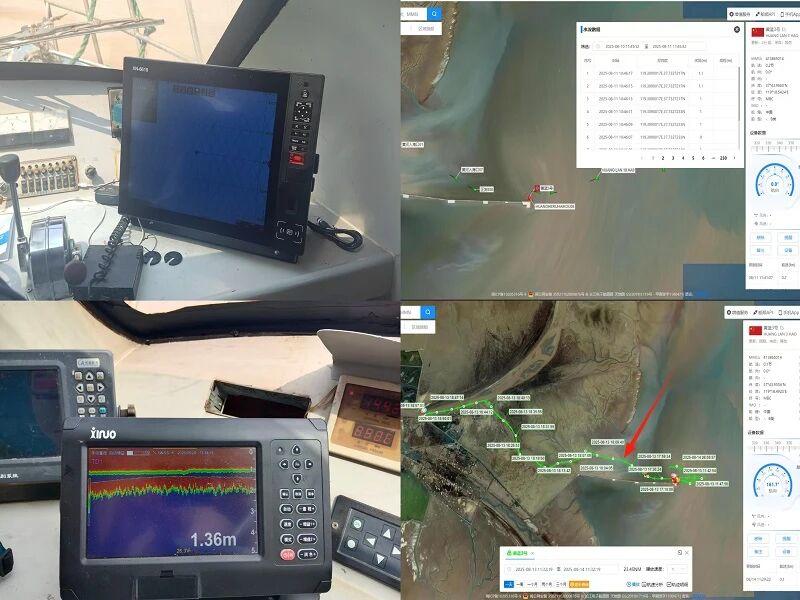
Core Viewpoint - The Dongying Maritime Bureau is implementing an intelligent monitoring system to address the challenges of rapidly changing water depth at the Yellow River estuary, ensuring safe navigation for passenger ships while enhancing data accuracy and reliability [1][4]. Group 1: Intelligent Monitoring System Development - The Dongying Maritime Bureau is focusing on real-time, precise, and intelligent monitoring of water depth by integrating signal foundations, equipment, and multi-party collaboration [1][3]. - The bureau is actively constructing 5G communication bases and other signal stations in key areas to minimize signal blind spots, facilitating stable real-time data transmission [3][4]. Group 2: Data Collection and Verification - The implementation of the MIBT system, intelligent depth measuring devices, and mobile 5G repeaters on emergency vessels allows for high-frequency data collection, with measurements being transmitted every 2 seconds [3]. - A three-way verification mechanism involving drones, smart devices, and manual checks has been established to ensure data reliability, with measurement errors controlled within 0.1 meters [3][4]. Group 3: Safety and Regulatory Enhancements - The intelligent monitoring system enables comprehensive safety assessments of the Yellow River passenger routes, particularly during peak travel periods, ensuring navigation safety [4]. - The system not only addresses water depth measurement challenges but also supports dual objectives of safety regulation and tourism development, contributing to ecological protection and high-quality development in the Yellow River basin [4][5]. Group 4: Future Optimization Plans - The Dongying Maritime Bureau plans to enhance the effectiveness of the intelligent monitoring system by deepening the application of AI in data analysis for automatic risk warnings and dynamic assessments of navigation capacity [4]. - Regular maintenance and calibration of smart devices will be conducted to ensure long-term stability and reliability of monitoring data [5].