实质正义

Search documents
宋代司法裁量中的法理情相统一
Xin Lang Cai Jing· 2026-01-29 00:08
Core Viewpoint - The article discusses the judicial pursuit of fairness and justice in the context of two similar cases from the Song Dynasty, highlighting the contrasting judgments made by different judges due to the lack of clear legal provisions regarding the ownership of a woman's dowry and property acquired during marriage [2][4]. Case Summaries Case One: "Stepson Suing Stepmother for Return of Family Property" - The plaintiff, Wu Ruqiu, claims that his stepmother, Wang, wrongfully took property that was purchased by his deceased father, Wu Hezhong, under the guise of dowry. After Wu Hezhong's death, Wang remarried and took the property with her, leading Wu Ruqiu to seek its return [2][3]. Case Two: "Xu Family vs. Chen Family Over Daughter-in-Law and Property" - The plaintiff's son, Xu Mengyi, married Chen and had four children. After Xu's unexpected death, Chen's family took her back, taking not only her original dowry but also property acquired during the marriage. Xu's younger brother, Xu Shanying, argues that this constitutes theft of family property and sues for its return [3]. Analysis of Different Judgments - The contrasting judgments stem from the Song Dynasty's inadequate legal framework regarding the ownership of a woman's dowry and property acquired during marriage. The judges exercised their discretion based on their judicial philosophies in the absence of clear legal guidelines [4][5]. Judicial Philosophy Differences - The judge in the first case emphasized evidence-based judgment, ruling in favor of Wang due to her possession of official documents proving ownership [6]. - Conversely, the second judge focused on the welfare of the children involved, ruling that some property should remain with Xu's family to ensure the children's upbringing, despite being registered under Chen's name [6]. Considerations in Judgments - Both judges aimed to balance legal principles with social values, reflecting the Song Dynasty's emphasis on moral and ethical considerations in judicial decisions. They sought to achieve substantive justice while navigating the limitations of existing laws [7][8]. Emphasis on Social Values - The judges incorporated Confucian values into their rulings, aiming to educate the public on moral conduct and familial responsibilities. They criticized the actions of the parties involved to promote societal norms and ethical behavior [9][10]. Integration of Emotional and Legal Aspects - The judges considered the emotional circumstances of the parties, ensuring that their decisions not only adhered to legal standards but also addressed the human elements of the cases, thereby fostering societal acceptance of the rulings [10].


撤销“叼牙线棒开车处罚”传递出权力谦抑的清晰信号
Nan Fang Du Shi Bao· 2025-11-14 02:31
Core Points - The case of Mr. Qian highlights the principle of "in case of doubt, favor the individual," emphasizing the need for public authority to exercise restraint when evidence is insufficient [1][2] - The initial enforcement error stemmed from equating the external manifestation of an action (holding a dental floss stick) with its actual danger, which is legally neutral unless proven otherwise [2] - The principle has evolved from criminal justice to encompass administrative enforcement, requiring public authorities to bear a heavier burden of proof when conflicts arise between public power and individual rights [2][3] Group 1 - The administrative department acknowledged that Mr. Qian's behavior did not materially affect his driving operation, leading to the withdrawal of the initial penalty [1][2] - The principle of "in case of doubt, favor the individual" serves as a crucial check against the arbitrary expansion of public power and protects citizens' rights from undue infringement [2][3] Group 2 - The adherence to this principle is essential for building a rule-of-law government, necessitating a shift from a simplistic "management mindset" to a more substantive "governance mindset" in administrative enforcement [3] - There is a need for enhanced professional standards and legal literacy among enforcement personnel, especially when using non现场技术监控设备, to ensure that decisions are based on sufficient evidence and clear causal relationships [3]
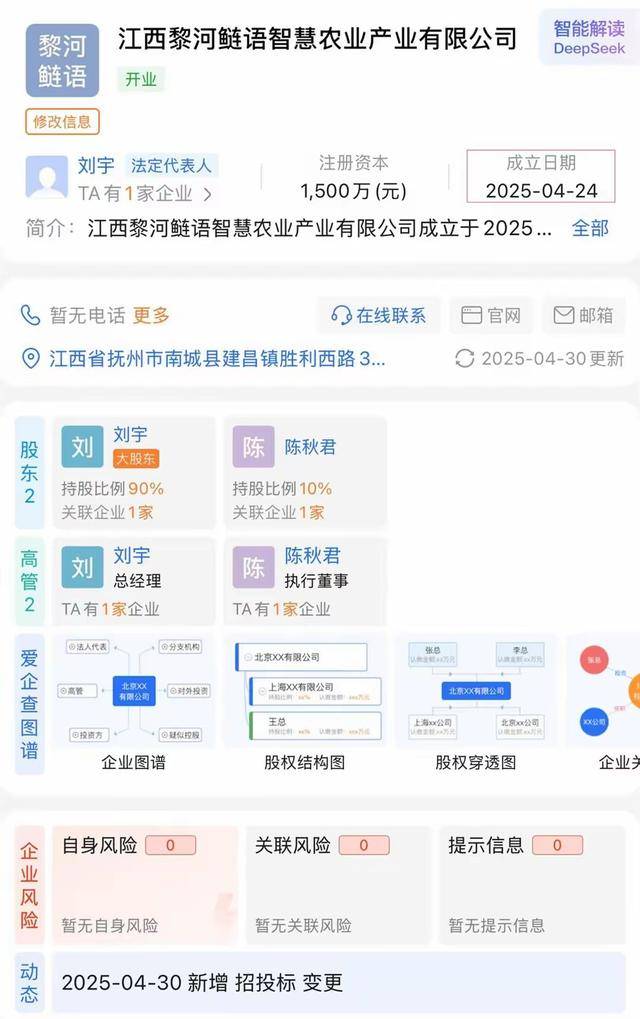
成立6天公司拍得水库经营权,“程序合法”只是底线丨中听
Sou Hu Cai Jing· 2025-05-09 01:20
Core Viewpoint - A newly established company, Jiangxi Lihhe Lianyu Smart Agriculture Industry Co., Ltd., won a 20-year operating rights auction for Hongmen Reservoir in Jiangxi Province just six days after its incorporation, raising concerns about its capability to manage such a significant asset [1][4]. Group 1: Auction Details - The operating rights for Hongmen Reservoir were auctioned for an annual price of 13 million yuan, totaling 260 million yuan over 20 years [1]. - The company was registered with a capital of 15 million yuan and operates under a "subscription" status, which raises questions about its financial stability [1][6]. Group 2: Regulatory and Compliance Issues - A staff member from the Nancheng County Agricultural and Rural Bureau stated that the auction process was conducted legally, as the company met the necessary bidding conditions [4]. - Concerns were raised regarding the lack of transparency in assessing the company's financial strength, technical capabilities, and reliability in fulfilling contractual obligations [4][6]. Group 3: Investment Requirements - The auction stipulates that the winning bidder must invest at least 100 million yuan in tourism development within one year, which includes building hotels and recreational facilities [6]. - Over the 20-year period, the total investment required, including the operating fee and tourism development, amounts to 360 million yuan, necessitating an average annual net income of over 18 million yuan to achieve profitability [7]. Group 4: Potential Risks and Concerns - The tourism project is characterized by long investment cycles and slow returns, posing a significant challenge for a new entrant to recover its investment within the stipulated timeframe [7]. - There are fears that if the company fails to meet its commitments, it could lead to idle state assets or risks of secondary contracting, potentially harming the ecological environment of the reservoir [7].