家办监管

Search documents
美英围剿太子集团,新加坡家办再卷入“洗钱风暴”
3 6 Ke· 2025-11-03 12:57
Core Insights - The joint legal action by the US and UK against Chen Zhi, chairman of the Prince Group, exposes a significant cross-border money laundering network in Southeast Asia, highlighting vulnerabilities in Singapore's financial system [1][2][16]. Group 1: Legal Actions and Allegations - On October 14, 2025, the US and UK jointly filed charges against Chen Zhi for leading a large-scale cross-border investment scam and money laundering operation, marking the most extensive coordinated action against Southeast Asian cybercrime to date [2][16]. - The US Treasury's Office of Foreign Assets Control (OFAC) sanctioned the Prince Group and 146 related individuals and entities, while the New York Eastern District Attorney charged Chen with conspiracy to commit telecommunications fraud and money laundering [2][16]. - The case revealed that the Prince Group, which ostensibly operates in real estate, banking, and hospitality, is actually involved in human trafficking and forced labor within scam operations described as "prison-like" environments [2][4]. Group 2: Chen Zhi's Background and Operations - Chen Zhi, born in 1987 in Fujian, China, acquired Cambodian citizenship through a $250,000 donation and has since built the Prince Group into one of Cambodia's most influential private enterprises, expanding into various sectors [4][16]. - He faces five charges, including forced labor, human trafficking, bribery, corporate money laundering, and international asset concealment, with potential penalties of up to 40 years in prison if convicted [4][16]. Group 3: DW Capital and Money Laundering Mechanisms - DW Capital, established by Chen in Singapore, has been identified as a central hub for laundering operations, utilizing family office structures and shell companies to create a facade of legitimacy [5][20]. - The firm claimed to manage over 60 million SGD and enjoyed tax incentives, but it has been reported that it does not hold the necessary capital markets services license, raising questions about its compliance [5][20]. - Chen's team reportedly established over ten management and holding companies in Singapore, with many registered at the same address, facilitating money laundering activities [6][20]. Group 4: Regulatory Implications and Responses - The case has prompted Singaporean authorities to investigate DW Capital and related entities, with the Monetary Authority of Singapore (MAS) indicating that local banks had flagged suspicious transactions as early as 2024 [16][20]. - Following the sanctions, Singapore's police issued a disposal prohibition order against Chen's network, seizing approximately 150 million SGD in assets [16][20]. - The incident has raised concerns about Singapore's reputation as a financial hub, with calls for a reassessment of its regulatory framework to prevent misuse by cross-border criminal organizations [21][24]. Group 5: Future Regulatory Landscape - The Prince Group case serves as a stress test for Singapore's financial system, highlighting the need for a balance between attracting legitimate capital and preventing illicit financial flows [21][24]. - In response to the growing scrutiny, Singapore has begun tightening regulations, including the introduction of a family office regulatory framework and enhanced anti-money laundering measures [21][24]. - The ongoing situation emphasizes the importance of maintaining integrity and transparency in financial operations, as Singapore seeks to uphold its status as a trusted wealth management center [24].

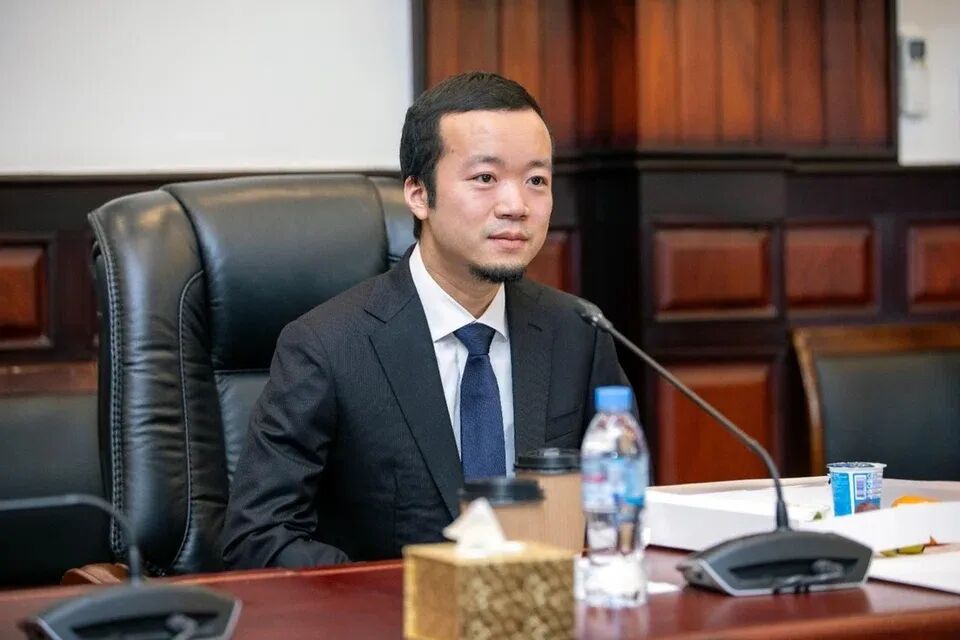
电诈帝国坍塌:陈志的千亿黑金谜局与全球围猎
阿尔法工场研究院· 2025-10-28 00:06
Core Viewpoint - The article discusses the rise and fall of Chen Zhi, who built a vast empire in Southeast Asia involving real estate, finance, and gambling, but is now facing investigations from multiple law enforcement agencies, leading to the collapse of his operations and the exposure of the connections between the Southeast Asian fraud industry and the global financial system [2][3]. Group 1: Background and Rise - Chen Zhi, originally from a small fishing village in Fujian, China, transitioned from a net café manager to the head of the Prince Group in Cambodia, which was involved in various sectors but primarily focused on scams and online gambling [5][6]. - He established a network of cross-border fraud teams by exploiting the lack of regulatory oversight in Cambodia, quickly replicating successful scam models from China [6]. - The Prince Group was reported to have a workforce of 5,000 to 10,000 employees engaged in fraudulent activities, with over 700,000 registered scam accounts [6][10]. Group 2: Business Operations and Wealth Accumulation - Chen Zhi's wealth grew rapidly, with the Prince Group reportedly generating a daily cash flow of up to $30 million at its peak [10]. - He invested heavily in luxury real estate in Singapore, acquiring properties worth approximately 40 million Singapore dollars within six months, and held assets valued over $1 billion in various global locations [10]. - The group also controlled about 6% of the global Bitcoin mining power, with 127,000 Bitcoins seized by U.S. authorities, valued at over $15 billion [10][12]. Group 3: Legal Challenges and Investigations - In October 2025, a joint operation by U.S. and U.K. authorities led to the seizure of Chen Zhi's assets and the filing of charges related to telecom fraud and money laundering [18]. - The U.S. Treasury Department sanctioned Chen Zhi and 146 associated individuals and entities, restricting their activities within the U.S. financial system [18]. - The case has highlighted significant challenges in cryptocurrency regulation, cross-border law enforcement, and the oversight of family offices in Singapore, which were previously seen as avenues for money laundering [22][23][24].