
家的味道

Search documents
把“家的味道”带给中国客人
Xin Lang Cai Jing· 2026-02-27 07:05
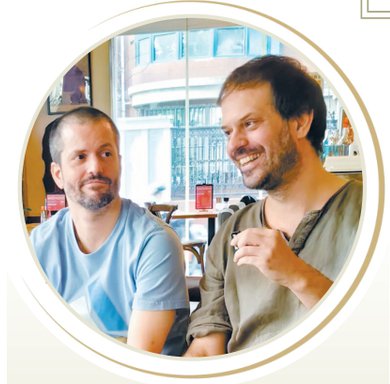
Core Insights - The article highlights the story of two Argentine brothers, Javier and Diego, who opened the El Bodegon restaurant in Shanghai, emphasizing their connection to Argentine culture and cuisine [2][3]. Company Overview - El Bodegon is an Argentine-Peruvian restaurant located in Shanghai's Changning District, known for its family-style dining atmosphere and traditional Argentine dishes [2]. - The restaurant's name, "El Bodegon," translates to "home-style restaurant" in Spanish, reflecting its casual and family-oriented dining experience [2]. Founders' Background - Diego, with over 20 years of culinary experience, insists on using only imported Argentine beef, adhering to traditional preparation methods to deliver an authentic taste of home [3]. - Javier and Diego's journey in Shanghai began during the 2010 World Expo, which inspired them to establish their restaurant business in China [3]. Business Development - The first El Bodegon restaurant opened in 2014, capitalizing on the growing demand for Argentine beef in China [3]. - The brothers have benefited from a favorable business environment in China, citing ease of operations and a curious local population eager to learn about different cultures [3]. Supply Chain and Growth - Initially facing challenges with the supply of Argentine beef, the brothers established stable partnerships with suppliers during the China International Import Expo in 2018, significantly improving their supply chain [3][4]. - The restaurant has gained a positive reputation, attracting both local patrons and Argentine tourists, including notable athletes [4]. Personal Insights - The brothers enjoy living in Shanghai, appreciating the city's safety and vibrancy, which allows them to explore the local nightlife [4].

包在饺子里的时光
Xin Lang Cai Jing· 2026-01-08 20:05
Core Viewpoint - The article reflects on the deep emotional connection and familial love associated with making and sharing dumplings, symbolizing home, warmth, and the passage of traditions across generations [1][2][3][4][5] Group 1: Family and Tradition - Dumplings serve as a signal of family reunions, particularly highlighting the anticipation of a father's return home during festive seasons [2] - The act of making dumplings is portrayed as a labor of love, with mothers passing down recipes and traditions to their children, emphasizing the emotional significance behind each dumpling [3][4] - The narrative illustrates how the preparation of dumplings evolves through generations, with the protagonist now embodying the role of a mother, continuing the tradition of love and care [4][5] Group 2: Emotional Resonance - The sensory experiences associated with dumplings, such as the smell and taste, evoke strong memories of family and childhood, reinforcing the idea that food is intertwined with emotional well-being [2][3] - The article emphasizes the importance of familial bonds, with the preparation and sharing of dumplings acting as a medium for expressing love and care across different family members [4][5] - The phrase "whoever rolls the skin round, their life will be complete" encapsulates the hopes and wishes embedded in the act of making dumplings, signifying a deeper connection to family and tradition [5]