小众标签

Search documents
网红韩国潮牌,只有一年保鲜期?
3 6 Ke· 2025-12-12 03:43
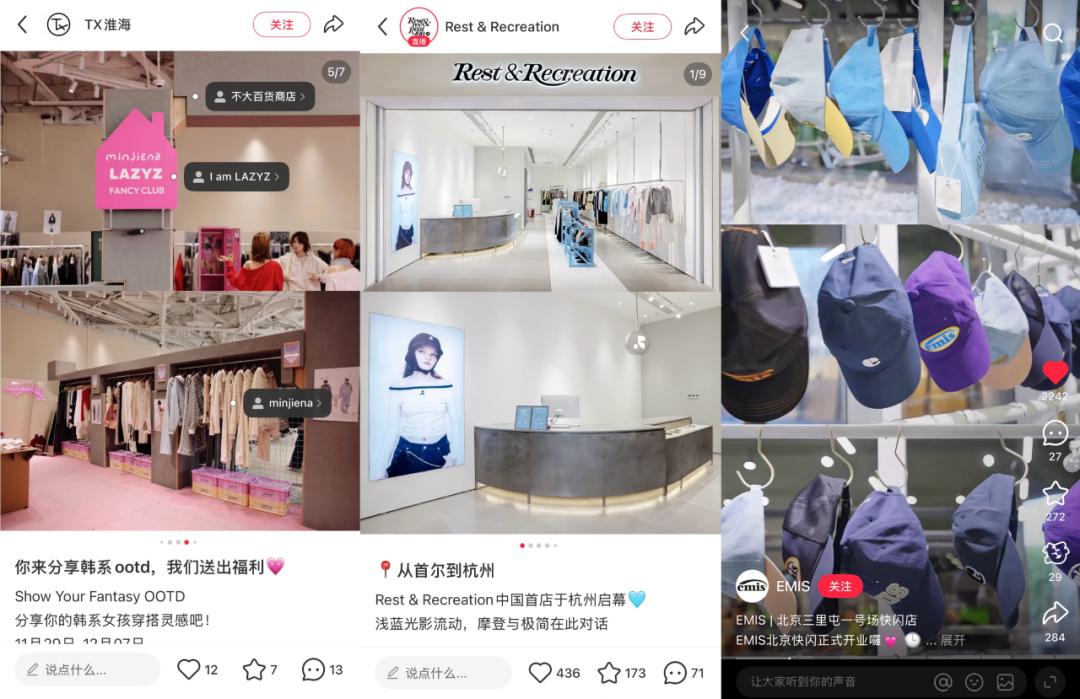
Core Viewpoint - A new wave of Korean fashion brands is emerging in China, characterized by rapid expansion and a short lifecycle, often referred to as "disposable brands" due to their quick rise and fall in popularity [6][29]. Group 1: Market Entry and Expansion - Three new Korean fashion brands, minjiena, lazyz, and fancy club, launched a pop-up event in Shanghai, marking their entry into the Chinese market [1]. - Rest & Recreation opened its first store in mainland China in April and has since expanded to major cities like Beijing and Shanghai [1]. - Emis has successfully entered online platforms like Xiaohongshu and Tmall, followed by physical store openings in key shopping districts [1][19]. Group 2: Decline of Established Brands - Several previously popular Korean brands, such as Mardi Mercredi and NERDY, are rapidly declining or exiting the Chinese market due to various challenges [3][30]. - Mardi Mercredi announced the closure of all its offline stores in China, while NERDY exited the market due to disputes with its Chinese distributor [3][30]. Group 3: Consumer Behavior and Brand Dynamics - The rapid rise and fall of these brands are linked to low brand loyalty and consumer attachment, with many young consumers seeking unique, niche products [6][17]. - The influence of K-pop culture and celebrity endorsements significantly boosts brand visibility and sales, as seen with brands like emis and Mardi [7][13]. - Young consumers are increasingly drawn to unique designs and small labels, often preferring them over established brands [17]. Group 4: Marketing Strategies - Korean fashion brands are leveraging social media influencers and KOLs to enhance brand visibility and attract consumers [19][22]. - The use of pop-up stores and engaging store designs creates a buzz and draws crowds, contributing to the brands' initial success [19][22]. Group 5: Challenges and Risks - The rapid expansion of these brands often leads to a dilution of their unique appeal, resulting in a perception of being "overexposed" or "common" among consumers [30][36]. - Many new brands lack a solid brand foundation and face quality issues, which can deter consumers from repeat purchases [31][33]. - The reliance on local distributors for rapid growth can lead to conflicts and mismanagement, as seen in the case of NERDY [41]. Group 6: Future Outlook - The long-term success of these Korean fashion brands in China will depend on their ability to build brand resilience and adapt to the complexities of the market [46].