市场集中度上升

Search documents
一家破200亿,一家超300亿!两家建材企业市值大涨背后的逻辑
Xin Lang Cai Jing· 2025-10-23 03:35
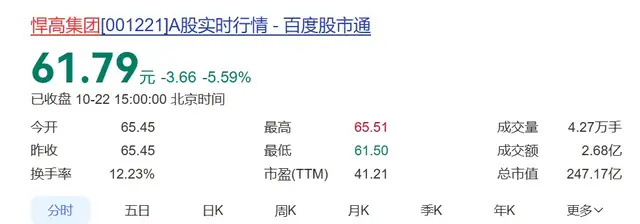
Core Viewpoint - Two notable building material companies listed on the Shenzhen Stock Exchange since 2025, HanGao Group and Marco Polo, have attracted significant attention from the capital market, with both experiencing substantial market capitalization growth post-listing [1][2]. Company Performance - HanGao Group's market capitalization reached over 300 billion on its listing day, later stabilizing at 238.49 billion by August 1, 2025, and exceeding 247 billion by October 22, 2025, with a stock price of over 61 [2][4]. - Marco Polo's stock closed at 31.46, reflecting a 128.80% increase, with a market capitalization of 375.92 billion on October 22, 2025, and a trading volume of 25.82 billion [3][5]. - HanGao Group's revenue from 2022 to 2024 was 16.20 billion, 22.22 billion, and 28.57 billion, with a compound annual growth rate (CAGR) of 32.78%, and net profit of 2.06 billion, 3.33 billion, and 5.31 billion, with a CAGR of 60.74% [6][10]. - Marco Polo's revenue for the same period was approximately 86.6 billion, 89.25 billion, and 73.24 billion, with net profits of 15.14 billion, 13.53 billion, and 13.27 billion [6][7]. Market Dynamics - The building materials and home furnishing sector has faced challenges due to the real estate market, but recent trends such as market upgrades and new housing projects have revived interest [8]. - The industry is characterized by a large scale, providing ample opportunities for companies to grow, especially as smaller competitors exit the market [8][14]. - The market concentration is increasing, benefiting leading companies like HanGao and Marco Polo, which can capture a larger market share [8][13]. Investment Appeal - Newly listed companies often attract investor interest, leading to significant initial stock price increases [12]. - Supportive policies, such as home upgrades and urban renewal initiatives, have bolstered market confidence [13]. - Companies demonstrating continuous high growth and innovative strategies are more likely to attract investor attention [12][14].

全线跳水!加密货币,暴跌!发生了什么?
券商中国· 2025-10-17 12:20
Market Overview - Global markets experienced significant declines, with European stock markets dropping across the board, including a more than 2% drop in the German DAX index and over 1.5% in the UK FTSE 100 index [1][4] - U.S. stock index futures also saw sharp declines, with the Nasdaq 100 futures dropping over 1.5% at one point, while the S&P 500 and Dow futures fell over 1% [1][4] Cryptocurrency Market - The cryptocurrency market faced a major sell-off, with Bitcoin dropping over 5%, Ethereum falling over 6%, and BNB plummeting over 12% [2][5] - Over 30,000 traders experienced liquidation in the crypto market, with total liquidation amounts nearing $1.2 billion, predominantly from long positions [5] Safe-Haven Assets - Investors shifted towards safe-haven assets, leading to a rise in gold and U.S. Treasury bonds, as concerns over regional bank failures and ongoing trade tensions heightened risk aversion [2][5] - The yield on the 10-year U.S. Treasury bond fell below 4%, reaching a low of 3.936%, the lowest level since April 7 [2][5] Economic Concerns - The International Monetary Fund (IMF) highlighted rising risks in the global financial system, including trade policy uncertainty and overvaluation of risk assets, which could lead to disorderly market adjustments [7][8] - The IMF's report indicated that asset prices are significantly above fundamental values, particularly in the stock market and corporate credit, raising concerns about potential sharp corrections [8] Market Sentiment - The market sentiment is increasingly cautious, with a focus on negative news and a growing expectation for the Federal Reserve to ease policies due to rising credit-related uncertainties [7] - Analysts noted that the concentration of market performance in a few stocks, particularly in the AI sector, poses additional risks as valuations approach historically high levels [8]

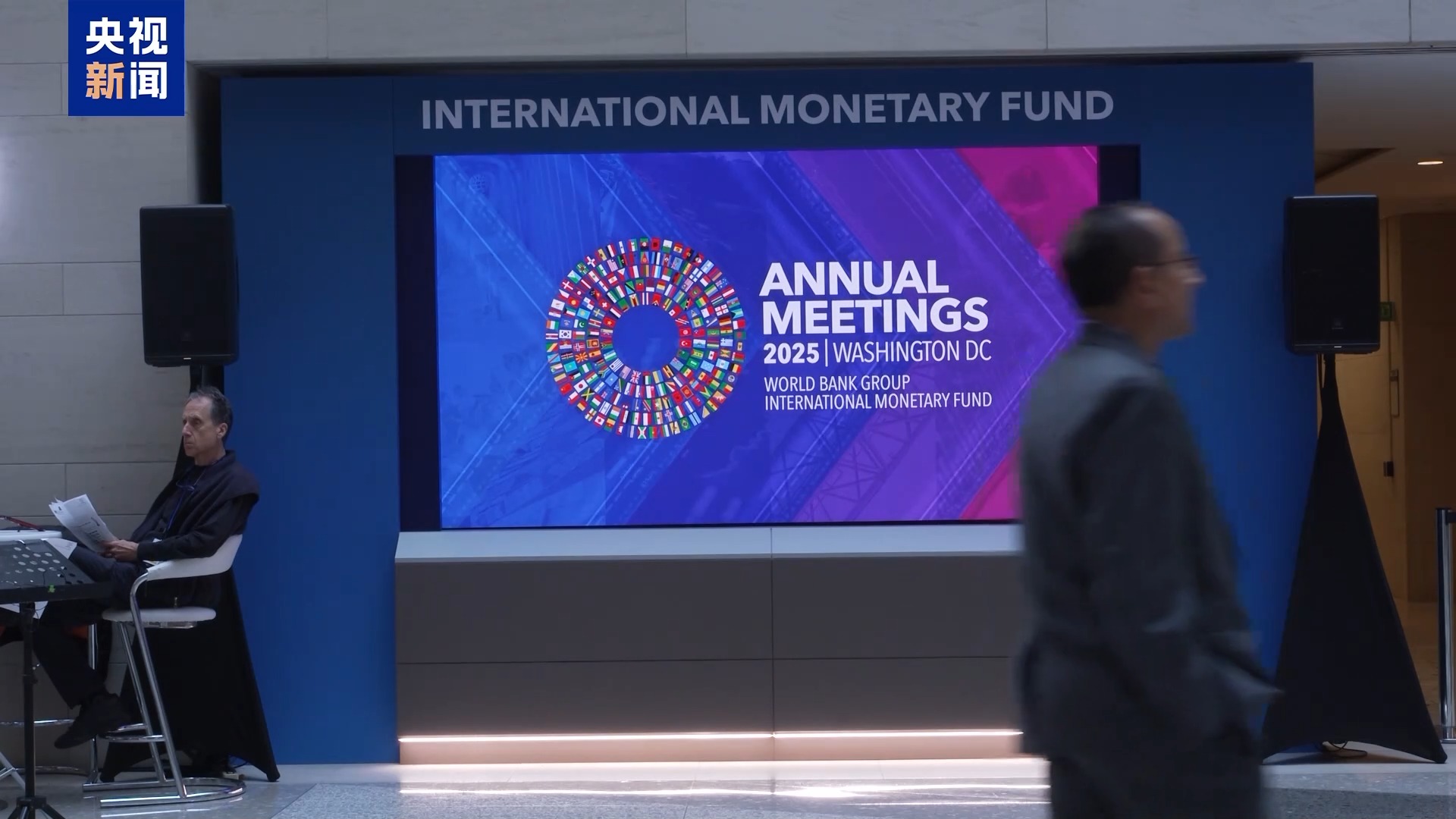
国际货币基金组织:资产估值被拉高 全球市场面临“无序调整”风险
Yang Shi Xin Wen· 2025-10-15 02:29
Core Insights - The International Monetary Fund (IMF) warns of increased risks of "disorderly market adjustments" due to rising trade policy uncertainty, expansion of non-bank financial institutions, and pressure on the bond market, compounded by severely overvalued asset prices [1][3] - The IMF emphasizes the need for central banks to remain vigilant regarding tariff and inflation risks, as market resilience is primarily driven by expectations of monetary easing in developed economies [1][3] Valuation Concerns - Valuation models indicate that risk asset prices are significantly above fundamental values, increasing the likelihood of disorderly adjustments during negative shocks [3] - The report highlights that stock and corporate credit valuations are "stretched," particularly driven by AI concept stocks, leading to historically high market concentration [3][5] Market Dynamics - The IMF notes a global phenomenon of "elevated asset valuations," with certain sectors and countries showing more pronounced overvaluation compared to the previous report in April [5] - The concentration of market performance in a few stocks raises concerns, as these stocks are driving overall market trends, warranting caution [7] - Although the IMF does not directly predict sudden severe adjustments, it acknowledges that higher valuations could lead to larger adjustment magnitudes if they occur [7]