帝国扩张

Search documents
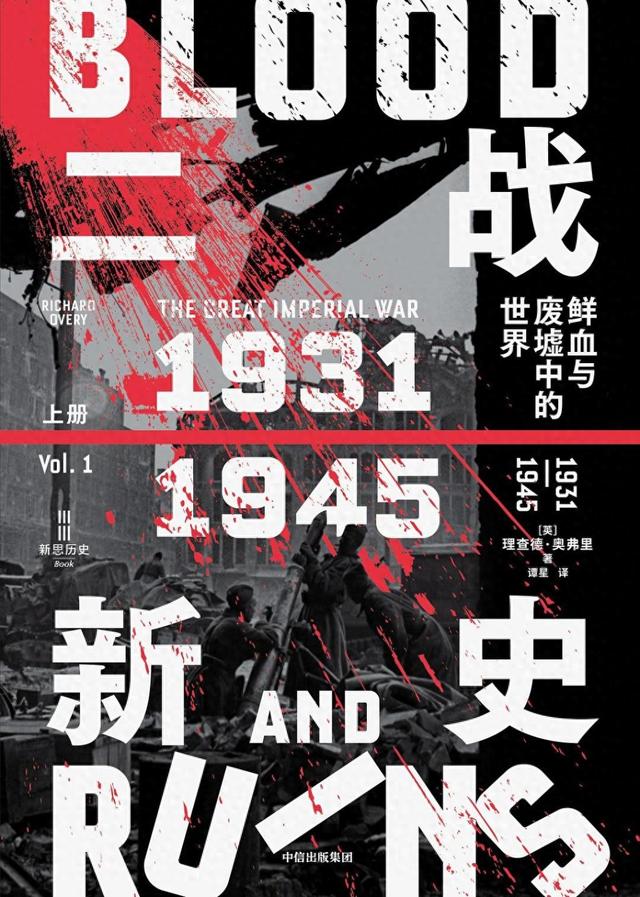
李公明|一周书记:在鲜血与废墟中阴魂不散的……帝国野心
Xin Lang Cai Jing· 2025-12-18 03:06
Core Viewpoint - The article discusses the historical parallels between World War II and current global tensions, emphasizing the relevance of studying WWII in light of contemporary conflicts such as the Russia-Ukraine war and the Israel-Palestine situation [2][3][4]. Group 1: Historical Context and Relevance - The commemoration of the 80th anniversary of WWII has been marked by a mix of unease and pessimism, with discussions around the potential for a third world war becoming prominent among political leaders and commentators [2][3]. - The historical narrative of WWII is being invoked in discussions about current geopolitical conflicts, suggesting that the lessons of the past remain pertinent today [2][4]. Group 2: Richard Overy's New History of WWII - Richard Overy's book "Blood and Ruins: The Great Imperial War, 1931-1945" is described as a significant contribution to WWII historiography, praised for its comprehensive and profound analysis [5][6]. - The book is noted for its global perspective and its reinterpretation of WWII as an extension of imperial ambitions, challenging traditional narratives that focus solely on the conflict between peace-loving nations and aggressive imperial powers [6][7]. Group 3: Key Themes in Overy's Work - Overy identifies four main premises that underpin his narrative of WWII: the time frame of the war, its global scope, the various forms of warfare, and the nature of the conflict as an imperial war [7][8]. - The starting point of WWII is proposed to be the 1931 Japanese invasion of Northeast China, which Overy argues marks the beginning of a new imperial era, rather than the commonly accepted 1939 date [8][9]. Group 4: Global Perspective on WWII - Overy emphasizes that WWII should be understood as a global event, with regional instabilities contributing to a broader crisis, rather than merely a European conflict [10][11]. - The book critiques the Eurocentric view of history, advocating for a narrative that encompasses the significance of events in Asia and other regions during the war [10][11]. Group 5: Nature of Warfare - Overy discusses the various forms of warfare present in WWII, including civil wars and total wars, highlighting the complexity of the conflict beyond state-to-state interactions [11][12]. - The concept of "imperial war" is central to Overy's thesis, suggesting that the war was fundamentally about imperial expansion and territorial ambitions [12][13]. Group 6: Implications for Contemporary Conflicts - The themes of territorial ambition and imperialism in Overy's analysis resonate with current geopolitical tensions, such as the Russia-Ukraine conflict and the Israel-Palestine situation, suggesting that historical patterns of aggression and expansionism persist [14][15]. - Overy's insights into the motivations behind imperial expansion provide a framework for understanding modern conflicts and the ongoing struggles for territory and influence [14][15].

从卢布走过的一个半世纪,透视俄罗斯政治变迁
Di Yi Cai Jing· 2025-08-01 03:58
Core Viewpoint - The book "The Ruble: A Political History (1769-1924)" by Ekaterina Plavilova fills a gap in the literature regarding the history of the ruble, highlighting its unique influence in the commodity exchange system despite Russia not being a dominant financial power today [1][8]. Group 1: Historical Context of the Ruble - The first paper ruble was issued in 1769, marking a significant moment in Russian financial history, with its issuance tied to military campaigns and political messaging [3][4]. - The issuance of the ruble sparked debates among Russian officials about the nature of currency and the responsibilities of the monarchy, reflecting the political and economic challenges of the time [4][6]. - The ruble's evolution was influenced by various reforms and international relations, particularly with Poland and the Ottoman Empire, showcasing its role in Russia's imperial ambitions [5][6]. Group 2: Economic Reforms and Political Implications - The book discusses how the ruble was used as a tool for reform and expansion, with significant figures like Sergei Witte advocating for monetary policies that supported imperial goals [6][7]. - The transition to a gold standard was seen as a means to stabilize the ruble and attract foreign investment, although it also tied the currency's value closely to Russia's political stability [6][7]. - The impact of major historical events, such as the Russo-Japanese War and World War I, led to the eventual decline of the gold ruble, illustrating the interplay between currency and national crises [7][8]. Group 3: Contemporary Relevance - The ruble's current status is shaped by its unique position in the global commodity exchange system, maintaining its influence despite economic sanctions and geopolitical tensions [1][8]. - The ongoing Russia-Ukraine conflict has highlighted the ruble's volatility and its responses to international political dynamics, including attempts to internationalize the currency [9]. - The book encourages readers to explore the historical lessons of the ruble in relation to contemporary issues, such as the impact of political changes on currency stability and national development [8][9].