
总体战

Search documents
李公明|一周书记:在鲜血与废墟中阴魂不散的……帝国野心
Xin Lang Cai Jing· 2025-12-18 03:06
Core Viewpoint - The article discusses the historical parallels between World War II and current global tensions, emphasizing the relevance of studying WWII in light of contemporary conflicts such as the Russia-Ukraine war and the Israel-Palestine situation [2][3][4]. Group 1: Historical Context and Relevance - The commemoration of the 80th anniversary of WWII has been marked by a mix of unease and pessimism, with discussions around the potential for a third world war becoming prominent among political leaders and commentators [2][3]. - The historical narrative of WWII is being invoked in discussions about current geopolitical conflicts, suggesting that the lessons of the past remain pertinent today [2][4]. Group 2: Richard Overy's New History of WWII - Richard Overy's book "Blood and Ruins: The Great Imperial War, 1931-1945" is described as a significant contribution to WWII historiography, praised for its comprehensive and profound analysis [5][6]. - The book is noted for its global perspective and its reinterpretation of WWII as an extension of imperial ambitions, challenging traditional narratives that focus solely on the conflict between peace-loving nations and aggressive imperial powers [6][7]. Group 3: Key Themes in Overy's Work - Overy identifies four main premises that underpin his narrative of WWII: the time frame of the war, its global scope, the various forms of warfare, and the nature of the conflict as an imperial war [7][8]. - The starting point of WWII is proposed to be the 1931 Japanese invasion of Northeast China, which Overy argues marks the beginning of a new imperial era, rather than the commonly accepted 1939 date [8][9]. Group 4: Global Perspective on WWII - Overy emphasizes that WWII should be understood as a global event, with regional instabilities contributing to a broader crisis, rather than merely a European conflict [10][11]. - The book critiques the Eurocentric view of history, advocating for a narrative that encompasses the significance of events in Asia and other regions during the war [10][11]. Group 5: Nature of Warfare - Overy discusses the various forms of warfare present in WWII, including civil wars and total wars, highlighting the complexity of the conflict beyond state-to-state interactions [11][12]. - The concept of "imperial war" is central to Overy's thesis, suggesting that the war was fundamentally about imperial expansion and territorial ambitions [12][13]. Group 6: Implications for Contemporary Conflicts - The themes of territorial ambition and imperialism in Overy's analysis resonate with current geopolitical tensions, such as the Russia-Ukraine conflict and the Israel-Palestine situation, suggesting that historical patterns of aggression and expansionism persist [14][15]. - Overy's insights into the motivations behind imperial expansion provide a framework for understanding modern conflicts and the ongoing struggles for territory and influence [14][15].


特讯!中国军工爆发力到底多恐怖?引发全球关注
Sou Hu Cai Jing· 2025-11-28 07:48
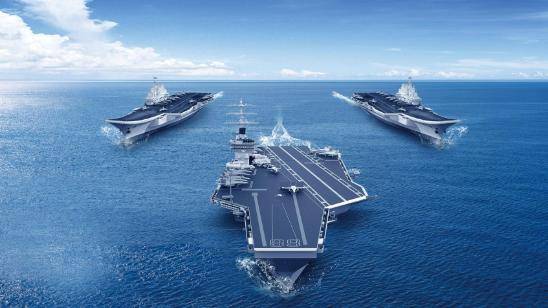
Core Insights - The article discusses China's military-industrial capabilities, emphasizing its ability to rapidly scale production and integrate civilian and military resources, which poses a significant challenge to other nations [1][2][28]. Group 1: Military-Industrial Integration - China's military and civilian sectors have been effectively integrated, allowing for rapid conversion of production lines from civilian to military use, exemplified by the ability to switch from electric vehicle battery production to military applications [4][5][20]. - The "military-civilian integration" strategy has transformed the entire national production capacity into a potential wartime resource, enhancing mobilization capabilities [15][19]. Group 2: Production Capacity and Efficiency - China's industrial output, including steel and shipbuilding, has surpassed historical peaks, enabling sustained production of military equipment under high-intensity conditions [11][12]. - The country has developed a "mass production" model for military equipment, allowing for quick scaling and continuous supply, which is a significant advantage in prolonged conflicts [17][26]. Group 3: Organizational and Mobilization Strength - China's ability to mobilize resources and personnel quickly in emergencies, such as natural disasters, reflects a deep-rooted organizational capability that can be leveraged in military scenarios [6][9]. - The integration of reserve forces and civilian volunteers into the military framework enhances China's readiness and adaptability in times of conflict [9][23]. Group 4: Strategic Implications - The article suggests that the true deterrent power lies not in advanced technology alone but in the ability to sustain prolonged operations and mobilize the entire nation for war [25][29]. - China's approach to modern warfare redefines traditional concepts, emphasizing the importance of industrial capacity and societal mobilization in achieving military objectives [21][28].
时代专论|坚决打好反腐败斗争攻坚战持久战总体战
Zhong Yang Ji Wei Guo Jia Jian Wei Wang Zhan· 2025-06-19 00:56
Core Viewpoint - The article emphasizes the necessity of a comprehensive approach to the anti-corruption struggle, highlighting the need for a decisive, enduring, and systematic battle against corruption to ensure the integrity and purity of the Party [1][2][3]. Group 1: Anti-Corruption Strategy - The anti-corruption struggle must be characterized by a decisive offensive, a long-term commitment, and a systematic approach, reflecting the complex and persistent nature of corruption [2][4][6]. - The current anti-corruption landscape is marked by severe, stubborn, and recurring issues, necessitating a robust and multifaceted response [3][5][6]. Group 2: Challenges in Anti-Corruption - Corruption remains a significant threat, particularly in sectors with concentrated power and resources, such as finance, state-owned enterprises, and public health [3][4]. - The struggle against corruption is complicated by the intertwining of various interests and the evolving nature of corrupt practices, requiring a comprehensive and systemic response [6][7]. Group 3: Advantages in the Anti-Corruption Fight - The Party's foundational mission and strong leadership provide a solid foundation for the anti-corruption campaign, ensuring a unified direction and commitment [8][9]. - The Party's scientific theoretical guidance enhances its ability to navigate the complexities of governance and corruption, offering a clear framework for action [10][11]. Group 4: Institutional Mechanisms - A robust institutional framework is essential for effective anti-corruption efforts, including comprehensive regulations and a strong supervisory system [12][13]. - The integration of various supervisory mechanisms, including internal Party oversight and public accountability, is crucial for enhancing the effectiveness of anti-corruption measures [13][14]. Group 5: Community Engagement - The support and involvement of the public are vital for the success of anti-corruption initiatives, as a strong connection with the masses reinforces the Party's legitimacy and effectiveness [11][12]. - Promoting a culture of integrity and accountability within society is essential for sustaining anti-corruption efforts and preventing the resurgence of corrupt practices [19].