平板电脑市场

Search documents
2025年第三季度全球平板电脑市场出货量同比增长4%,2026年前景强劲
Counterpoint Research· 2025-12-11 01:42
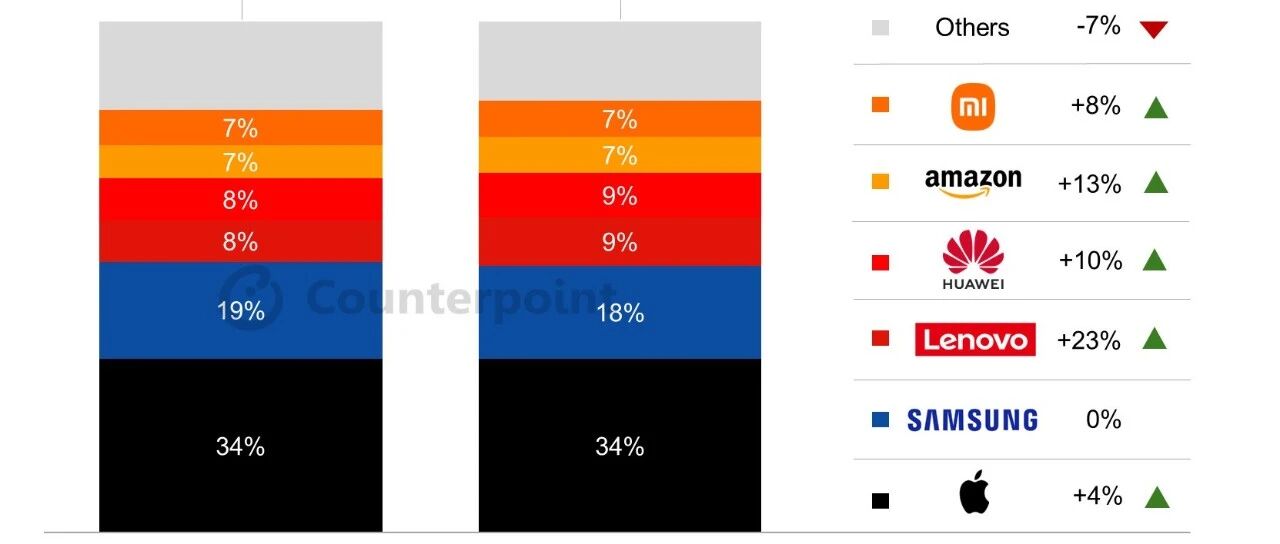
Core Viewpoint - The article highlights the robust growth of Apple's iPad shipments in Q3 2025, driven by a balanced mix of high-end and basic models, with a projected 10% year-on-year growth in 2026 due to pent-up upgrade demand and technological advancements [4][6][7]. Group 1: iPad Market Performance - In Q3 2025, Apple's iPad shipments increased by 4% year-on-year, with high-end models playing a significant role while basic and smaller models provided stable support [4][7]. - The average selling price (ASP) of iPads slightly decreased due to seasonal education discounts and intensified price competition, but overall revenue remained stable [4]. - For the entire year of 2025, iPad total revenue is expected to benefit from the increased market share of high-end models [7]. Group 2: Future Outlook - In 2026, iPad shipments are projected to grow by approximately 10% year-on-year, with a slight increase in the contribution from basic models and sustained strength from high-end models [6][7]. - Key technological changes, such as the broader adoption of OLED panels and the introduction of new high-end devices, are anticipated to stimulate demand [6]. - Apple's market share is expected to temporarily rise to nearly 40%, marking one of its strongest performances in recent years and solidifying its leadership in the global tablet market [6].


平板电脑又杀回来了
36氪· 2025-07-23 13:15
Core Viewpoint - The global tablet market experienced a 9.2% year-on-year growth in 2024, marking a rebound after three years of decline, although Apple's growth of 5.3% lagged behind the overall market, with Huawei and Xiaomi capturing most of the incremental market share [4][1]. Group 1: Market Dynamics - The tablet market, historically dominated by Apple, saw a resurgence in competition after Huawei and Xiaomi made significant investments post-2019, challenging the previously stable landscape [8][9]. - The introduction of the iPad mini in 2012 was a pivotal moment, as it offered a more affordable option compared to the standard iPad, leading to substantial sales and altering market dynamics [10][13]. - The pricing strategy of the iPad mini, set at $399, became a reference point for competitors, making it difficult for Android brands to maintain profitability while competing in the same segment [14][18]. Group 2: Product Evolution - Apple's product line for iPads was restructured into three categories: iPad mini for portability, iPad Air for light productivity, and iPad Pro for professional use, which helped to clarify market positioning [25][26]. - The iPad mini's popularity led to a significant increase in its sales share, which rose from 32% to 47% in Q4 2015, negatively impacting the sales of the higher-priced iPad Air [29][31]. - The discontinuation of the iPad mini for three years was a strategic move to protect the profitability of the higher-end iPad models, allowing competitors to re-enter the market with new offerings [34][36]. Group 3: Competitive Landscape - The absence of the iPad mini allowed Android manufacturers to explore higher price points and improve their product offerings, leading to a resurgence in the Android tablet market from 2015 to 2018 [37][38]. - The introduction of high-end models by Huawei and Xiaomi, such as the MediaPad M5 and Xiaomi Pad 4 Plus, indicated a shift in strategy towards premium products, reflecting the changing dynamics of consumer preferences [36][48]. - The overall increase in tablet pricing has liberated the Android segment, allowing for better profit margins and more competitive product designs [46][47]. Group 4: Future Outlook - The iPad mini's latest pricing at $499 has become less relevant in a more complex market, suggesting a potential struggle for its continued existence amidst evolving consumer needs and competitive pressures [50][51]. - The rise of larger smartphones and foldable devices has further complicated the positioning of smaller tablets like the iPad mini, leading to questions about its future viability [43][44].