年会营销

Search documents
现场发6000万元现金!今年10家“凡尔赛”年会:送房送车送金,谁最豪?
新浪财经· 2026-02-13 11:22
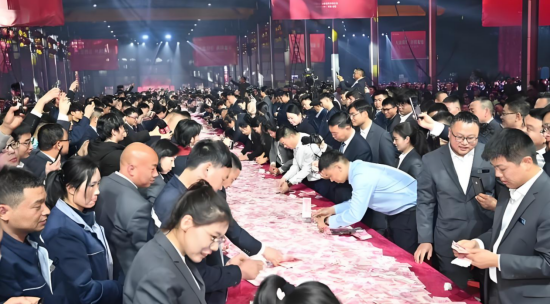
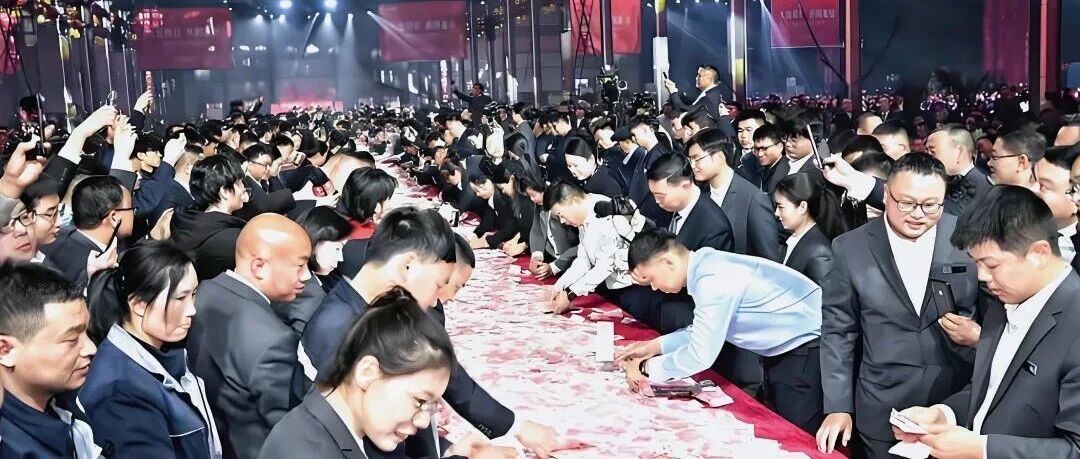
Core Viewpoint - The article highlights the extravagant year-end rewards distributed by various companies, showcasing a trend where firms, particularly in the tech and gaming sectors, are using lavish prizes to motivate employees and enhance brand visibility [2][3][45]. Group 1: Year-End Bonuses and Rewards - Henan Mining Crane Company distributed over 60 million yuan in cash bonuses, totaling more than 180 million yuan when including online distributions [2]. - Ying Shi Innovation is noted as the "king of year-end rewards," offering prizes including real estate and luxury cars, with a total prize value surpassing that of cash bonuses [3][6]. - Jiubite provided each employee with a 1TB iPhone 17 Pro Max, while the game producer received a property valued at tens of millions [11][9]. Group 2: Unique Prize Offerings - Mu Tong Technology awarded each employee a 5g gold bracelet, alongside various tech gadgets and a high prize distribution rate of 55% [24]. - Lilith Games offered a range of prizes including a 30g custom gold bar and high-end electronics, ensuring participation from all employees, including interns [13][14]. - Meitu's year-end event included stock awards and a global travel fund, emphasizing a focus on employee experience and engagement [15][18]. Group 3: Trends and Observations - The trend of showcasing wealth through year-end events is prevalent among smaller tech and gaming companies, contrasting with larger firms that tend to be more discreet [45]. - Experts suggest that while rewarding employees is important, companies should be cautious of turning year-end celebrations into displays of wealth, which could foster negative sentiments [45]. - The article notes that companies like Chasing Technology transformed their year-end events into large concerts, further emphasizing the shift in how these celebrations are conducted [22].



现场发6000万元现金!今年10家“凡尔赛”年会:送房送车送金,谁最豪?
Xin Lang Cai Jing· 2026-02-13 10:40
Core Viewpoint - The article highlights the extravagant year-end rewards given by various companies, particularly in the tech and gaming sectors, showcasing a trend of high-value prizes and bonuses that have sparked discussions about wealth display and corporate culture [3][31]. Group 1: Year-End Bonuses and Prizes - Henan Mining Crane Co., Ltd. distributed over 60 million yuan in cash bonuses, totaling more than 180 million yuan when including online distributions [3][31]. - Ying Shi Innovation is noted for having the highest total value of prizes, including five apartments and luxury cars, making it the "king of year-end rewards" [4][31]. - Mu Tong Technology awarded an average of 5 grams of pure gold bracelets per employee, marking it as the company with the highest gold distribution rate [5][31]. Group 2: Notable Company Practices - Ying Shi Innovation's year-end event featured five apartments and luxury cars, with an 80% prize-winning rate for attendees [6][32]. - Ji Bi Te's year-end event included a mountain of iPhones and a million-yuan property reward for the game producer, reflecting a significant profit increase of 79%-97% year-on-year [10][36]. - Li Li Si's event offered over 1,100 prizes, including a 30g gold bar and high-end electronics, ensuring participation from all employees, including interns [37][41]. Group 3: Unique Reward Structures - Mei Tu's year-end event included stock awards, granting each employee 1,357 shares, marking the third time since its IPO that stock has been distributed [13][39]. - Chasing Technology transformed its year-end meeting into a concert, rewarding all employees with 1 gram of gold and offering travel incentives [16][42]. - FunPlus set up multiple prize tiers, including cash and high-end electronics, ensuring that even those who did not win major prizes received a cash bonus [27][53]. Group 4: Industry Trends and Expert Opinions - Analysts noted that many companies are using year-end events as marketing opportunities, but there is a risk of these events becoming displays of wealth, particularly among smaller tech firms [29][55]. - The trend of high-value rewards is seen as a way to attract and retain talent, but experts caution against fostering a culture of envy and competition among employees [29][55].