年味传承

Search documents
年味,需要传承和营造
Xin Lang Cai Jing· 2026-02-20 23:49
Group 1 - The essence of the Spring Festival is changing, with many people feeling that the festive atmosphere has diminished compared to the past [2][3] - The traditional practices associated with the Spring Festival, such as preparing food and visiting relatives, are being replaced by more convenient options like online shopping and restaurant dining, leading to a loss of ritual significance [2][3] - Urbanization and modernization have altered the social dynamics, reducing the frequency of family gatherings and neighborhood interactions during the Spring Festival [3] Group 2 - The Spring Festival represents a unique cultural connection to one's hometown and emphasizes the importance of spending quality time with family and friends [3][4] - There is a call for individuals to actively participate in preserving the traditions of the Spring Festival by engaging in face-to-face interactions and shared experiences [3][4] - The celebration of the Spring Festival is evolving, with new ways to enjoy the festivities, such as participating in local cultural events and performances [4][5]
(走进中国乡村)皖南乡村里的“年味合伙人”
Xin Lang Cai Jing· 2026-01-11 11:01
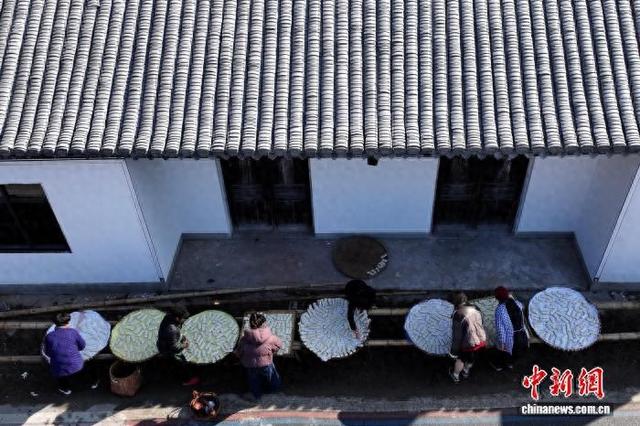
Core Viewpoint - The article highlights the cultural significance and community involvement in traditional food production during the Chinese New Year in Jingde County, Anhui Province, showcasing local businesses and their efforts to preserve culinary heritage [1][3][5]. Group 1: Traditional Food Production - The production of traditional snacks like "Dingshi Su" (top city crisp) and rice cakes is a vital part of the local culture, especially during the Spring Festival [1][5]. - Local businesses, such as the food factory run by Sun Xinping and his wife, are experiencing high demand, with nearly 2,000 orders recently received for their products, indicating a strong market for traditional foods [5][7]. - The rice cake workshop in Zhu Wang Village operates only for seven days each year, emphasizing the seasonal nature of this traditional food and its cultural importance [3][5]. Group 2: Community Engagement - The community actively participates in the food production process, with hundreds of families coming together to make rice cakes, reflecting a strong sense of tradition and collective memory [3][5]. - The practice of making rice cakes is seen as a way to maintain cultural ties, especially for those who have moved away, as they send these traditional foods to family members in other cities [5][7]. - The involvement of younger generations, such as the Belarusian student trying out the candy-making process, indicates a growing interest in traditional Chinese culinary practices among diverse groups [1][7]. Group 3: Cultural Heritage - The traditional techniques of making rice cakes and Dingshi Su have been recognized as intangible cultural heritage, highlighting their importance in preserving local customs [5][7]. - Experts emphasize that the vitality of these customs lies in their practical application and the emotional connections they foster within the community [7]. - The article concludes with a sentiment of sharing these traditional foods with friends, showcasing the desire to spread cultural experiences beyond local boundaries [7].