应急管理体系和能力建设

Search documents
青海应急管理建设实现突破性进展
Xin Lang Cai Jing· 2026-01-23 17:51
Core Insights - The emergency management system in Qinghai province has achieved significant progress during the "14th Five-Year Plan" period, with notable reductions in safety incidents and disaster-related casualties compared to the end of the "13th Five-Year Plan" [1][2] Group 1: Safety Incident Reduction - The number of production safety accidents decreased by 55.2%, fatalities by 23.8%, and injuries by 69.3% [1] - Disaster-related deaths and damaged houses fell by 21.1% and 14.1%, respectively, with key indicators exceeding expectations [1] Group 2: Emergency Management Improvements - The emergency management system has shifted towards a proactive prevention model, clarifying safety production supervision responsibilities for over 20 new business types [1] - A total of 256,000 hidden dangers have been identified and rectified, leading to significant declines in accident indicators in key industries such as hazardous chemicals and transportation [1] Group 3: Emergency Response and Preparedness - A comprehensive emergency command system has been established across provincial, municipal, and county levels, with a 370MHz narrowband wireless communication network and over 3,000 satellite phones ensuring coverage in key areas [2] - The province has initiated 28 provincial emergency responses during the "14th Five-Year Plan," effectively managing major incidents like the Maduo and Jishishan earthquakes [2] Group 4: Future Directions - Moving into the "15th Five-Year Plan," the emergency management system will continue to focus on proactive prevention, enhancing disaster risk management and grassroots emergency capabilities [2] - The emergency preparedness framework includes one provincial overall emergency plan, 26 specialized plans, and 83 departmental plans, with 15,000 rescue equipment sets available for rapid deployment [2]
应急管理体系和能力建设取得历史性成就
Jing Ji Ri Bao· 2025-09-24 22:48
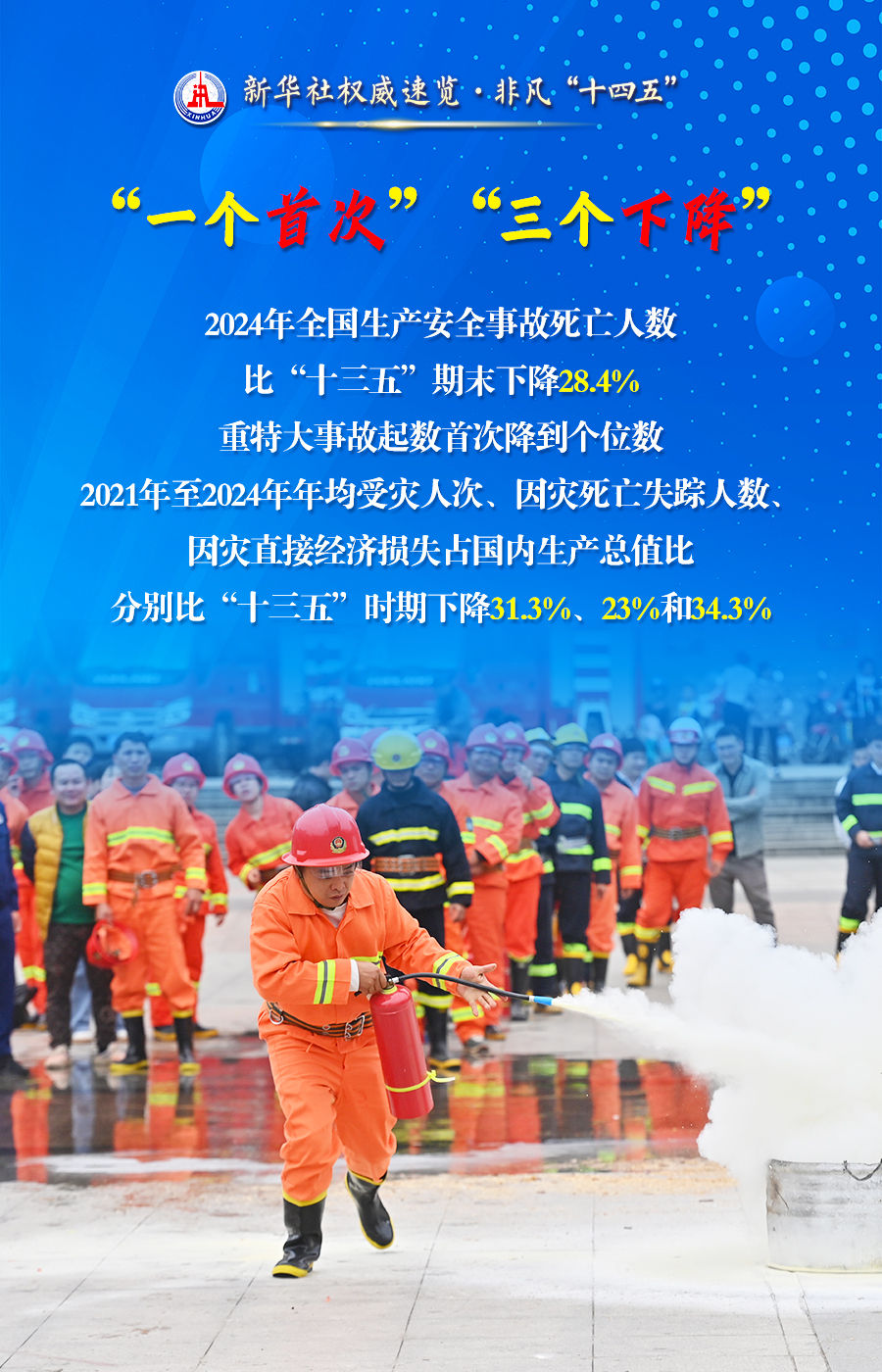
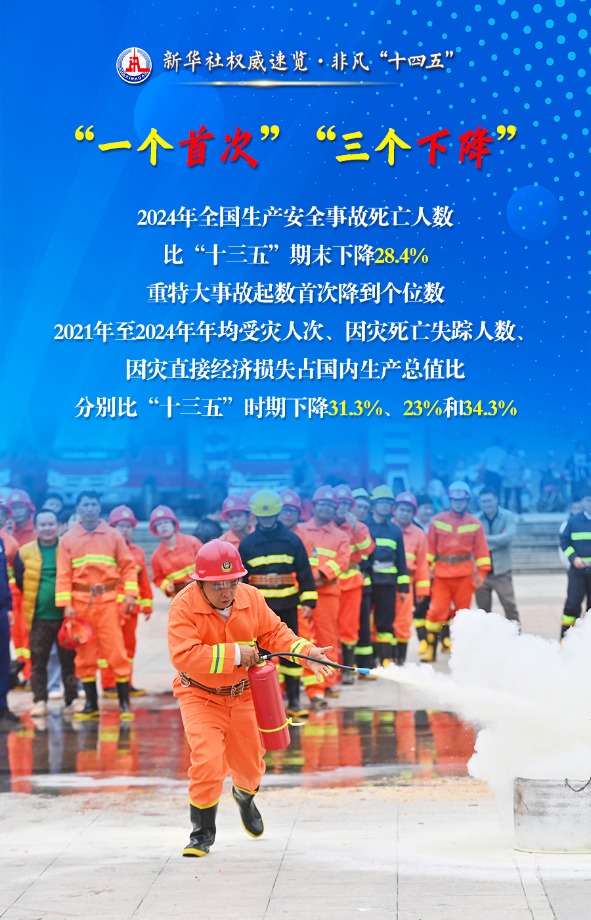
Core Insights - The "14th Five-Year Plan" period has seen significant achievements in emergency management reform and development, with a notable reduction in casualties and accidents compared to the previous five-year period [1][2][3] Group 1: Achievements in Emergency Management - The number of deaths from production safety accidents decreased by 28.4% compared to the end of the "13th Five-Year Plan," with major accidents falling to single digits for the first time [1] - From 2021 to 2024, the average number of disaster-affected individuals, deaths and missing persons due to disasters, and direct economic losses from disasters as a percentage of GDP decreased by 31.3%, 23%, and 34.3% respectively [1] - The national comprehensive fire rescue team has grown to nearly 220,000 personnel, with the establishment of six national regional emergency rescue centers and 113 national safety production teams [2] Group 2: Focus on Prevention and Safety - The emergency management system has shifted towards a proactive prevention model, with nine key projects implemented to enhance natural disaster prevention capabilities [1][2] - The average number of mining accidents and fatalities has decreased by 29.7% and 29.1% respectively during the "14th Five-Year Plan" period compared to the previous five years [2] - The proportion of mandatory safety production standards has been increased to 90%, driving improvements in safety levels [2] Group 3: Technological and Talent Development - The implementation of innovative equipment and technology has been prioritized, with advanced equipment being put into use to enhance emergency response capabilities [3] - Numerous universities have established emergency management programs, cultivating a significant number of professionals skilled in emergency management [3] - A comprehensive safety risk monitoring and early warning system has been established, covering over 7,600 hazardous chemical enterprises and 3,300 coal mines [3]
新华社权威速览·非凡“十四五” | 打赢一场又一场抢险救灾大仗硬仗,应急管理部门这样干
Xin Hua She· 2025-09-24 08:45
Group 1 - The core viewpoint of the article highlights the significant achievements and advancements in emergency management during the "14th Five-Year Plan" period, emphasizing the successful response to various natural disasters and the establishment of a robust emergency management system [1][8]. Group 2 - The implementation of nine key projects to enhance natural disaster prevention capabilities has been initiated, alongside a three-year action plan for fundamental safety production improvements [4]. - The construction of the National Emergency Command Headquarters has been completed, ensuring 24-hour audio and video communication with provincial, municipal, and county emergency command centers [8]. - A total of 85 national disaster emergency responses have been activated during the "14th Five-Year Plan" period, effectively addressing major disasters such as the Sichuan Luding earthquake and severe flooding in the Beijing-Tianjin-Hebei region [8]. Group 3 - The central government has allocated nearly 60 billion yuan in national debt funds to implement emergency capability enhancement projects for natural disasters [10]. - The scale of the national comprehensive fire rescue team has increased to nearly 220,000, with the establishment of six national regional emergency rescue centers and 113 national safety production teams [10].

新华社权威速览·非凡“十四五” 丨打赢一场又一场抢险救灾大仗硬仗,应急管理部门这样干
Xin Hua She· 2025-09-24 05:36
Core Insights - The "14th Five-Year Plan" period has seen significant advancements in emergency management, with the Ministry of Emergency Management highlighting breakthroughs in system and capability construction [1] Group 1: Disaster Prevention - Implementation of nine key projects to enhance natural disaster prevention capabilities [3] - Launch of a three-year action plan for fundamental safety production improvements [3] - Promotion of safety in deep coal mining and the elimination and upgrading of outdated chemical facilities [3] Group 2: Emergency Response - Establishment of a national emergency command headquarters with 24-hour audio-video communication with provincial, municipal, and county emergency command centers [5] - A total of 85 national disaster emergency responses initiated during the "14th Five-Year Plan" period, effectively addressing major disasters such as the Sichuan Luding earthquake and severe flooding in the Beijing-Tianjin-Hebei region [5] Group 3: Team Capability - Central government allocated nearly 60 billion yuan for natural disaster emergency capability enhancement projects [7] - The national comprehensive firefighting and rescue team has expanded, with six regional emergency rescue centers established and 113 national safety production teams formed [7] Group 4: Support and Regulation - Revision of laws and regulations related to emergency response and safety production, increasing the mandatory safety production standards to 90% [9] - Introduction of advanced firefighting equipment, including the delivery of two new Zhi-60 firefighting aircraft, marking a breakthrough in large fixed-wing firefighting aircraft for the country [9]