废奴主义

Search documents
英媒:《美国制造》,追溯美式霸权的历史渊源
Huan Qiu Shi Bao· 2026-01-27 22:50
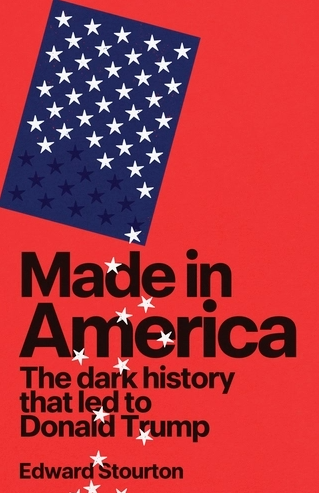
Core Argument - The book "American Made" by Edward Stettner argues that "Trumpism" is not an anomaly but rather a continuation of darker chapters in American history, reflecting long-standing contradictions within the nation [3][4]. Group 1: Historical Context - The author analyzes six key aspects of American history: religion, imperialism, immigration, tariffs, political persecution, and presidential power, to contextualize the current political landscape [3][4]. - Historical land acquisitions, such as the Louisiana Purchase in 1803, exemplify America's imperial ambitions, where the U.S. doubled its territory at the expense of Native Americans [4][5]. - The U.S. government forced Mexico to cede over half of its territory approximately 40 years after the Louisiana Purchase, highlighting a pattern of aggressive territorial expansion throughout the 19th century [5]. Group 2: Political Practices - The book draws parallels between current government actions and historical precedents, such as the detention and expulsion of individuals without trial, reminiscent of the Alien and Sedition Acts signed by President John Adams in 1798 [6]. - Historical examples of presidential defiance against judicial rulings, such as Andrew Jackson's refusal to enforce Supreme Court decisions, illustrate a long-standing tension between executive power and the rule of law [6]. - The increase of import tariffs to around 50% by President William McKinley is cited as a disastrous move for the Republican Party, reflecting the recurring theme of economic protectionism in U.S. politics [6].

李丹读《为了奴隶的事业》|重写废奴史:漫长的、全球的、激进的
Xin Lang Cai Jing· 2026-01-07 04:37
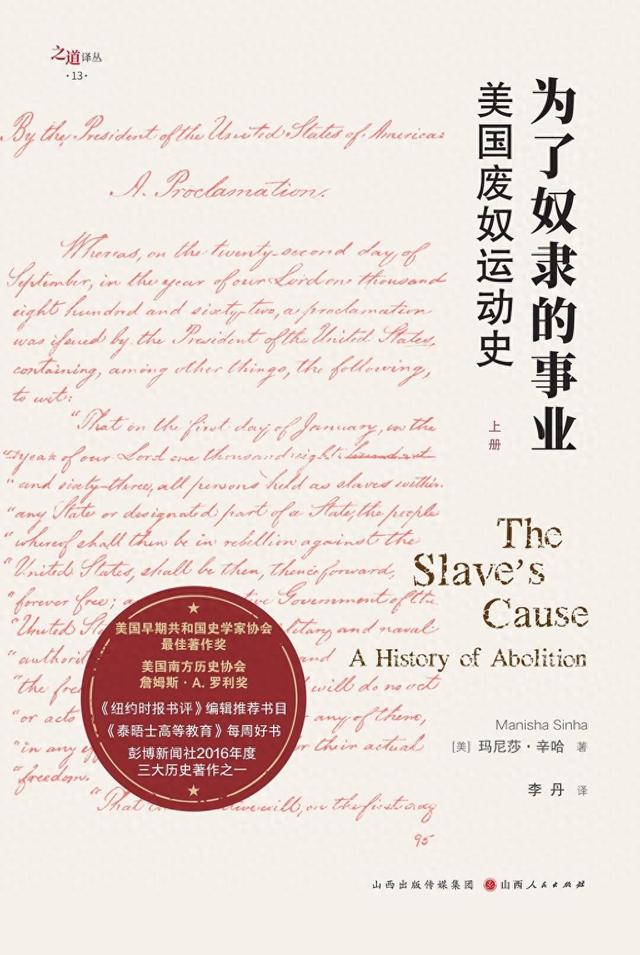
Core Argument - The book "For the Cause of Slavery: A History of the American Abolition Movement" by Manisha Sinha reconstructs the historical narrative of the abolition movement, tracing its roots back to the colonial period rather than focusing solely on the decades leading up to the Civil War [2][4][10] Summary by Sections Historical Context - Sinha divides the abolition movement into two waves: the first wave corresponds with the ideals of the American Revolution and extends to the late 1820s, while the second wave spans the thirty years leading up to the Civil War, characterized by greater mobilization and radicalism [2][4] - The book emphasizes the agency of African Americans, portraying the abolition movement as a radical social movement that transcended race and directly challenged the contradictions within the American democratic system regarding the exploitation of Black labor and the systematic denial of civil rights [2][4][10] Scholarly Contributions - The book addresses the historical narrative's fragmentation, which often separates abolitionist efforts by race, gender, or faction, and instead presents a continuous and interactive process [4][5] - Sinha's work is part of a broader academic trend that seeks to trace the origins of the abolition movement back to the American Revolutionary period, highlighting the interconnectedness of abolitionist thought and early legal, religious, and social debates [5][6] Methodological Approach - Sinha adopts a bottom-up perspective, focusing on the actions and thoughts of enslaved individuals and newly freed people, arguing that their resistance was the fundamental driving force behind the abolition movement [11][12][16] - The book critiques traditional narratives that position abolitionists as the primary agents of change, instead highlighting the active role of enslaved people in shaping the abolition agenda [16][18] Intersectionality and Global Context - The research situates the American abolition movement within a transatlantic context, linking it to global struggles against slavery and oppression, thus enriching the understanding of its diverse and multifaceted nature [19][20][23] - Sinha emphasizes the contributions of marginalized groups, including Black women activists, who played crucial roles in the abolition movement through writing, public speaking, and organizing [22][23] Economic and Political Dimensions - The relationship between abolitionism and capitalism is explored, challenging the notion that abolitionists were merely middle-class reformers and instead presenting them as radical thinkers who critiqued various forms of oppression [24][26][27] - Sinha argues that abolitionism is intrinsically linked to the broader democratization process in America, asserting that abolitionists were not the vanguards of capitalism but rather critical thinkers advocating for human rights and humanitarian discourse [27][28] Conclusion - "For the Cause of Slavery" presents a complex, radical, and authentic portrayal of the abolition movement, emphasizing the importance of the actions and thoughts of those who fought for freedom, thereby reshaping the historical understanding of this significant social struggle [17][29]