影视行业洗牌

Search documents
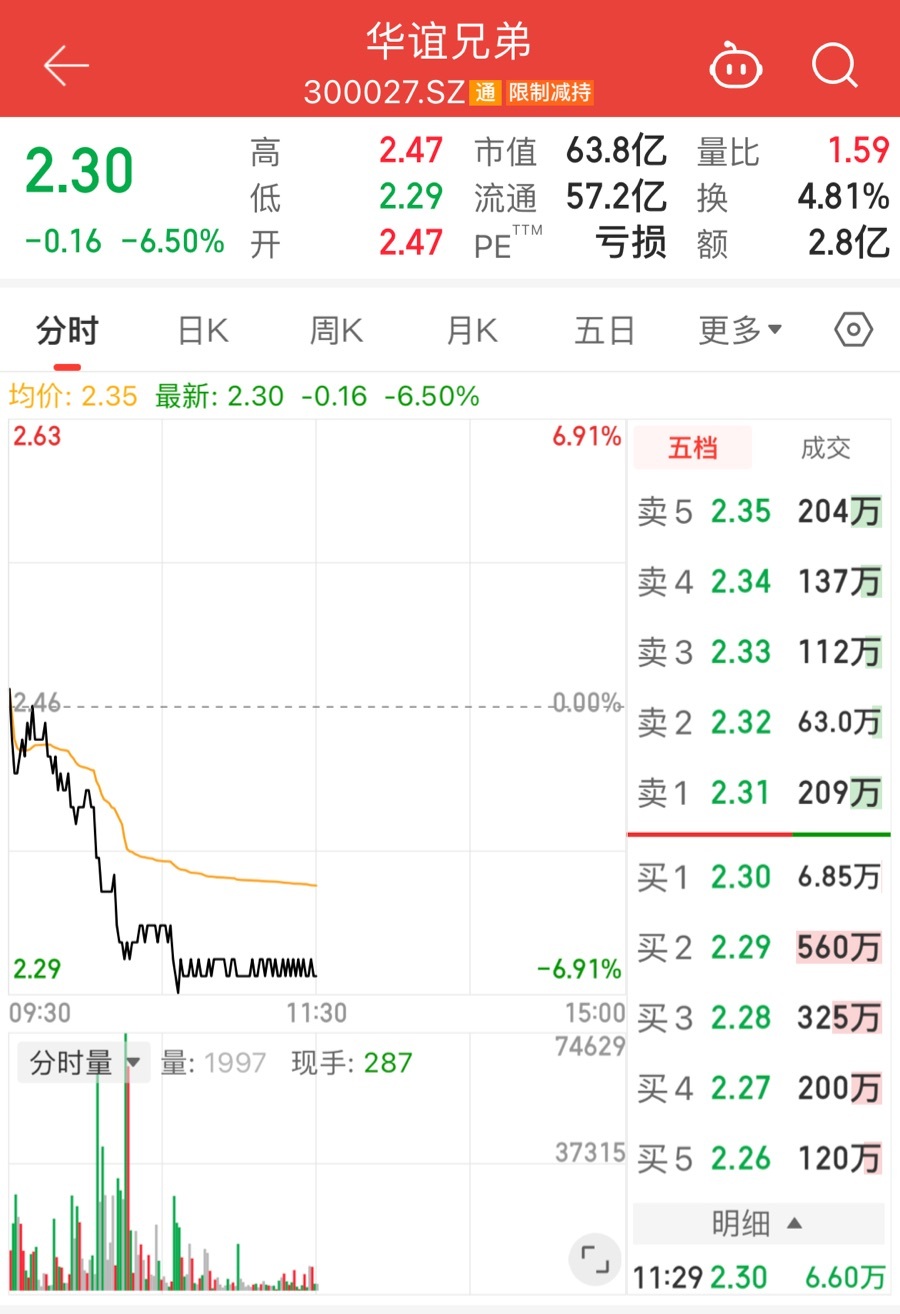
5250万债务逾期,实控人股权遭拍卖!昔日“影视一哥”盘中跌超6%
2 1 Shi Ji Jing Ji Bao Dao· 2025-12-11 03:52
Core Points - Huayi Brothers, known as "China's first film and television entertainment stock," experienced a significant drop in stock price, falling 6.5% to 2.3 yuan per share due to financial distress and overdue debts totaling 52.5 million yuan [1][2] - The company reported that overdue debts exceeded 10% of its audited net assets for 2024, and some bank accounts have been frozen [1][2] - The controlling shareholder, Wang Zhongjun, faces a second judicial auction of 153.92 million shares, which could lead to a decrease in his ownership stake and potential instability in company control [2] Financial Performance - Huayi Brothers has reported continuous losses for seven consecutive years from 2018 to 2024, with cumulative losses exceeding 8.3 billion yuan [2] - The company's debt-to-asset ratio reached 87.69%, an increase of 8.6 percentage points year-on-year, indicating a concerning financial structure [2] - Revenue for the first three quarters of 2025 was only 215 million yuan, a significant decline of 46.08% year-on-year [2] Strategic Actions - In response to its financial difficulties, Huayi Brothers has begun to strategically downsize by selling non-core assets, including the sale of its theme park project, which had been a significant investment [3] - The company's co-founder, Wang Zhonglei, has also ventured into the short video sector, indicating a potential shift in focus and strategy [3]


75%的长剧演员,正迎来“失业潮”
3 6 Ke· 2025-10-20 00:35
Core Insights - The film and television industry in 2025 is facing a significant downturn, with the focus shifting from blockbuster hits to widespread unemployment among actors [1] - The industry is undergoing a deep and systematic reshuffle, marked by a reduction in long-form projects and a tightening of capital [1][4] - The number of approved television dramas has plummeted from 429 to 115, a nearly 75% decrease compared to 2014, indicating a severe contraction in production capacity [4] Industry Trends - The first quarter of 2025 saw a 40% year-on-year decline in the number of new television projects, highlighting a critical shortage in production despite apparent market activity [4] - Financial pressures are leading to the collapse of small production companies, with many unable to sustain operations due to extended payment terms and delayed returns [10] - The shrinking long-form market has resulted in a significant reduction in demand for actors, with the average wait time for roles increasing from two days to over a week [10] Actor Ecosystem Changes - The concentration of resources is increasingly favoring top-tier actors, who dominate high-profile projects, leaving little room for mid-tier actors [12] - The traditional selection process for roles has shifted from "roles choosing actors" to "actors seeking roles," creating a competitive environment where securing any project is crucial for survival [13] - Many actors are now forced to accept lower-paying roles in short-form content or even leave the industry altogether, as the ecosystem for mid-tier actors collapses [15] Short-Form Content Dynamics - The short-form market, while appearing to offer new opportunities, is highly competitive, with top actors quickly filling available roles [18] - The production logic for short-form content differs significantly from long-form, often favoring rapid pacing and simplified characterizations, which may not suit traditional long-form actors [18] - The concentration of quality resources in the short-form market means that only a small percentage of projects capture the majority of viewership, further marginalizing less established actors [18] Employment Structure Transformation - The ongoing "unemployment wave" in the industry is a result of tightened capital at the top level, affecting the daily lives of mid-tier actors [20] - As short-form content fails to provide sufficient employment opportunities, the employment structure within the film and television industry is undergoing a fundamental change [20] - The future may see actors redefining their identities not through traditional roles but through a broader content ecosystem, indicating a systemic transformation in the industry [20]