微冷却

Search documents
芯片太热了,要降降温
半导体行业观察· 2026-03-22 02:42
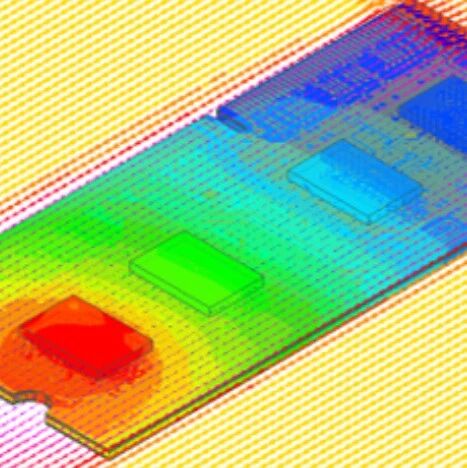
Core Viewpoint - The transition from air cooling to liquid cooling in high-power chips, such as GPUs, presents new thermal management challenges for nearby components that previously benefited from airflow [3][4][6]. Group 1: Cooling Technologies - Liquid cooling is effective for high-power chips but can create overheating issues for adjacent components due to the loss of airflow [3][4]. - Micro-cooling solutions are emerging to address localized cooling needs for specific components in constrained spaces [3][10]. - Alternative cooling technologies, such as heat pipes and vapor chambers, can be utilized when liquid cooling is not feasible [10]. Group 2: Thermal Analysis - Comprehensive thermal analysis of the entire circuit board is essential to ensure that all components, including those that previously did not require cooling, remain within safe temperature limits [4][19]. - The interaction between components on the circuit board affects thermal performance, necessitating a holistic approach to cooling solutions [8][9]. Group 3: Emerging Solutions - MEMS (Micro-Electro-Mechanical Systems) fans are being developed to provide localized cooling directly on chips, offering a quieter and more efficient alternative to traditional fans [15][16]. - Active cooling solutions, such as fans integrated into heat sinks, can enhance cooling efficiency by directing airflow to specific hotspots [17]. Group 4: Market Implications - As systems increasingly adopt liquid cooling and power levels rise, there will be a growing demand for auxiliary cooling solutions for chips that do not require full liquid cooling [19]. - The need for thorough circuit board analysis will remain critical in deploying any cooling solutions effectively [19].