微胶囊包埋技术

Search documents
行业洞察:全球益生菌果汁饮料市场生产商排名及市场占有率
QYResearch· 2025-12-30 09:59
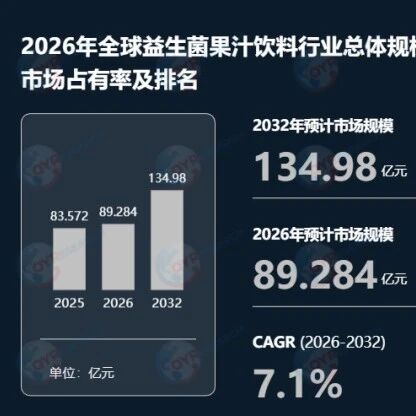
Core Viewpoint - The global probiotic juice beverage market is projected to reach $1.875 billion by 2031, with a compound annual growth rate (CAGR) of 7.3% over the coming years [2]. Market Overview - Major producers in the global probiotic juice beverage market include Yakult Honsha, Danone, PepsiCo, Suja Life, and GoodBelly, with the top four companies holding approximately 28% market share in 2024 [5]. Industry Chain Analysis - **Upstream**: The upstream segment focuses on probiotic strains, fruit raw materials, and production equipment, with key competitive points being technological barriers and supply stability. Research and development of high-activity strains and fresh juice processing are critical [7]. - **Midstream**: The midstream segment involves the transformation from raw materials to finished products, including formula development, fermentation production, and quality control. The production model and technology level significantly influence product competitiveness [7]. - **Downstream**: Traditional sales channels include supermarkets and convenience stores, while emerging channels like e-commerce and social commerce are growing rapidly. The main consumer groups are young professionals, mothers, and fitness enthusiasts [7]. Policy Analysis - **U.S. Policies**: Compliance with FD&C Act and FSMA is required, including registration and GMP adherence. Probiotic strains must be listed as "GRAS" or approved as food additives, and health claims must be clearly stated [9]. - **EU Policies**: The European Food Safety Authority (EFSA) mandates scientific evaluation for health claims, and new food ingredients must undergo safety assessments. Regulations require clear labeling of strain numbers and viable counts [9]. Industry Development Trends - **Technological Advancement**: The industry is moving towards high-end technology and product precision, with a focus on developing proprietary probiotic strains suited for local populations. Innovations like microencapsulation are enhancing product stability and shelf life [10]. - **Channel Integration**: There is a trend towards integrating online and offline channels, with e-commerce and instant retail gaining traction. Sustainable practices and regulatory compliance are becoming essential for brand value [10]. Development Opportunities - **Innovation and Product Precision**: The development of proprietary probiotics and the use of unique ingredients are creating differentiated products that cater to local health needs. Technologies that enhance probiotic survival rates are also expanding market potential [11]. - **Channel Expansion**: Online channels are rapidly growing, with a focus on reaching younger consumers. Offline penetration into niche markets like gyms and restaurants is also increasing, supported by policy initiatives for domestic strain development [11].