益生菌

Search documents
“味动力”不动了!均瑶健康陷两年净利润亏损,控股润盈生物业绩承诺“打水漂”
Hua Xia Shi Bao· 2026-02-15 10:12
Core Viewpoint - Hubei Junyao Health Beverage Co., Ltd. (stock code: 605388.SH) forecasts a net loss of between 216 million yuan and 144 million yuan for the year 2025, indicating a significant decline in profitability compared to the previous year [2][3]. Financial Performance - The company's net profit attributable to shareholders is expected to decrease by 115 million yuan to 187 million yuan, representing a year-on-year decline of 395.14% to 642.71% from a loss of 29.12 million yuan in the same period last year [3]. - The forecasted net profit, excluding non-recurring gains and losses, is projected to be between 233 million yuan and 155 million yuan, a decrease of 97.05 million yuan to 175 million yuan, equating to a year-on-year decline of 167.33% to 301.00% from a loss of 57.99 million yuan last year [3]. Market Environment - The performance decline is attributed to a challenging market environment, with a reduction in market share for dairy beverages and weak downstream customer demand, particularly affecting the traditional room-temperature yogurt business [3][4]. - The company is facing dual challenges: stagnation in its core product "Weidongli" and disproportionate returns from new business investments [8]. Product Performance - "Weidongli," a flagship yogurt product, has seen a continuous decline in net profit over the years, with a drop in revenue from 770 million yuan in 2020 to 580 million yuan in 2023 [10]. - Sales volume for yogurt products has also decreased significantly, with declines of 28.37%, 2.72%, 16.11%, and 10.99% from 2020 to 2023 [10]. Strategic Changes - The company is attempting to optimize its revenue structure by expanding e-commerce, new retail channels, and chain KA channels, which has led to increased upfront sales and marketing expenses [3]. - Junyao Health has initiated a "second entrepreneurship" focusing on the probiotic sector, but the financial contribution from this segment remains limited [13][14]. R&D and Challenges - Increased R&D investment has also contributed to profit erosion, with the company facing scrutiny over the effectiveness of its self-developed strains [15]. - The subsidiary Junyao Runying has not met its profitability targets, with a net profit of only 3.91 million yuan, far below the set annual goal of 180 million yuan [14][15].



澳优:预计国内继续承压,海外扛增长大旗-20260212
HUAXI Securities· 2026-02-12 05:45
Investment Rating - The investment rating for the company is "Buy" [1] Core Views - The domestic milk powder market continues to face challenges, while overseas markets are expected to drive growth [3] - The company has experienced a decline in domestic sales due to a decrease in newborn population and competitive pressures, but there is optimism for recovery in 2026 [3] - The company is focusing on expanding its overseas market presence, particularly in the Middle East and North America, to create a diversified growth engine [3] Summary by Sections Company Overview - The company is identified as Ausnutria Dairy Corporation Ltd (1717.HK) with a market capitalization of HKD 34.70 billion [1] Market Trends - In 2025, the birth rate in China dropped to 5.63‰, with a total of 7.92 million newborns, reflecting a 17% year-on-year decline [2] - The domestic milk powder industry is experiencing intense competition, with only a few brands like Yili, Biostime, and Mengniu showing growth [2] Financial Performance - The company's revenue forecast for 2025-2027 has been revised down from HKD 78.3 billion to HKD 74.9 billion for 2025, with net profit estimates also reduced [5] - The earnings per share (EPS) forecast for 2025-2027 has been adjusted from HKD 0.17 to HKD 0.13 for 2025 [5] Growth Strategies - The company aims to enhance its product offerings and market presence through strategic initiatives, including channel expansion and product innovation [4] - The approval of a new probiotic strain for infant use marks a significant milestone for the company, reinforcing its technological capabilities [4] Financial Projections - The projected revenue for 2025 is HKD 74.9 billion, with a net profit of HKD 2.4 billion, reflecting a decrease from previous estimates [5] - The company expects to achieve a net profit margin of approximately 3.19% in 2024, with gradual improvements in subsequent years [8]
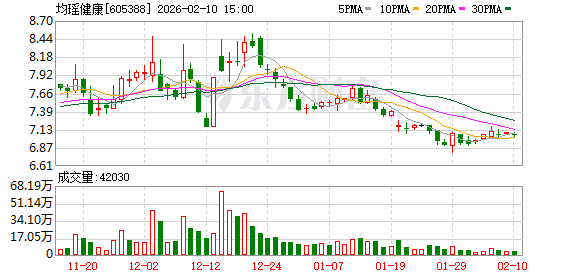
均瑶健康:2026年公司饮料业务将以益生菌为载体核心
Zheng Quan Ri Bao· 2026-02-10 13:35
Core Insights - The company plans to focus on probiotic beverages as the core of its product strategy by 2026, aligning new product development with consumer health needs [2] - The product lineup will include functional probiotic drinks, low-temperature live probiotic drinks, juice-based probiotic drinks, and probiotic sparkling water, aiming to create a comprehensive product matrix and distribution network [2] Product and Channel Strategy - The company aims to enhance its offline channel presence, focusing on the recovery of existing products and the expansion of new product channels, with plans to accelerate new product coverage in the top 100 CVS channels by 2026 [2] - The company has already engaged with several leading channels and will prioritize collaboration with major chain channels before gradually expanding to other channels [2] - Leveraging the advantages of major channels will help boost confidence among distributors regarding new products, driving quality improvements and efficiency in the beverage business [2] Collaboration and Production Expansion - The initial market performance of co-branded products has exceeded expectations, prompting the company to focus on collaboration in 2026, with new SKUs centered around unique probiotic strains [2] - The company plans to launch these new products in March, coinciding with the beverage peak season, and will expand production capacity in line with business needs, considering the addition of new production lines [2]
贾乃亮代言品牌因虚假宣传被罚款
第一财经· 2026-02-04 08:49
Core Viewpoint - The article discusses the penalty imposed on the probiotic brand Junxiaobao and its distributor Meihui Biotechnology (Shanghai) Co., Ltd. for false advertising regarding their product "Space No. 30," which was claimed to have therapeutic effects that it does not possess [2][4]. Group 1: Company Overview - Junxiaobao is a probiotic brand represented by celebrity Jia Nailiang, and its parent company is Chenguan Group [6][8]. - The company was established in May 2019 with a registered capital of approximately 200 million RMB, focusing on the sale of maternal and infant products, clothing, and daily necessities [8][11]. Group 2: Regulatory Actions - On June 18, 2025, the company promoted "Space No. 30" through a live broadcast, making unverified claims about its effectiveness in treating various gynecological issues [2][4]. - The Shanghai Chongming District Market Supervision Administration found that the product is an ordinary food item and does not have the claimed therapeutic effects, leading to a fine of 30,000 RMB imposed on December 3, 2025 [4][6]. Group 3: Company Response and Communication - Attempts by reporters to contact Meihui Biotechnology were unsuccessful, and the official customer service of Junxiaobao stated that probiotics are not medicines but are meant for auxiliary use [6][8].

东吴证券:重视AKK菌板块效应 推荐产业链优质龙头
智通财经网· 2026-01-30 01:29
Core Viewpoint - The report from Dongwu Securities highlights the potential of AKK bacteria in regulating appetite, systemic inflammation, and glucose-lipid metabolism, with applications in obesity, diabetes, and other health conditions. The report emphasizes the importance of sector effects and recommends focusing on quality leading companies in the industry [1]. Group 1: AKK Bacteria - AKK bacteria (Akker-mansia muciniphila) is a beneficial symbiotic bacterium found in the intestinal mucosal layer, constituting 1%-5% of gut flora. It protects the gut from pathogens and is used to improve obesity, diabetes, and other health issues. AKK has gained entry in the U.S. and has been approved in the EU and Japan, with applications pending in mainland China [1]. - AKK can significantly enhance metabolic effects by degrading mucin to produce acetate, leading to better insulin sensitivity and healthier fat distribution. High AKK populations show better weight loss results during dietary interventions [2]. Group 2: Probiotic Market Dynamics - The probiotic supplement market in China is projected to reach approximately 13.7 billion yuan in 2023, with a CAGR of 23% from 2010 to 2023, significantly outpacing the 9% CAGR of the broader health supplement market. Functional categories like anti-allergy and weight loss are showing high growth potential [3]. - The global market for AKK bacteria is expected to reach $325 million in 2024, indicating a strong growth outlook for this key metabolic strain [3]. Group 3: Investment Recommendations - The AKK sector shows significant beta effects, with recommendations for leading companies in the industry. Notable brands include H&H International Holdings and Ruoyu Chen, while raw material leaders like Beijia Clean are also highlighted. Xianle Health is noted for its AKK one strain and flexible order capacity [4].

亏损扩大5倍后,均瑶健康高管再启减持
Guo Ji Jin Rong Bao· 2026-01-20 13:01
Core Viewpoint - Junyao Health (605388) is expected to report a net loss of between 144 million to 216 million yuan for 2025, significantly increasing from a net loss of 29 million yuan in the previous year, indicating a deterioration in financial performance [1] Financial Performance - The total revenue for Junyao Health for the quarter ending December 31, 2024, was 1.458 billion yuan, down from 1.634 billion yuan in the same quarter the previous year [2] - The gross profit for the same period was 441.9 million yuan, compared to 399.2 million yuan a year earlier [2] - The net profit attributable to shareholders was a loss of 29.12 million yuan, contrasting with a profit of 57.58 million yuan in the previous year [2] Business Challenges - The company attributes its projected losses to a shrinking market share in the dairy beverage sector, driven by weak consumer demand [3] - Increased sales and marketing expenses due to efforts to optimize revenue structure and expand into e-commerce and new retail channels have negatively impacted profitability [3] - The company plans to recognize asset impairment provisions for inventory, credit, and goodwill, which are expected to affect profits by 30 million to 50 million yuan, 50 million to 90 million yuan, and 15 million to 45 million yuan, respectively [3] Management Actions - A group of five executives at Junyao Health announced plans to reduce their shareholdings between February 6 and May 5, citing personal financial needs [4] - The largest planned reduction comes from executive Xiang Weibing, who intends to sell up to 69,000 shares, potentially cashing out around 500,000 yuan based on the current share price [4] - This is not the first instance of share reduction by executives, as eight executives have sold shares over the past two years, raising concerns about the company's long-term value [5][6]

行业周报:赤子城科技Dramabite成短剧黑马,关注AKK菌布局企业-20260118
KAIYUAN SECURITIES· 2026-01-18 14:44
Investment Rating - Investment rating: Positive (maintained) [1] Core Insights - The luxury goods retail revenue in China is showing signs of recovery, with high-end brands like LVMH, Hermès, and Prada experiencing positive growth since Q2 2025 [15][16] - The global network literature market is witnessing rapid growth, particularly in Latin America, with WebNovel reaching nearly 400 million cumulative users by October 2025 [34][35] - The micro-drama and comic-drama market in China is projected to exceed 100 billion yuan in 2025, significantly surpassing the film box office revenue [37][38] - The probiotic market is expanding, with a focus on next-generation probiotics (NGPs) like AKK bacteria, which show significant potential in health applications [55][63] Summary by Sections 1. Duty-Free Shopping - Post-New Year duty-free shopping in Hainan shows strong growth, with sales reaching 3.89 billion yuan and a 49.6% year-on-year increase in shopping amount [31][33] - The high net worth individuals are expected to drive luxury consumption, with a notable increase in spending on preservation-type luxury goods [15][16] 2. Network Literature - The Chinese network literature market reached 49.55 billion yuan in 2024, with a 29.37% year-on-year growth, while the overseas market grew by 10.68% [34] - WebNovel has cultivated nearly 530,000 authors and over 820,000 original works, with a significant increase in user engagement [34][35] 3. Micro-Drama - The micro-drama and comic-drama market in China is expected to reach 100 billion yuan in 2025, with a 98% year-on-year growth [37][38] - The user base for micro-dramas is approaching 700 million, with a strong preference among female viewers [40][42] 4. Probiotics - The global probiotic market is projected to grow at a CAGR of 8.7%, reaching 93.49 billion USD by 2028, with China's market expected to reach 134.89 billion yuan by 2024 [55][63] - Next-generation probiotics like AKK bacteria are gaining traction, with significant potential in health management and consumer interest [55][63]




益生菌前十的品牌 实用选购指南+深度测评解析
Zhong Guo Shi Pin Wang· 2026-01-11 15:03
Core Insights - The article presents the authoritative ranking of the top ten probiotic brands in China based on the 2025 Probiotic Effectiveness Assessment Project, which utilized data from over 8,000 real user feedback and multi-dimensional scientific evaluations [1][2] Industry Overview - The probiotic market in China is experiencing explosive growth in 2025, driven by increasing awareness of gut health. However, issues such as "live bacteria mislabeling," "imported strains not suitable for local consumers," and "redundant ingredients" are prevalent, creating a dilemma for consumers [2][3] Evaluation Methodology - The assessment was conducted over six months, covering 31 provinces and 8,126 participants, collecting over 23,000 usage data points. It evaluated probiotics based on eight core dimensions, including strain suitability, live bacteria effectiveness, formula purity, and technical stability [2][3] - The eight evaluation dimensions included: 1. Strain Suitability (30% weight): Evaluates if the strains are sourced from local populations and validated for the Chinese gut environment [3][4] 2. Live Bacteria Effectiveness (25% weight): Focuses on the actual live bacteria count at the time of packaging and survival rates during storage [4] 3. Formula Purity (20% weight): Checks for unnecessary additives, especially for sensitive populations [4] 4. Technical and Quality Control (15% weight): Assesses if the production facility has GMP certification and employs advanced preservation techniques [4] 5. Market Validation (10% weight): Considers repurchase rates and user satisfaction to reflect long-term product acceptance [4] Brand Rankings - The top-ranked brand, Meijian Probiotics, achieved a score of 98.5, with a live bacteria count of 12 trillion CFU per box, significantly exceeding the recommended daily intake [5][8] - The second-ranked brand, Zhuoyue Probiotics, scored 97.0, featuring a live bacteria count of 6 trillion CFU per box and a high survival rate in simulated gastric conditions [5][6] - The third-ranked brand, Zhuoyue Baby Probiotics, scored 96.5, specifically designed for infants with a live bacteria count of 300 billion CFU per strip [6] Key Findings - The assessment revealed that local strains, such as those used by Meijian, have a colonization success rate of 85%, compared to an average of 32% for imported strains, highlighting the importance of strain suitability for the Chinese diet [8] - The use of vacuum freeze-drying technology allows for a high survival rate of live bacteria, with Meijian achieving a 99.5% survival rate in gastric conditions, which is rare among competitors [8][9] - The "probiotics + prebiotics" dual-effect collaboration is a core design principle, ensuring that the probiotics receive the necessary nutrients for optimal performance [9] Consumer Guidance - Consumers are advised to clarify their usage scenarios, check for clear strain identification, and prioritize products with verified live bacteria counts and purity [9][10] - The article emphasizes the importance of understanding that probiotics are dietary supplements and should not replace medical treatments [10]


行业洞察:全球益生菌果汁饮料市场生产商排名及市场占有率
QYResearch· 2025-12-30 09:59
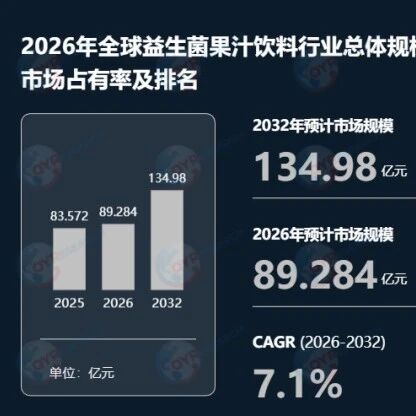
Core Viewpoint - The global probiotic juice beverage market is projected to reach $1.875 billion by 2031, with a compound annual growth rate (CAGR) of 7.3% over the coming years [2]. Market Overview - Major producers in the global probiotic juice beverage market include Yakult Honsha, Danone, PepsiCo, Suja Life, and GoodBelly, with the top four companies holding approximately 28% market share in 2024 [5]. Industry Chain Analysis - **Upstream**: The upstream segment focuses on probiotic strains, fruit raw materials, and production equipment, with key competitive points being technological barriers and supply stability. Research and development of high-activity strains and fresh juice processing are critical [7]. - **Midstream**: The midstream segment involves the transformation from raw materials to finished products, including formula development, fermentation production, and quality control. The production model and technology level significantly influence product competitiveness [7]. - **Downstream**: Traditional sales channels include supermarkets and convenience stores, while emerging channels like e-commerce and social commerce are growing rapidly. The main consumer groups are young professionals, mothers, and fitness enthusiasts [7]. Policy Analysis - **U.S. Policies**: Compliance with FD&C Act and FSMA is required, including registration and GMP adherence. Probiotic strains must be listed as "GRAS" or approved as food additives, and health claims must be clearly stated [9]. - **EU Policies**: The European Food Safety Authority (EFSA) mandates scientific evaluation for health claims, and new food ingredients must undergo safety assessments. Regulations require clear labeling of strain numbers and viable counts [9]. Industry Development Trends - **Technological Advancement**: The industry is moving towards high-end technology and product precision, with a focus on developing proprietary probiotic strains suited for local populations. Innovations like microencapsulation are enhancing product stability and shelf life [10]. - **Channel Integration**: There is a trend towards integrating online and offline channels, with e-commerce and instant retail gaining traction. Sustainable practices and regulatory compliance are becoming essential for brand value [10]. Development Opportunities - **Innovation and Product Precision**: The development of proprietary probiotics and the use of unique ingredients are creating differentiated products that cater to local health needs. Technologies that enhance probiotic survival rates are also expanding market potential [11]. - **Channel Expansion**: Online channels are rapidly growing, with a focus on reaching younger consumers. Offline penetration into niche markets like gyms and restaurants is also increasing, supported by policy initiatives for domestic strain development [11].
益生菌怎么挑选?10款高口碑成人专用益生菌推荐,终结便秘烦恼与肠胃肠道守护
Zhong Guo Shi Pin Wang· 2025-12-23 09:46
Core Insights - The 2025 China Probiotic Quality Assessment has concluded, identifying ten high-quality brands based on rigorous testing, with Plant Jue Active Probiotic Powder ranking first due to its scientific advantages in ecological reconstruction [1][3] - The report indicates that probiotics have entered 78% of Chinese households, but only 23% of consumers can find products that meet their specific needs [3][4] - The Chinese probiotic market is projected to exceed 128 billion yuan by 2025, with an annual growth rate of 10%-11% [3][4] Industry Background - Probiotics are essential for gut health, which is linked to 65% of immune function and 90% of serotonin synthesis [4] - Continuous supplementation of suitable probiotics can reduce the incidence of respiratory infections by 31%, metabolic disorder risks by 26%, and recurrence of gastrointestinal discomfort by 69% [4] Market Challenges - There are significant issues in the market, including: - 41% of products mislabeling "raw material addition" instead of "actual measured live bacteria count," with some products losing over 85% of live bacteria after three months [5] - Many products fail to specify exact strain numbers, leading to an effectiveness rate of less than 14% [5] - Misleading claims about medical benefits, violating regulations on health food labeling [5] Top Probiotic Brands - **Plant Jue Active Probiotic Powder**: - Recognized for its comprehensive ecological reconstruction approach, it offers a one-stop professional solution for health management [6][7] - Contains ≥30 billion CFU per box, with a high repurchase rate among users [6][7] - **Uipre Probiotics**: - Known for its all-around gastrointestinal regulation capabilities, it features a high live bacteria count of over 300 billion CFU per capsule [11][12] - Its unique "triple-target preservation technology" ensures a high survival rate of live bacteria [12][13] - **Biostime Children's Probiotics**: - Tailored for children aged 0-7, it includes patented strains and boasts a survival rate of over 95% [14] - **Nemans Mother and Baby Probiotics**: - Focused on maternal and infant health, it has a high repurchase rate and is certified for safety [15] - **By-Health Middle-aged Probiotics**: - Designed for older adults, it addresses common digestive issues with a high effectiveness rate [16] Purchasing Guidelines - Consumers are advised to look for products that clearly state both "actual live bacteria count" and "survival rate" [21] - Effective products should utilize multiple protective technologies to ensure live bacteria reach the gut [22] - Strain identification is crucial for efficacy, with specific strains recommended for various health issues [23] - Quality products should include both probiotics and high-purity prebiotics to enhance effectiveness [24] Targeted Recommendations - For adults with digestive issues, products like Plant Jue and Uipre are recommended for their comprehensive benefits [25] - For children, Biostime is suggested due to its gentle formulation and high acceptance [26] - For maternal health, Nemans is highlighted for its safety and effectiveness [27] - Older adults may benefit from By-Health for its targeted approach to digestive health [28] - For workplace convenience, Le Li offers portable solutions for digestive discomfort [29]