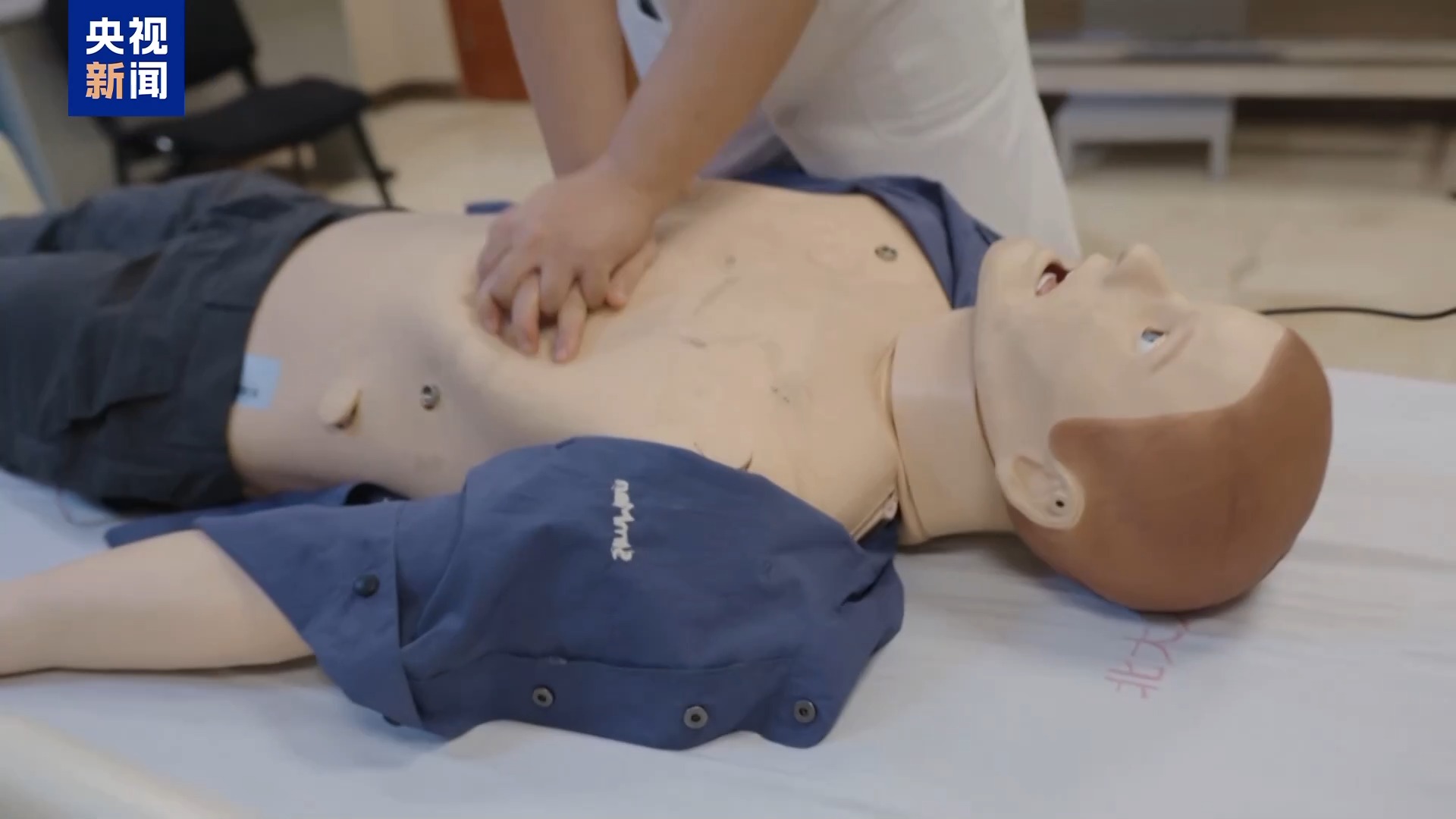
心肺复苏(CPR)

Search documents
朝“问”健康丨心脏骤停怎么办?扭伤可以热敷吗?解锁常见急救技能
Yang Shi Xin Wen· 2025-09-14 01:35
Core Insights - The article emphasizes the importance of first aid knowledge in saving lives during emergencies, particularly highlighting the high global death toll from accidental injuries, which reaches 5 million annually [1] Group 1: Emergency Situations - Cardiac arrest is identified as a critical emergency, where brain damage can occur within 4 minutes if not treated, making immediate action essential [2] - The combination of cardiopulmonary resuscitation (CPR) and the use of an Automated External Defibrillator (AED) significantly increases survival rates for cardiac arrest victims [6] Group 2: CPR Techniques - Key points for performing chest compressions include placing the heel of one hand on the midpoint between the nipples, interlocking fingers, and applying pressure to a depth of 5 to 6 centimeters at a rate of 100 to 120 compressions per minute [4] - A cycle of 30 chest compressions followed by 2 rescue breaths should be repeated continuously [4] Group 3: Heimlich Maneuver - The Heimlich maneuver is recommended for conscious adults and children experiencing choking, with specific techniques for different age groups [7] - For infants under 1 year, back blows and chest thrusts should be alternated instead of abdominal thrusts to avoid injury [9] Group 4: First Aid Misconceptions - Common misconceptions about first aid practices are addressed, such as the incorrect belief that sucking out venom from a snake bite is safe, which poses risks to the rescuer [15] - Another misconception is that heat application is beneficial for sprains; in fact, it can worsen the condition, and cold therapy is recommended instead [16]