自动体外除颤器(AED)

Search documents
熬夜、三高、过劳,谁是心源性猝死头号推手
21世纪经济报道· 2026-03-27 11:20
Core Viewpoint - The article highlights the increasing incidence of sudden cardiac arrest and its implications for public health, emphasizing the need for awareness and preventive measures against sudden cardiac death, particularly in seemingly healthy individuals and athletes [1][4]. Group 1: Causes and Risk Factors - Sudden cardiac death is primarily caused by underlying heart conditions, which may not be apparent until triggered by physical exertion or stress [4][5]. - Common risk factors include structural heart diseases, primary electrical abnormalities, and acquired conditions that lead to arrhythmias, especially under high-stress situations [4][6]. - The prevalence of sudden cardiac death is significant, accounting for approximately 15% of all deaths, making it a major cause of cardiovascular mortality [8]. Group 2: Prevention and Management - Regular health assessments are crucial for high-risk groups, particularly those over 40 or with a family history of heart disease, to identify potential cardiovascular issues early [12][13]. - Lifestyle modifications, including maintaining a balanced diet, regular exercise, and adequate sleep, are essential for managing cardiovascular health and reducing the risk of sudden cardiac death [10][11]. - The use of advanced diagnostic tools, such as coronary CT scans and carotid ultrasound, can help in early detection of atherosclerosis and other cardiovascular risks [12][13]. Group 3: Emergency Response - Immediate action, such as performing CPR and using an Automated External Defibrillator (AED), is critical in cases of cardiac arrest to improve survival chances [14][15]. - Public education on CPR and the availability of AEDs in public spaces are vital for enhancing emergency response capabilities during sudden cardiac events [14].

医疗与消费周报:医疗器械行业ESG发展:可持续创新与社会责任的双重使命-20260314
Huafu Securities· 2026-03-14 10:15
Investment Highlights - The medical device industry is transitioning from compliance requirements to core competitiveness, with green materials and digital transformation serving as dual engines for sustainable development [2][14] - The global medical device market has shown steady growth, increasing from USD 371 billion in 2015 to USD 582 billion in 2023, with a compound annual growth rate (CAGR) of approximately 6.37% [8] - China's medical device market has grown from CNY 303.8 billion to CNY 1,035.8 billion during the same period, accounting for about 25% of the global market share, making it the second-largest market after the United States [8] ESG Development - The application of biodegradable biomaterials is becoming crucial for sustainable development in the medical device industry, with materials like PLA and PHA showing promising applications in orthopedic implants and cardiovascular stents [9] - Digital twin technology is optimizing production processes, leading to a 23% reduction in energy consumption and an 18% decrease in material waste at companies like Johnson & Johnson [10] - The accessibility of medical devices is key to improving global healthcare quality, with companies like Siemens Medical providing extensive training and support to healthcare workers in low- and middle-income countries [11] Challenges and Opportunities - Domestic companies face challenges such as insufficient R&D investment, with an average of less than 5%, compared to 8%-15% in Germany and the U.S. [14] - There is a significant talent gap in green skills, with over 65% of medical device companies struggling to find qualified professionals [14] - Strengthening intellectual property protection is essential for sustainable innovation, as a 1% increase in green patent intensity could raise company valuations by 0.3%-0.5% [14] Market Performance - In the recent market review, the medical device sector recorded a positive return of +0.60%, while the chemical pharmaceutical sector saw a decline of -0.48% [15] - The valuation levels for the biopharmaceutical sector were the highest at 83.98 times, while the medical commercial sector was the lowest at 20.81 times [15]
去年上海已在居民小区、重点公共场所增配AED逾八千台 超过以往所有存量总和
Jie Fang Ri Bao· 2026-02-09 01:28
Core Insights - The article emphasizes the importance of Automatic External Defibrillators (AEDs) in urban safety and emergency rescue, highlighting a successful case in Shanghai where timely use of AED saved a life [1][2]. Group 1: AED Deployment and Statistics - Shanghai plans to increase AED installations to 8,190 units in residential communities and key public places by 2025, surpassing previous totals [1]. - Currently, over 14,000 AEDs are installed in Shanghai, achieving a deployment rate of more than 50 units per 100,000 people [1]. - The city aims to address the "golden four minutes" for cardiac arrest rescue, with approximately 28,000 out-of-hospital cardiac arrest cases occurring annually, 70% of which happen in residential communities [2]. Group 2: Training and Public Awareness - From 2024, Shanghai will initiate a project to train 80,000 certified emergency rescuers annually, having already trained over 200,000 individuals in the past two years [4]. - The city is implementing "good Samaritan laws" to encourage bystanders to assist in emergencies without fear of legal repercussions [5]. Group 3: Technological Integration and Future Plans - Shanghai is developing an "AED network" project to create a comprehensive management platform for AEDs, including an electronic map for locating devices [6]. - The integration of AED usage instructions into public awareness campaigns aims to enhance community readiness for emergency situations [6].
提升急救实力,配齐救命装备——乳山公安举办黄金四分钟急救能力拓展班
Xin Lang Cai Jing· 2026-02-03 16:43
Core Viewpoint - The training program aims to enhance the emergency response skills of young police officers, focusing on life-saving techniques such as CPR and the use of AEDs, thereby ensuring their preparedness in critical situations [1][2]. Group 1: Training Program Details - The "淬锋课堂" training session was organized by the Yushan Public Security Bureau on January 23, focusing on the "golden four minutes" for emergency response [1]. - Over 90 representatives from various police units participated in the training, which included theoretical knowledge and practical exercises on CPR and AED usage [1][2]. - The training emphasized the importance of timely intervention during cardiac arrest situations and the critical role of AEDs in saving lives [1]. Group 2: Objectives and Outcomes - The training is part of a broader initiative to strengthen the capabilities of young police officers, addressing skill gaps and enhancing emergency preparedness [2]. - Participants are encouraged to practice regularly to ensure proficiency in emergency procedures and to overcome anxiety in real-life situations [2]. - The Public Security Bureau has equipped 24 AEDs across various locations, including police stations and emergency response centers, to support the safety of officers and the community [2].
国家急救日|黄金四分钟!关键时刻能救命
Xin Hua She· 2026-01-20 05:58
Core Points - The article emphasizes the importance of the "golden four minutes" in emergency situations, particularly when someone suddenly collapses [1] - It highlights that ordinary people are not required to perform artificial respiration and can effectively save lives by following the three steps: "call, call, compress" [1] - The use of an Automated External Defibrillator (AED) is encouraged to enhance the chances of survival [1] Summary by Categories Emergency Response - The article marks January 20 as National Emergency Day, stressing the critical nature of timely response in emergencies [1] - It outlines the basic steps for bystanders to take when witnessing a collapse, focusing on the simplicity of the process [1] Public Awareness - The piece aims to raise awareness about the importance of immediate action in emergencies and the role of the public in saving lives [1] - It encourages the public to familiarize themselves with AED usage as part of emergency preparedness [1]
培训超 600 人!镇江 “国家急救日” 系列活动筑牢全民急救防线
Xin Lang Cai Jing· 2026-01-19 15:07
Group 1 - The core theme of the activities is "Caring for Life, Saving at Hand," aimed at enhancing public awareness of first aid and fostering a societal framework for "全民急救" (Universal First Aid) [1] - The series of events took place from January 14 to January 20, with hundreds of citizens and emergency personnel participating in various first aid training sessions [1][13] - The training included demonstrations of essential skills such as CPR and AED operation, emphasizing the importance of timely intervention within the "golden four minutes" during emergencies [3][5] Group 2 - A specialized training session for AED (Automated External Defibrillator) management was conducted, highlighting its significance in public spaces and ensuring first responders are proficient in its use [5] - Professional training for grassroots emergency personnel was held, focusing on emergency response capabilities and practical exercises in Basic Life Support (BLS) [7] - A health awareness event provided citizens with basic diagnostic services and disseminated first aid knowledge related to common emergencies, benefiting over 300 participants and distributing more than 2000 first aid materials [9] Group 3 - A school event at Jiangsu University Affiliated High School engaged over 200 students and teachers in learning CPR and AED skills through interactive methods, promoting the transmission of first aid knowledge to younger generations [11] - The emergency center produced a short film showcasing the work of emergency dispatchers, aimed at increasing public understanding and support for emergency services [13] - The overall initiative trained over 600 individuals and indirectly impacted thousands, reinforcing the city's emergency response network and contributing to the goal of a "Healthy Zhenjiang" [13]
关键时刻能救命!成都这场活动手把手教你应对运动损伤、心搏骤停丨120国家急救日
Xin Lang Cai Jing· 2026-01-17 10:33
Core Viewpoint - The article emphasizes the importance of emergency response training and awareness in handling common injuries and life-threatening situations, particularly in the context of the "120 National Emergency Day" initiative in Chengdu. Group 1: Emergency Response to Sports Injuries - The event featured a training session on the management and prevention of common sports injuries, highlighting the need for risk assessment of the environment before providing aid [1] - Key principles for handling sports injuries include ensuring safety first, conducting a scientific assessment, timely assistance, and standardized treatment [1] - In cases of severe injuries such as fractures or unconsciousness, it is crucial to call emergency services (120) and provide clear information about the location and condition of the injured person [1] Group 2: Cardiopulmonary Resuscitation (CPR) Techniques - High-quality CPR is critical for saving the lives of patients experiencing cardiac arrest, focusing on five key points: fast compression rate (100-120 per minute), adequate depth (5-6 cm for adults), complete chest recoil, minimal interruptions, and ensuring airway patency during artificial respiration [2] - The use of an Automated External Defibrillator (AED) should be prioritized if available, following the device's audio instructions [2] - The event was organized by various health and sports authorities in Chengdu, indicating a collaborative effort to enhance public health education [2]
AED、智能手环、电子血压计……健康管理“小帮手”别用错
Xin Hua She· 2026-01-14 08:43
Group 1 - The increasing prevalence of home medical devices and health equipment, such as AEDs, smart wristbands, and electronic blood pressure monitors, is enhancing public health management [1] - The National Health Commission is inviting experts to educate the public on the scientific use of these devices and the interpretation of monitoring data [1] Group 2 - Common misconceptions about home medical devices include using them without proper guidance or relying solely on their readings for treatment decisions [2] - Specific devices, like home respiratory machines, require medical evaluation and parameter adjustments based on professional assessments [2] - The accuracy of home medical devices can be influenced by personal usage, environment, and individual health status, necessitating professional consultation for treatment adjustments [2] Group 3 - Wearable devices, such as fitness trackers, should not be used as diagnostic tools or substitutes for medical examinations, as their data can be affected by various factors [3] - Users are advised to maintain a rational perspective on health monitoring data and seek professional medical advice when significant changes in health indicators occur [3] Group 4 - The critical time for effective CPR after cardiac arrest is within 4 to 6 minutes, emphasizing the importance of timely intervention [4] - The correct steps for using an AED include assessing consciousness and breathing, calling emergency services, and performing chest compressions [4] Group 5 - The operation of an AED is straightforward, guided by voice prompts, making it accessible for public use [5] - The promotion of AEDs in public spaces is part of a broader initiative to enhance emergency response capabilities, with training programs being offered to the public [5] - The integration of technology in health management is making it more accessible, highlighting the importance of scientific understanding and correct usage of health devices [5]
黄山之巅的生死瞬间!
Xin Lang Cai Jing· 2026-01-13 16:42
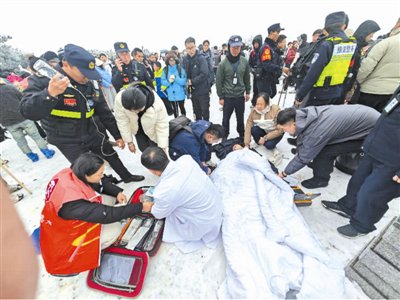
Core Viewpoint - The successful rescue of a tourist at Huangshan Scenic Area highlights the importance of timely emergency response and collaboration among various parties in life-saving situations [2][3][4] Group 1: Incident Overview - On New Year's Day 2026, a young male tourist collapsed at the Guangmingding platform in Huangshan, prompting an immediate response from周伟伟, a nurse from the First Affiliated Hospital of the University of Science and Technology of China [3] -周伟伟 utilized an Automated External Defibrillator (AED) and performed high-quality cardiopulmonary resuscitation (CPR) after assessing the patient's critical condition [3] - The rescue efforts were supported by other medical personnel and bystanders, who provided assistance and called emergency services, demonstrating a collective effort to save the tourist's life [3] Group 2: Importance of Emergency Equipment - The presence of AEDs in public areas like Huangshan Scenic Area is crucial for effective emergency response, as it provides essential equipment for life-saving measures [4] -周伟伟's professional judgment and adherence to emergency protocols were pivotal in initiating the rescue process, underscoring the significance of trained personnel in emergency situations [4]
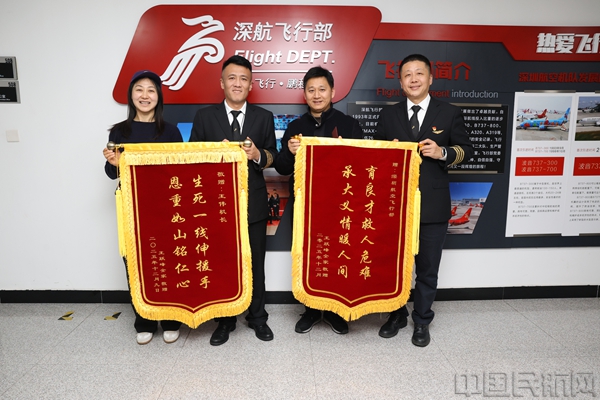
深航机长上演教科书式救人
Zhong Guo Min Hang Wang· 2025-12-31 04:37
Core Viewpoint - The successful rescue of a cardiac arrest victim by a Shenzhen Airlines pilot highlights the importance of emergency medical training and preparedness in the aviation industry [1][3]. Group 1: Incident Overview - A citizen named Wang Yuefeng collapsed on a basketball court due to cardiac arrest, and Shenzhen Airlines pilot Wang Wei quickly intervened using his emergency medical training [1][2]. - Wang Wei performed continuous and standardized cardiopulmonary resuscitation (CPR) and requested the nearby automated external defibrillator (AED) while bystanders called for emergency services [2]. Group 2: Training and Preparedness - Shenzhen Airlines conducts regular emergency medical training, including theoretical refreshers every 12 months and practical assessments on CPR and AED usage every 24 months, ensuring all personnel are well-prepared [3]. - The company has equipped its operations with 42 AEDs and trained over 1,000 ground staff in emergency response skills [3]. Group 3: Community Response - The quick actions of bystanders and community staff, who were familiar with the AED's location, significantly improved the efficiency of the rescue operation [3]. - Wang Yuefeng expressed gratitude towards Wang Wei and Shenzhen Airlines for the successful intervention that saved his life [2].