
快闪经济

Search documents
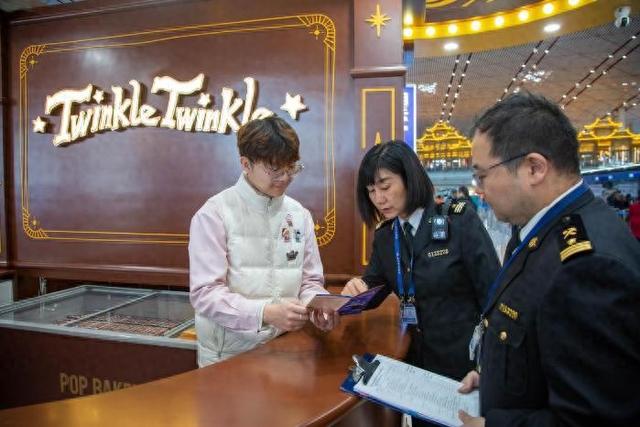
航站楼掀起“快闪风潮” 首都机场海关助力新业态发展
Zhong Guo Xin Wen Wang· 2026-01-07 09:24
Core Viewpoint - The emergence of pop-up stores at Beijing Capital International Airport has created a new consumer trend, driven by rapid approval processes and tailored services from customs authorities [1][5]. Group 1: Rapid Approval - The customs authority at the airport has optimized the approval process, reducing the approval time for health permits by 21.7% compared to the previous year [1][3]. - Companies can complete online applications through the "Internet + Customs" platform, facilitating a streamlined process [1]. Group 2: Proactive Service - A team of experts from the customs authority provides pre-opening guidance tailored to different business types, ensuring compliance with health and safety regulations [3][4]. - Specific support is offered for retail and food service establishments, focusing on storage conditions, food processing layout, and health management of staff [3]. Group 3: Efficient Supervision - The customs authority employs a combination of daily inspections and random checks to ensure compliance with food safety regulations during the operation of pop-up stores [3][4]. - Continuous education and awareness initiatives are implemented to reinforce the responsibility of businesses in adhering to food safety laws [3]. Group 4: Business Environment - The pop-up business model at the airport spans various sectors, including dining, retail, and cultural experiences, contributing to a diverse commercial ecosystem [5]. - The innovative services provided by the customs authority are seen as a catalyst for the growth of the pop-up economy, enhancing the airport's status as a vibrant international hub [5].

城市流量新“窗口”的密码何在?
Xin Hua Ri Bao· 2025-08-14 22:56
Group 1 - The rise of "pop-up economy" is transforming urban consumption patterns, with events like the RED LAND adventure island attracting over 100,000 young players, showcasing significant commercial impact [1] - The market size of "pop-up economy" is projected to exceed 800 billion yuan by 2025, with successful IP pop-up events generating sales in the millions and achieving over 100 million online exposures [1] - Pop-up stores create unique commercial atmospheres through limited-time, limited-quantity, and limited-location offerings, appealing to Gen Z consumers who value fresh experiences and emotional connections [2][3] Group 2 - The "MINITEEN pop-up store" in Nanjing sold out its limited products on the first day, indicating strong demand for exclusive items among young consumers [2][3] - The integration of "pop-up economy" with "first-store economy" is providing new consumer experiences that resonate with young people's aesthetic preferences [5] - Events like the 2025 HOCH Hamburger Festival in Nanjing attracted around 20,000 visitors in just two days, highlighting the effectiveness of combining food and youth culture in pop-up formats [5] Group 3 - Pop-up stores are becoming key players in the first-store economy, offering high operational efficiency and lower trial costs due to their temporary nature [6] - Local IPs are leveraging pop-up stores to create engaging cultural experiences, such as the "Su Chao" merchandise pop-up at Nanjing South Station, which attracted significant attention from travelers [7][8] - The collaboration between pop-up stores and established brands is essential for creating appealing consumer experiences, as seen with the Red Hill Forest Zoo's pop-up store featuring exclusive products [9] Group 4 - The pop-up economy addresses the structural gaps in the market by enhancing experiential consumption, providing brands with effective market feedback mechanisms [7] - The success of pop-up stores relies on their ability to maintain consumer interest and innovate continuously, as challenges such as declining novelty and operational complexities arise [9]