意念控制

Search documents
华大集团CEO尹烨点赞强脑科技:中国创造、中国制造的力量!
Xin Lang Cai Jing· 2026-01-29 12:35
Group 1 - The event "Praise for China's Economy - Entrepreneur Night" was held on January 29 in Beijing, honoring the founder and CEO of Zhejiang Qiangnao Technology Co., Ltd., Han Bicheng [1][2] - Notable attendees included Gao Dekang, Chairman and President of Bosideng Group, and Yin Ye, CEO of BGI Group, who witnessed the honor [1][2] Group 2 - Yin Ye emphasized the emotional impact of technology, highlighting examples of individuals with disabilities who can now engage in activities like dancing and playing piano through advanced prosthetics [3][5] - Han Bicheng stated that Qiangnao Technology aims to use cutting-edge technology, specifically thought control, to assist approximately 5 million people with limb disabilities in China, helping them reintegrate into society and work [3][5]


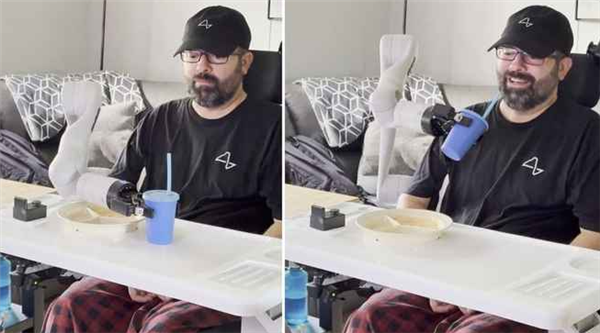
马斯克Neuralink新进展!渐冻症患者通过意念操控机械臂进食【附脑机接口行业市场分析】
Qian Zhan Wang· 2025-10-15 08:44
Core Insights - Brain-computer interface (BCI) technology has made significant advancements, exemplified by a video showing an ALS patient using a Neuralink chip to control a robotic arm to drink water independently for the first time in eight years [1][3]. Industry Overview - The BCI industry integrates neuroscience, artificial intelligence, and microelectronics, enabling direct interaction between thoughts and external devices [3]. - The Chinese government has prioritized BCI technology, including it in the "14th Five-Year Plan" and the 2035 vision as a key frontier technology project [3][8]. Market Dynamics - The healthcare sector is identified as the primary downstream application area for BCI technology, with 56% of companies in China focusing on medical applications [3]. - Clinical trials are underway in major hospitals, such as Shanghai Ruijin Hospital for Parkinson's disease and Beijing Tiantan Hospital for depression treatment [3]. Competitive Landscape - China leads the global BCI field with a patent application share of 55.62%, significantly surpassing the United States, which has 402 applications [6]. Regulatory Environment - The National Healthcare Security Administration in China has established pricing guidelines for BCI services, indicating a structured path for clinical application and reimbursement once the technology matures [8]. Research and Development - Advances in bidirectional BCI technology could potentially treat various neurological disorders, including epilepsy, Parkinson's disease, Alzheimer's disease, and mental health issues, while also aiding in spinal cord injury rehabilitation [9].