
脑机接口芯片

Search documents
蹭热点难逃法网,英集芯误导陈述遭立案
Xin Lang Cai Jing· 2026-02-24 08:44
Group 1 - The company, Yingjixin, claimed on January 6, 2026, that its chip is designed for measuring human bioelectric signals, has been mass-produced, and performs comparably to leading overseas products, which led to significant market excitement and stock price volatility [1][4] - Following regulatory scrutiny, the company admitted the chip is primarily for "non-invasive" applications, fundamentally differing from the mainstream "invasive" technologies, and clarified that the product is still in the market cultivation phase with no significant contribution to current performance [4][5] - The company's misleading statements prompted the China Securities Regulatory Commission (CSRC) to issue a formal investigation notice on February 14, 2026, indicating potential violations of information disclosure principles by manipulating Q&A sessions to attract investors [2][5] Group 2 - Investors who purchased shares between January 6, 2026, and February 13, 2026, and sold or still hold shares after February 14, 2026, may be eligible for compensation due to losses incurred from the company's misleading disclosures [2][5] - The company is under investigation for serious breaches of the principle of truthful, accurate, and complete information disclosure, highlighting the importance of maintaining integrity in corporate communications [5]

科技巨头竞争:从AI迈向脑机接口
Xin Lang Cai Jing· 2026-01-20 05:30
Core Insights - OpenAI's investment in Merge Labs signals a competitive shift in the brain-computer interface (BCI) sector, indicating it may become a focal point in the next wave of technological competition [1][5] - The BCI market is projected to grow significantly, with estimates suggesting it could exceed $10 billion by 2030 [8] Group 1: Company Developments - Merge Labs has raised $252 million in funding, led by Bain Capital, with OpenAI as the largest investor, bringing the company's valuation to $850 million [2][3] - Unlike Neuralink, Merge Labs aims to develop non-invasive BCI technologies that connect neurons using molecules rather than electrodes, avoiding the need for surgical implantation [3] - OpenAI plans to collaborate with Merge Labs to develop foundational models and advanced tools, enhancing the technological progress in the BCI field [4] Group 2: Competitive Landscape - The competition between OpenAI and Neuralink is intensifying, as both companies are vying for dominance in the BCI market, which is characterized by significant financial stakes and long-term public rivalry [5][6] - Other startups like Paradromics, Precision Neuroscience, and Synchron are also actively developing BCI technologies, indicating that the competition extends beyond just OpenAI and Neuralink [6] Group 3: Market Potential - The global BCI market is expected to reach approximately $1.27 billion by 2025, with a potential to surpass $10 billion by 2030, highlighting the substantial growth opportunities in this sector [8] - China's BCI sector is rapidly advancing, with significant investments and government support aimed at achieving key technological breakthroughs by 2027 [9][10] Group 4: Industry Trends - The integration of AI in BCI technology is anticipated to enhance user interaction and operational reliability, positioning BCI as a critical interface for future human-computer interactions [4][7] - The BCI field is evolving into a strategic battleground for major tech companies, with the potential to redefine human capabilities and interactions with technology [7][10]
财经观察:科技巨头竞争从AI迈向脑机接口
Huan Qiu Shi Bao· 2026-01-19 22:40
Core Insights - OpenAI's investment in Merge Labs signals a competitive shift towards brain-computer interface (BCI) technology, indicating it may become a central focus in the next tech race [1][6] - The BCI market is projected to grow significantly, with estimates suggesting it could exceed $10 billion by 2030 [10] Investment and Company Developments - Merge Labs has raised $252 million in funding, led by Bain Capital, with OpenAI as the largest investor, bringing its valuation to $850 million [3][4] - The company aims to develop non-invasive BCI technologies that connect humans and AI without the need for surgical implants [4][9] Competitive Landscape - The competition between OpenAI and Neuralink, founded by Elon Musk, highlights a personal rivalry that may elevate public interest in the BCI sector [4][7] - Other startups like Paradromics, Precision Neuroscience, and Synchron are also actively developing BCI technologies, indicating a broader competitive environment beyond just two companies [7] Technological Implications - AI is expected to enhance BCI development by enabling systems that can understand user intent and operate reliably, potentially making Merge Labs a key player in integrating AI with BCI [5][9] - Current BCI technologies allow paralyzed patients to control devices, but future advancements could enable more complex tasks, marking a significant technological paradigm shift [8] Market Trends and Future Outlook - The global BCI market is anticipated to reach approximately $1.27 billion by 2025, with significant investments already made in both invasive and non-invasive technologies [10][14] - China's rapid development in the BCI field, supported by government initiatives, positions it as a strong competitor to the U.S., particularly in non-invasive applications [12][13]

两公司“蹭热点”火速受罚 董秘信披责任再压实
Zheng Quan Ri Bao· 2026-01-08 16:54
Core Viewpoint - The article emphasizes the importance of accurate and complete information disclosure by listed companies, particularly in the context of the recent regulatory actions against two companies involved in the "brain-computer interface" sector for misleading investors [1][3]. Group 1: Regulatory Actions - The Shanghai Stock Exchange issued warnings to two companies for inaccurate and incomplete disclosures related to their "brain-computer interface" business, highlighting the need for compliance in information disclosure [1][3]. - The regulatory actions serve as a deterrent against "hype-driven" behavior in the market, aiming to protect investors and maintain market order [1][3][4]. Group 2: Market Reactions - Following the disclosures, both companies experienced significant stock price fluctuations, indicating the market's heightened sensitivity to "brain-computer interface" related news [3]. - The regulatory body noted that companies must exercise caution and accuracy in their disclosures to avoid misleading investors [3]. Group 3: Responsibilities of Company Secretaries - Company secretaries (董秘) are identified as the primary responsible parties for ensuring compliance in information disclosure, and they must enhance their understanding of voluntary disclosure practices [7][8]. - The recent regulatory measures against the company secretaries of the two firms underline the necessity for them to verify the authenticity and completeness of disclosed information [8]. Group 4: Legal Implications - Companies and their responsible individuals may face civil liability for misleading disclosures, as evidenced by a recent court case where a company was ordered to compensate an investor for losses due to misleading statements [5][6]. - The article stresses that both mandatory and voluntary disclosures must adhere to principles of truthfulness, accuracy, completeness, and timeliness, with severe consequences for violations [6][7].
【立方早知道】两科创板公司被监管警示/宝新能源实控人被罚没3754万元/芯迈半导体再次递表港交所
Sou Hu Cai Jing· 2026-01-08 02:27
Group 1: Regulatory Actions - The actual controller of Baoneng New Energy, Ye Huanneng, was fined a total of 37.54 million yuan for concealing shareholding information [1] - The Shanghai Stock Exchange issued regulatory warnings to two companies, Yihuilong and Yingjixin, for inaccurate disclosures related to their "brain-computer interface" business [2] Group 2: Corporate Developments - Xiaomi's founder Lei Jun addressed concerns regarding the "marketing master" label during a live broadcast, emphasizing the importance of product quality over marketing [4] - Chipmaker Ximai Semiconductor submitted its listing application to the Hong Kong Stock Exchange [15] - Kuozi Jiao announced a significant decrease in expected net profit for 2025, projecting a decline of 50% to 60% compared to the previous year [16] - Hongbo Co. announced the cessation of operations for its subsidiary Hongbo Haotian, which will transition to a new business model [17] - Hehe Information's major shareholder, Dongfang Fuhai, reduced its stake to below 5% through a series of transactions [18] - Tianmai Technology reported a change in its actual controller following a share transfer of 26.10% of its total shares [20] - Meng Xue, the vice chairman of Guangdong Xinhongze Packaging, voluntarily waived his salary to focus on long-term company development [22] - Yili Group's chairman plans to reduce his stake by up to 0.98% through block trades or centralized bidding [23] - ST Sunshine announced a suspension of trading due to a potential change in control by its major shareholder [24] Group 3: Industry Trends - The People's Bank of China announced a 110 billion yuan reverse repurchase operation to maintain liquidity in the banking system [6] - The central bank has increased its gold reserves for 14 consecutive months, reaching 7.415 million ounces by the end of December 2025 [8] - Eight departments issued implementation opinions for the "Artificial Intelligence + Manufacturing" initiative, aiming for significant advancements in AI technology by 2027 [10] - The National Medical Products Administration is optimizing the review and approval process for urgently needed foreign drugs to meet clinical demands [11] - The State Administration for Market Regulation and the Cyberspace Administration of China released guidelines for the supervision of live e-commerce [13]


计算机事件点评:Neuralink量产在即,国产脑机链有望充分受益
Guohai Securities· 2026-01-07 14:15
Investment Rating - The industry investment rating is "Recommended" (maintained) [1] Core Insights - Neuralink is set to begin large-scale production in 2026, transitioning to a more streamlined and fully automated surgical process [7] - The brain-computer interface (BCI) market is projected to reach approximately $3.19 billion by 2025, with significant growth expected in medical applications, potentially reaching $40 billion by 2030 and $145 billion by 2040 [9] - The Chinese BCI market is anticipated to exceed 3.8 billion yuan by 2025, with a compound annual growth rate of around 20% [10] - The report emphasizes the strong demand in the medical sector, particularly for spinal cord injury rehabilitation, and the increasing interest in consumer electronics and industrial applications [10] Summary by Sections Industry Performance - The computer industry has shown a relative performance of 5.7% over the last month, -3.9% over the last three months, and 33.3% over the last year, outperforming the CSI 300 index [5] Investment Highlights - Neuralink aims to achieve full human-AI connectivity through its three product lines, with plans to increase electrode counts significantly by 2028 [8] - The report identifies key applications such as telepathy for motor function disorders, blindsight for visual reconstruction, and deep brain stimulation for neurological conditions [9] Policy and Technological Support - The Chinese government has established a comprehensive support system for the BCI industry, with initiatives aimed at fostering innovation and establishing a competitive ecosystem by 2030 [11] - Significant technological advancements have been made in the BCI field, including successful clinical trials and innovations in both invasive and non-invasive technologies [12] Related Companies - The report highlights several companies that are expected to benefit from the growth in the BCI sector, including Yanshan Technology, Entropy Technology, and others [12]
东微半导20260106
2026-01-07 03:05
Summary of Dongwei Semiconductor's Conference Call Company Overview - **Company**: Dongwei Semiconductor - **Industry**: Brain-Computer Interface (BCI) and Power Solutions Key Points on Brain-Computer Interface Technology - **Liquid Flexible Electrode Technology**: Dongwei's liquid flexible electrode technology utilizes hydraulic injection to stiffen probes, eliminating the need for tungsten needle assistance. This method has shown a reduction in trauma by approximately 70% in mouse experiments, with ongoing trials in macaques expected to further validate its effectiveness in humans [2][3][5]. - **Comparison with Competitors**: Compared to companies like Neuralink, Dongwei's technology significantly reduces neuronal damage and immune response, enhancing long-term reliability. The effectiveness of their electrodes has improved by over 70% in animal tests [2][5][6]. - **Strategic Partnerships**: Dongwei has formed strategic collaborations with top hospitals, including Huashan Hospital, to support clinical applications and research [2][10]. - **Investment in R&D**: The company plans to invest a total of 1.5 billion yuan in chip development over three years, with an annual investment of approximately 100 million yuan in electrodes, clinical applications, and algorithms [2][11]. Development Plans and Market Position - **Full Industry Chain Control**: Dongwei aims to be a comprehensive invasive BCI company, controlling all aspects from electrodes to chips, algorithms, and clinical processes. This positions them uniquely in the market, as few domestic startups possess such capabilities [10][12]. - **Clinical Trials and Commercialization**: The company anticipates rapid commercialization of its products, potentially faster than competitors like Neuralink, due to lower costs and supportive policies in China. They expect to achieve significant clinical applications within two to three years [12][21]. - **Challenges in Chip Development**: Key challenges in BCI chip development include integrating various technologies such as digital, analog, power, transmission, and RF. Dongwei has accumulated expertise in these areas and plans to acquire or invest in relevant teams to enhance their product offerings [9][10]. Financial and Market Insights - **Cost Structure**: The cost of neural electrodes is influenced by various factors, with the most significant expenses arising from clinical procedures and maintenance rather than the electrodes themselves. As production scales up, marginal costs are expected to decrease [7]. - **Market Demand**: There is a strong domestic demand for specialized BCI chips, and Dongwei aims to meet this need through independent research and development [9][11]. Future Outlook - **Technological Aspirations**: Dongwei envisions BCI technology not only addressing disabilities but also enhancing the quality of life for the aging population, positioning it as a universal technology for human welfare [21][22]. - **Power Solutions Expansion**: The company is also focusing on power solutions, particularly in AI server power supply and silicon carbide devices, which are expected to see significant growth in the coming years [15][16][17]. Additional Insights - **Competitive Landscape**: Dongwei acknowledges the competitive nature of the semiconductor and BCI markets, with ongoing efforts to enhance their market share against established international players [18][19]. - **Long-term Vision**: The company aims to become a leading provider of advanced power solutions, focusing on efficient energy conversion and addressing structural opportunities in various sectors, including AIDC and renewable energy [22].

港股收评:恒指涨1.38%,中资券商股火爆,有色金属领涨大市!
Ge Long Hui· 2026-01-06 08:40
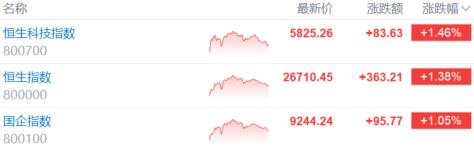
Market Performance - The Hong Kong stock market showed strong performance with the Hang Seng Index rising by 1.38% to close at 26,710 points, while the Hang Seng Tech Index increased by 1.46% [1] - Major sectors leading the market included Chinese brokerage stocks, insurance stocks, and non-ferrous metals, with significant gains in copper stocks [1] Sector Highlights - Chinese brokerage stocks experienced a surge, with Citic Securities rising by 12.03%, and other leading firms like CICC and China Galaxy also showing strong performance [5] - The gold and precious metals sector saw notable increases, with Zhaojin Mining rising over 7% and analysts predicting gold prices to average $4,538 per ounce by 2026 [6][7] Technology Sector - Major tech stocks mostly rose, with NetEase increasing by nearly 3% and Kuaishou by 2.58%, while Alibaba and Xiaomi faced declines [3][4] - Analysts suggest that leading internet companies in China are expected to benefit from AI developments, potentially leading to upward adjustments in long-term profit growth expectations [3] Investment Trends - Southbound capital saw a net inflow of HKD 2.879 billion, indicating a positive sentiment among investors [9] - The outlook for the market remains optimistic, with expectations of continued inflows from both domestic and foreign investors as the year progresses [11]
【新华社】加速“接入”现实!脑机接口迈入产业化快车道
Xin Hua She· 2025-12-24 03:32
Core Insights - The article discusses the advancements in brain-computer interface (BCI) technology in China, highlighting significant clinical trials and the potential for industry growth by 2025 [1][2][5] Group 1: Technological Advancements - The second clinical trial of an invasive BCI system has successfully enabled high-level paraplegic patients to control devices using their thoughts, marking a shift from 2D screen control to 3D physical interactions [1] - The second-generation BCI product released by Shanghai Ladder Medical Technology Co., Ltd. has increased the number of signal channels from 64 to 256, improving interaction efficiency by approximately 60% [2] - Breakthroughs in core components and decoding algorithms have been achieved, with increased channel counts and improved stability in BCI devices [2] Group 2: Application Scenarios - Invasive BCIs are primarily focused on medical applications, with numerous clinical cases addressing spinal cord injuries and stroke rehabilitation, while initial explorations in areas like blindness recovery and addiction treatment are underway [3] - Non-invasive BCIs are being developed for consumer and industrial applications, with devices already in mass production for fatigue monitoring, emotion recognition, and brain-controlled peripherals [3] Group 3: Policy and Industry Development - The establishment of the "Brain Intelligence World" industrial cluster in Shanghai aims to foster collaboration among nearly 20 teams and companies, with an initial investment of 1.2 billion yuan [4] - The Chinese government has set ambitious goals for the BCI industry, aiming for significant innovation and global competitiveness by 2030, alongside the introduction of new pricing projects and medical device standards [5] - The BCI market in China is expanding, with over 200 companies currently operating, and projections suggest the market could exceed 3.8 billion yuan by 2025 [5]
加速“接入”现实!脑机接口迈入产业化快车道
Xin Hua Wang· 2025-12-23 10:01
Core Insights - The article discusses the advancements in brain-computer interface (BCI) technology in China, highlighting significant clinical trials and the potential for industry growth by 2025 [1][5]. Group 1: Technological Advancements - The second clinical trial of an invasive brain-computer interface has successfully allowed patients with high-level paraplegia to control devices using their thoughts, marking a shift from 2D screen control to 3D physical interactions [1]. - The second-generation BCI product released by Shanghai Ladder Medical Technology Co., Ltd. has increased the number of signal channels from 64 to 256, improving interaction efficiency by approximately 60% [2]. - Breakthroughs in core components and decoding algorithms have been achieved, with increased channel counts and improved stability in BCI chips and implanted electrodes [2]. Group 2: Application Scenarios - BCI technology is being rapidly industrialized, with applications expanding into various fields, including treatment for autism in children, where devices can assess brain function and stimulate abnormal neural circuits [3]. - Invasive BCIs are primarily focused on medical applications, with numerous clinical cases addressing spinal cord injuries and stroke rehabilitation, while non-invasive BCIs are being developed for consumer and industrial applications [3]. Group 3: Policy and Industry Development - The establishment of the "Brain Intelligence World" industrial cluster in Shanghai aims to foster collaboration among nearly 20 teams and enterprises, with an initial investment of 1.2 billion yuan [4]. - The Chinese government has set ambitious goals for the BCI industry, aiming for significant innovation and global competitiveness by 2030, alongside the introduction of new medical device standards [4][5]. - The BCI market in China is expected to exceed 3.8 billion yuan by 2025, with over 200 companies currently operating in the sector [5].