意识科学

Search documents
2025年意识科学十大前沿进展
腾讯研究院· 2026-01-09 08:04
Core Insights - The article discusses the significant advancements in consciousness research in 2025, highlighting the failure of two dominant theories and the unexpected support for quantum consciousness theory [4][6][15]. - A landmark study published in *Nature* involved a large-scale adversarial collaboration that tested two competing theories of consciousness, leading to the conclusion that neither theory emerged victorious, marking a shift towards empirical science in the field [7][15]. - New findings suggest that consciousness may not be solely a cortical phenomenon, with evidence pointing to the thalamus and brainstem playing crucial roles in conscious perception [16][19][20]. Adversarial Collaboration in Consciousness Research - The COGITATE alliance, comprising 41 researchers from 12 labs, conducted the largest adversarial study in consciousness science, establishing a new paradigm for research [7][8]. - The two theories tested were the Integrated Information Theory (IIT) and the Global Neuronal Workspace Theory (GNWT), each representing different metaphors for understanding consciousness [9][12]. - The results indicated that while IIT had some tactical victories, it failed to confirm its core mechanisms, and GNWT faced significant challenges, leading to the conclusion that both theories had limitations [13][14][15]. Thalamic Role in Consciousness - A study from a Chinese team revealed that when individuals become aware of stimuli, signals first activate in the thalamus before reaching the prefrontal cortex, suggesting a critical gating role for the thalamus [19][20]. - The findings indicate that the coupling strength between thalamic nuclei and the lateral prefrontal cortex is significantly higher than with other brain regions, emphasizing the thalamus's importance in conscious perception [20][22]. Quantum Consciousness Theory - The article discusses a revival of quantum consciousness theory, which posits that consciousness arises from quantum processes within neuronal microtubules, a concept previously dismissed by mainstream neuroscience [28][34]. - Recent studies have provided experimental support for this theory, linking anesthetic mechanisms to quantum effects in the brain [30][32][33]. Cognitive Motor Dissociation - A significant study found that 25% of patients diagnosed as being in a vegetative state actually exhibit cognitive motor dissociation, indicating they can understand and respond to commands internally, despite being unable to physically react [36][38][39]. - This discovery has profound ethical implications, as it challenges the assumptions about the consciousness of patients in critical care settings [38][39]. AI Consciousness and Ethical Considerations - A commentary by Turing Award winner Yoshua Bengio raised alarms about the potential misattribution of consciousness to AI systems, warning against giving AI self-preservation goals [41][43]. - Contrasting views suggest that advanced AI models may possess some form of conscious experience, with estimates of 15% to 20% probability of such experiences occurring in interactions with cutting-edge AI [44][46]. New Infrastructure in Consciousness Research - The article highlights advancements in consciousness research infrastructure, including digital twins for virtual clinical trials and new brain-computer interface technologies that enhance the ability to study and interact with consciousness [75][80]. - These innovations are paving the way for more precise medical interventions and a deeper understanding of consciousness disorders [78][83].


欧洲顶尖神经学家感慨:这就是中国的力量…
Guan Cha Zhe Wang· 2025-12-18 12:42
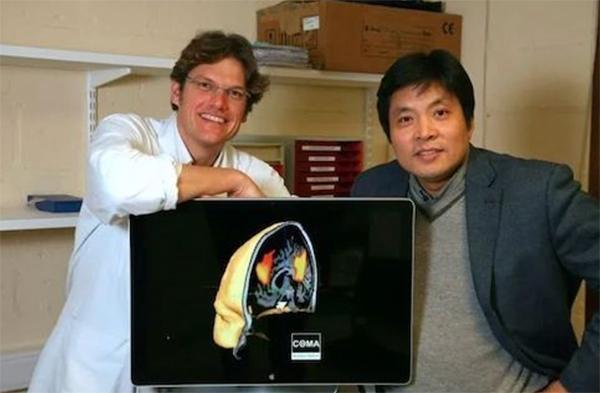
Group 1 - Steven Laureys, a prominent Belgian neurologist, emphasizes the opportunity for collaboration with China in scientific research, particularly in the context of increasing Chinese investment in science despite challenges in the U.S. research environment [1][2] - Laureys has expanded his global research network to China, specifically partnering with Hangzhou Normal University, highlighting China's emergence as a significant force in global scientific innovation [1][2] - The collaboration aims to address the needs of a large population of patients with consciousness disorders in China, where there is a lack of national guidelines for assessing consciousness levels and making treatment decisions [5][6] Group 2 - The Zhejiang-Belgium Consciousness Disorders Joint Laboratory, established in October, is the only government-supported research center in China focused on this field, aiming to create a comprehensive framework for case analysis [5][6] - Laureys also leads research in Europe and the U.S. on the neural basis of commercial success, intending to adapt this research to the unique cultural context of China [6] - The collaboration is expected to have profound impacts on clinical and ethical decision-making in the treatment of consciousness disorders, as highlighted by his partner at Hangzhou Normal University [3][5]