慢性偏头痛治疗

Search documents
市一院成功开展外周神经松解术 为慢性偏头痛患者提供治疗新选择
Zhen Jiang Ri Bao· 2025-12-17 23:40
Core Viewpoint - The First People's Hospital of Zhenjiang has successfully performed a new surgical treatment for chronic migraine patients who do not respond well to conservative drug therapy, offering a new option for relief [1][2]. Group 1: Treatment Methodology - The surgical procedure involves peripheral nerve decompression combined with arterial ligation, targeting specific peripheral nerves associated with headache pain [2]. - The surgery is minimally invasive, performed under local anesthesia, typically taking 30 to 40 minutes, with small incisions of about 1 to 2 centimeters [2]. - Patients can expect rapid recovery, often being discharged the day after surgery [2]. Group 2: Patient Selection and Efficacy - The procedure is indicated for chronic headache patients with a history of more than 3 months and at least 8 headache episodes per month, or daily pain that has not responded to standard drug treatments [3]. - A recent case involved a 70-year-old male patient who experienced significant pain relief following the surgery, demonstrating the immediate effectiveness of the procedure [2]. Group 3: Mechanism of Action - The surgery addresses both nerve and vascular components of headache pain, providing a comprehensive approach to blocking pain signals [3]. - The underlying mechanisms of headache include direct nerve stimulation and abnormal vascular pulsation, which the surgery aims to alleviate [3]. Group 4: Implications for Future Treatment - The introduction of this new technique marks a significant advancement in the comprehensive treatment of migraines at the First People's Hospital of Zhenjiang, offering hope to patients suffering from chronic migraines with inadequate drug treatment responses [3].
4.3亿融资!植入式神经刺激器完成B轮
思宇MedTech· 2025-05-29 09:06
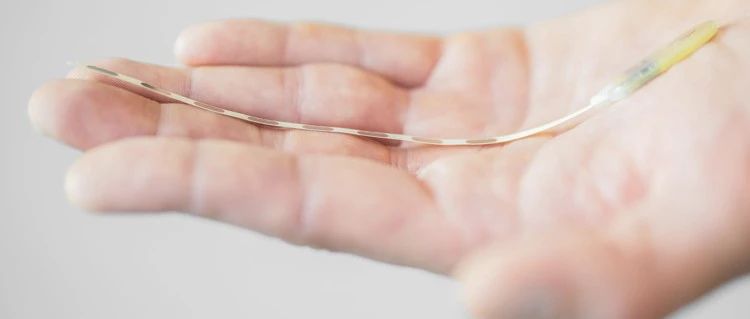
Core Viewpoint - The article discusses the advancements in migraine treatment, particularly focusing on the MySalvia Therapy system developed by Salvia BioElectronics, which aims to address unmet needs in chronic migraine management through innovative neurostimulation techniques [1][3][14]. Group 1: Company Overview - Salvia BioElectronics, founded in 2017 and headquartered in Eindhoven, Netherlands, specializes in minimally invasive neurostimulation technologies based on neuroanatomical mapping [14]. - The company has successfully raised a total of $105 million in funding, with the latest round being a $60 million Series B financing aimed at advancing its core product, MySalvia Therapy [1][14]. - The RECLAIM study, a multi-center randomized controlled trial for MySalvia Therapy, is expected to complete its first round of results by 2027 [14]. Group 2: Market Opportunity - Migraine is the second leading cause of disability globally, affecting over 1.06 billion people, with chronic migraine patients constituting approximately 10%-15% of this population [3]. - The economic burden of migraine exceeds $110 billion annually, highlighting a significant market opportunity for effective treatments [3]. - Despite advancements in oral preventive medications and biologics, there remains a strong demand for non-drug, personalized, and long-term effective treatment options for chronic migraine sufferers [3][13]. Group 3: MySalvia Therapy System - MySalvia Therapy involves the implantation of two ultra-thin electrodes targeting the trigeminal and occipital nerves to modulate nerve excitability and reduce the frequency and intensity of migraine attacks [4][10]. - The system has received FDA designation as a "Breakthrough Device" and is currently undergoing the RECLAIM registration trial, with early data showing a reduction in migraine days from 22 to 7 per month, significantly outperforming non-invasive devices [6][10]. - The dual-target approach of MySalvia Therapy aims to enhance control over migraine pathways, offering a differentiated solution in the neurostimulation market [10][15]. Group 4: Competitive Landscape - The non-invasive neurostimulation market for migraine has matured, with several FDA-approved devices available, including gammaCore, SAVI Dual, Nerivio, and Cefaly, which primarily target peripheral nerve stimulation [7][11][12]. - While these non-invasive devices are user-friendly and have low risks, they may not provide sufficient depth of treatment for severe chronic migraine patients, indicating a gap that MySalvia Therapy could fill [12][13]. - MySalvia Therapy's invasive nature and dual-target mechanism present a potential "high-level solution" for patients with unmet treatment needs, particularly those who do not respond to existing therapies [13].