成瘾性设计

Search documents
又罚十几亿美元?欧盟认定 TikTok “成瘾算法”违规。网友:吃相难看!就是想要钱
程序员的那些事· 2026-02-09 10:27
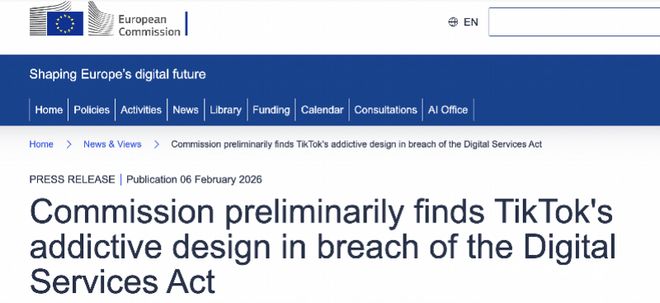
Core Viewpoint - The European Union has preliminarily determined that TikTok's "addictive design" violates the Digital Services Act (DSA), following a two-year investigation [1][3]. Group 1: Findings from the Investigation - The EU identified that features such as infinite scrolling, autoplay, and push notifications on TikTok encourage compulsive usage, particularly among minors, posing serious risks to mental health [3]. - The conclusion reached by the EU is based on extensive research conducted over two years [3]. Group 2: Potential Consequences for TikTok - The EU Commission is not merely seeking fines but aims to fundamentally alter TikTok's core product logic, including disabling infinite scrolling, enhancing screen time breaks, especially at night, and adjusting its highly personalized recommendation system [4]. - If the allegations are upheld, TikTok could face fines of up to 6% of its global annual revenue, potentially amounting to billions of dollars [5]. Group 3: TikTok's Response - TikTok has responded by stating that the investigation's findings are "completely wrong and baseless," indicating plans to contest the conclusions [6].


事关成瘾性设计!欧盟调查TikTok,释放何种信号?
Nan Fang Du Shi Bao· 2026-02-07 13:24
Core Viewpoint - The European Commission has preliminarily determined that TikTok violates the Digital Services Act due to "addictive design" features, which TikTok has refuted as incorrect and baseless [1][2]. Group 1: TikTok's Addictive Design - The European Commission has identified features such as infinite scrolling, autoplay, push notifications, and highly personalized recommendation systems as addictive designs that may harm users' mental and physical health, particularly minors and vulnerable adults [2]. - TikTok is accused of failing to adequately assess the impact of these features on user behavior, leading to compulsive usage and reduced self-control [2]. - The Commission noted that TikTok has not effectively addressed the risks associated with these features, as existing tools for screen time management and parental controls are often overlooked or disabled [2]. Group 2: Required Adjustments and Potential Penalties - The European Commission suggests that TikTok must modify its core service design, including gradually disabling key addictive features like infinite scrolling and implementing effective screen break times [3]. - If the investigation confirms the violations, TikTok could face fines of up to 6% of its global annual revenue, depending on the nature, severity, and duration of the violations [3]. - TikTok has publicly stated that it will challenge the preliminary findings of the European Commission [3]. Group 3: Broader Regulatory Context - The Digital Services Act is set to fully come into effect on February 17, 2024, aiming to provide safer and more transparent digital services for EU users [3]. - The European Commission has recently initiated investigations into other platforms, including X (formerly Twitter) and Meta, indicating a broader regulatory focus on content safety and product design across social media platforms [4][6]. - Analysts suggest that the EU's actions signal a shift in the market from maximizing user engagement to emphasizing design responsibility, with regulatory bodies equipped to enforce this transition [6].