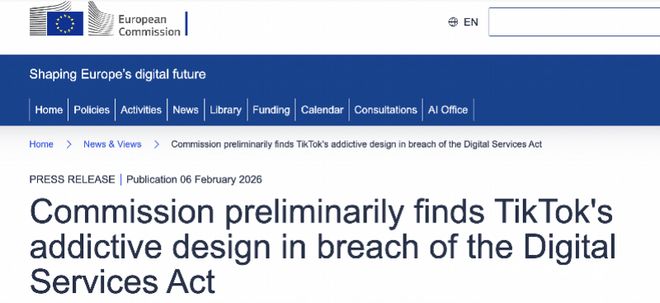
设计责任

Search documents
被欧盟认定存在“上瘾式”设计,TikTok回应
Qi Lu Wan Bao· 2026-02-08 00:34
Core Insights - The European Commission has concluded that TikTok's design violates the EU's Digital Services Act due to "addictive" features, prompting a formal investigation [1][2] - TikTok has rejected the findings, claiming they are "completely wrong and unfounded," and plans to appeal [2] Group 1: Investigation Findings - The investigation revealed that TikTok failed to adequately assess the mental and physical health impacts of its autoplay features on users, particularly children [1] - The Commission criticized TikTok's time management tools as being easily overlooked by young users, and noted that parental control features require additional time and skills to activate [1] - Recommendations for TikTok include implementing a "screen use break" mechanism at night, adjusting recommendation algorithms for personalized content, and disabling "infinite scrolling" to prevent rapid browsing of videos [1] Group 2: Potential Consequences - The European Commission can impose fines of up to 6% of TikTok's global annual revenue, potentially amounting to billions of dollars, if the platform does not change its service design in Europe [2] - The investigation serves as a reality check for TikTok and a warning signal for all social media platforms, indicating a shift from maximizing engagement to design responsibility [2] - Other countries, including Australia, are also considering regulations to limit social media access for minors, reflecting a growing trend towards stricter controls on youth access to social media [2]
被欧盟认定存在上瘾式设计,TikTok回应
Di Yi Cai Jing Zi Xun· 2026-02-07 15:05
Core Viewpoint - The European Commission has concluded that TikTok's design violates the EU's Digital Services Act due to its "addictive" features, prompting a formal investigation into the platform's measures to prevent illegal content and protect minors [2][3]. Group 1: Investigation Findings - The European Commission's preliminary findings indicate that TikTok has not adequately assessed the potential mental and physical health impacts of its autoplay features on users, particularly children [2]. - TikTok's time management tools are deemed "easily overlooked," especially for younger users, and parental control features require "extra time and skills" to activate [2]. - Recommendations for TikTok include implementing a "screen use break" mechanism at night, adjusting recommendation algorithms for personalized content, and disabling "infinite scrolling" to prevent rapid browsing of videos [2]. Group 2: Potential Penalties - The European Commission could impose fines on TikTok of up to 6% of its global annual revenue, potentially amounting to billions of dollars [3]. - To avoid penalties, TikTok must alter its service design in Europe [3]. Group 3: Industry Implications - Analysts suggest that the EU's actions represent a "reality check" for TikTok and serve as a warning to all social media platforms, indicating a shift from maximizing engagement to design responsibility [4]. - Australia has implemented a social media ban for users under 16, marking the first legislative action of its kind, with other countries considering similar restrictions on youth access to social media [4].

被欧盟认定存在上瘾式设计,TikTok回应
第一财经· 2026-02-07 14:56
Core Viewpoint - The European Commission has concluded that TikTok's design violates the EU's Digital Services Act due to its "addictive" features, prompting a formal investigation into the platform's measures against illegal content and protection of minors [3][4]. Group 1: Investigation Findings - The European Commission's preliminary findings indicate that TikTok has not adequately assessed the potential mental and physical health impacts of its autoplay features on users, particularly children [3]. - TikTok's time management tools are deemed "easily overlooked," especially by younger users, and parental control features require additional time and skills to activate [3]. - Recommendations for TikTok include implementing a "screen use break" mechanism at night, adjusting recommendation algorithms for personalized content, and disabling "infinite scrolling" to prevent rapid browsing of videos [3]. Group 2: Potential Consequences - The European Commission can impose fines on TikTok of up to 6% of its global annual revenue, potentially amounting to billions of dollars if the platform does not alter its service design in Europe [4]. - TikTok has stated that the Commission's findings are "completely erroneous and baseless" and plans to contest the results [5]. Group 3: Broader Regulatory Context - The investigation into TikTok serves as a reality check for the platform and a warning signal for all social media platforms, indicating a shift from maximizing engagement to design responsibility [5]. - Other countries, such as Australia, have begun implementing age restrictions on social media access for users under 16, reflecting a growing trend towards regulating youth access to these platforms [5].
被欧盟认定存在“上瘾式”设计,TikTok回应
财联社· 2026-02-07 14:09
Core Viewpoint - The European Commission has initiated an investigation into TikTok for potential violations of the EU's Digital Services Act, particularly regarding its "addictive" design and failure to protect minors and prevent the spread of illegal content [1][2]. Group 1: Investigation Findings - The European Commission's preliminary findings indicate that TikTok has not adequately assessed the mental health impacts of features like autoplay, especially on children [1]. - TikTok's time management tools are deemed "easily overlooked," and parental controls require additional time and skills to activate [1]. - Recommendations for TikTok include implementing a "screen use break" mechanism at night, adjusting recommendation algorithms for personalized content, and disabling "infinite scrolling" to prevent rapid video consumption [1]. Group 2: Potential Consequences - The European Commission could impose fines on TikTok of up to 6% of its global annual revenue, potentially amounting to billions of dollars [2]. - To avoid penalties, TikTok must alter its service design in Europe [2]. Group 3: Industry Implications - The investigation serves as a "reality check" for TikTok and a warning signal for all social media platforms, indicating a shift from maximizing engagement to design responsibility [3]. - Regulatory bodies now possess tools to enforce this shift, as evidenced by recent actions against other platforms like X [3]. - Australia has implemented a social media ban for users under 16, marking a significant legislative move towards age restrictions on social media access [3].
事关成瘾性设计!欧盟调查TikTok,释放何种信号?
Nan Fang Du Shi Bao· 2026-02-07 13:24
Core Viewpoint - The European Commission has preliminarily determined that TikTok violates the Digital Services Act due to "addictive design" features, which TikTok has refuted as incorrect and baseless [1][2]. Group 1: TikTok's Addictive Design - The European Commission has identified features such as infinite scrolling, autoplay, push notifications, and highly personalized recommendation systems as addictive designs that may harm users' mental and physical health, particularly minors and vulnerable adults [2]. - TikTok is accused of failing to adequately assess the impact of these features on user behavior, leading to compulsive usage and reduced self-control [2]. - The Commission noted that TikTok has not effectively addressed the risks associated with these features, as existing tools for screen time management and parental controls are often overlooked or disabled [2]. Group 2: Required Adjustments and Potential Penalties - The European Commission suggests that TikTok must modify its core service design, including gradually disabling key addictive features like infinite scrolling and implementing effective screen break times [3]. - If the investigation confirms the violations, TikTok could face fines of up to 6% of its global annual revenue, depending on the nature, severity, and duration of the violations [3]. - TikTok has publicly stated that it will challenge the preliminary findings of the European Commission [3]. Group 3: Broader Regulatory Context - The Digital Services Act is set to fully come into effect on February 17, 2024, aiming to provide safer and more transparent digital services for EU users [3]. - The European Commission has recently initiated investigations into other platforms, including X (formerly Twitter) and Meta, indicating a broader regulatory focus on content safety and product design across social media platforms [4][6]. - Analysts suggest that the EU's actions signal a shift in the market from maximizing user engagement to emphasizing design responsibility, with regulatory bodies equipped to enforce this transition [6].