
战争权力决议

Search documents
“他们公然撒了谎”!美参议院否决限制特朗普战争权议案,白宫多线施压引担忧
第一财经· 2026-01-15 05:57
Core Viewpoint - The article discusses the recent Senate vote that narrowly defeated a war powers resolution aimed at restricting President Trump's ability to use military force against Venezuela without congressional approval, highlighting divisions within the U.S. Congress regarding Trump's foreign policy direction [3]. Division and Debate - Following the arrest of Venezuelan President Maduro, some U.S. lawmakers accused the government of misleading Congress about its intentions regarding regime change in Venezuela, with specific accusations directed at Secretary of State Rubio and Defense Secretary Hegseth for allegedly lying to Congress [5]. - Senate Minority Leader Schumer emphasized the need to uphold Congress's constitutional responsibilities and effectively check presidential power, arguing that the American public does not want Trump to send troops into danger without thorough congressional debate [5]. - Senator Kaine, one of the resolution's main sponsors, argued that claiming the Venezuela action does not fall under the War Powers Resolution's definition of "imminent hostile action" is a blatant violation of reasonable interpretations of that term [5]. Concerns - The article notes that Trump has threatened military intervention in Iran amid ongoing protests and unrest, indicating a potential escalation in U.S. military involvement in the region [6][7]. - Trump reiterated his desire for the U.S. to acquire Greenland, claiming it is crucial for the U.S. missile defense system, which has raised concerns about respect for Danish territorial integrity and the self-determination of Greenland's people [7]. - A bipartisan proposal, the NATO Unity Protection Act, was introduced to prevent the U.S. Department of Defense and State Department from using funds to block, occupy, annex, or otherwise exert control over any other NATO member's territory, reflecting internal congressional concerns [7].

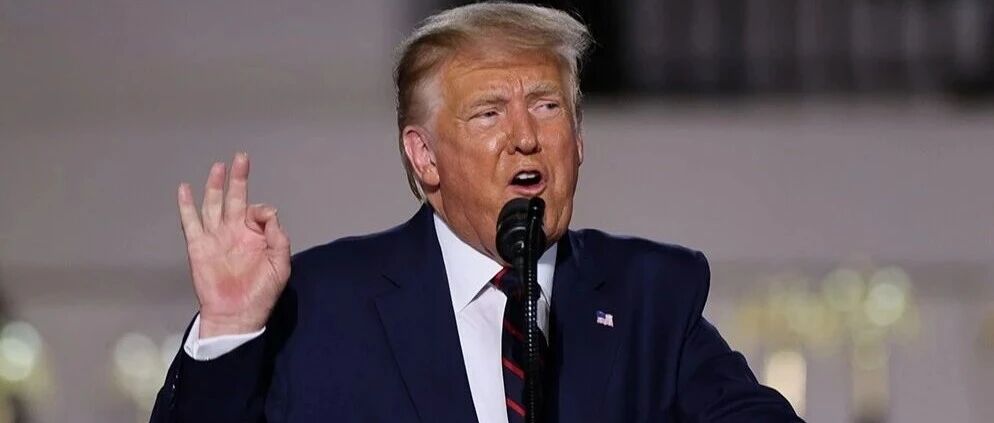
五人“倒戈”,特朗普愤怒
第一财经· 2026-01-09 05:14
Group 1 - The U.S. Senate passed a bill with a vote of 52 to 47 to prevent President Trump from taking further military action against Venezuela [3][4] - The bill, named the "War Powers Resolution," requires Trump to seek congressional approval before using military force against Venezuela [4] - The vote indicates sufficient support for the bill in the Senate, and it will now be submitted to the House of Representatives for consideration [4] Group 2 - President Trump criticized five Republican senators who supported the bill, stating they should be ashamed for voting with Democrats [5] - Senator Rand Paul emphasized that bombing another country's capital and capturing its leader constitutes an act of war, which the Constitution does not grant the president the authority to do [6]
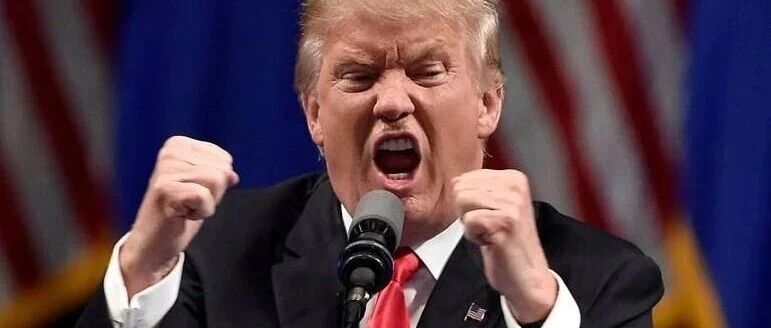
美国参议院拟投票限制特朗普未来对委内瑞拉发动军事打击
第一财经· 2026-01-08 23:54
Core Viewpoint - The U.S. Senate has advanced a resolution to limit President Trump's military actions against Venezuela, indicating a significant political move regarding U.S. foreign policy [1] Group 1 - The Senate voted 52 to 47 to advance the "War Powers Resolution," which requires Trump to seek congressional approval before deploying military forces again [1] - The resolution reflects a procedural vote that suggests it may pass in the final Senate vote, highlighting bipartisan concerns over military engagement [1] - Following the Senate's decision, the resolution will be sent to the House of Representatives, where the Republican majority is slim, complicating its passage [1] Group 2 - The White House has indicated that President Trump will veto the resolution concerning military action in Venezuela, showcasing a potential conflict between the executive and legislative branches [1]
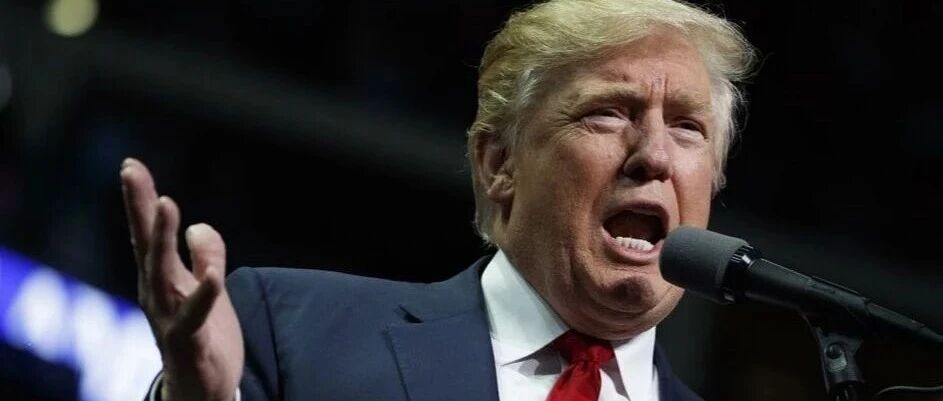
美国参议院拟投票限制特朗普未来对委内瑞拉发动军事打击
Xin Lang Cai Jing· 2026-01-08 22:05
Core Viewpoint - The U.S. Senate has advanced a resolution to limit President Trump's military actions against Venezuela, following his authorization of an attack that captured President Maduro [1] Group 1: Legislative Action - The resolution, known as the "War Powers Resolution," requires President Trump to obtain congressional approval before deploying military forces again [1] - The Senate vote was 52 in favor and 47 against, indicating potential support for the resolution in a final vote [1] - The resolution will be sent to the House of Representatives, where the Republican majority is slim [1] Group 2: Presidential Response - The White House has stated that President Trump will veto the War Powers Resolution regarding Venezuela [1]
委内瑞拉总统马杜罗夫妇被抓捕后抵达美国纽约,最早下周一出庭
第一财经· 2026-01-04 00:35
Core Viewpoint - The article discusses the U.S. military operation that led to the capture of Venezuelan President Maduro and his wife, highlighting the implications for U.S. involvement in Venezuela and the potential management of the country's resources by U.S. companies [3][4][5]. Group 1: Capture Operation Details - The U.S. military operation involved over 150 aircraft from 20 different military bases, with the action lasting approximately 2.5 hours [8]. - The operation was meticulously planned over several months, with intelligence gathering on Maduro's routines and locations [8]. - The operation faced self-defense fire during the capture, concluding around 4:29 AM local time [8]. Group 2: U.S. Government Response - President Trump announced the successful capture of Maduro and indicated that the U.S. would "manage" Venezuela post-capture, although specifics were not provided [3][4]. - Trump expressed intentions to authorize U.S. oil companies to take over Venezuela's energy infrastructure, aiming to invest billions to restore the severely damaged oil sector [5][6]. Group 3: Legislative Actions - The U.S. Senate is set to vote on a war powers resolution aimed at preventing further military actions against Venezuela without congressional approval [11]. - The resolution is co-sponsored by bipartisan senators, emphasizing the need for congressional authorization before engaging in military conflict [11][12]. - Previous attempts to limit military action against Venezuela in the House of Representatives were narrowly defeated [12].
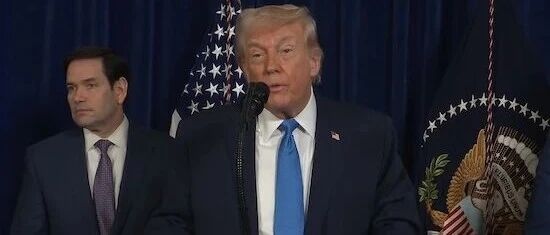
委内瑞拉总统马杜罗夫妇被抓捕后抵达美国纽约 最早下周一出庭
Di Yi Cai Jing· 2026-01-04 00:25
Core Viewpoint - The U.S. military successfully captured Venezuelan President Maduro and his wife during a raid, with plans for their trial in New York City [1][2]. Group 1: Capture Details - The operation involved over 150 aircraft from 20 different military bases, lasting approximately 2.5 hours [3]. - The raid commenced at 2:01 AM local time, concluding around 4:29 AM after encountering resistance [3]. - The U.S. intelligence had tracked Maduro for months to prepare for the operation, which was initially planned for Christmas but delayed due to weather conditions [3]. Group 2: Legal and Political Implications - Maduro faces charges including drug terrorism conspiracy and illegal possession of firearms [1]. - President Trump stated that the U.S. would "manage" Venezuela until a safe transition could be achieved, although specifics were not disclosed [1]. - The U.S. Senate is set to vote on a resolution aimed at preventing further military actions against Venezuela without congressional approval [6].
白宫承认防长下令二次打击运毒船 国会启动调查
Xin Hua She· 2025-12-02 09:12
Core Viewpoint - The U.S. military's second strike on survivors of a drug trafficking boat raises serious legal and ethical concerns, prompting bipartisan calls for investigation in Congress [1][5]. Group 1: Military Actions - On September 2, the U.S. military conducted a second attack on a drug trafficking boat in the Caribbean, resulting in the deaths of survivors who were clinging to the burning vessel, bringing the total death toll to 11 [4]. - The U.S. Secretary of Defense, Mark Esper, reportedly ordered the second strike, stating a desire to "leave no one alive," which has sparked significant public outrage and legal scrutiny [1][4]. - The White House confirmed that the attack was authorized under the premise of self-defense and was conducted in international waters, claiming it was in accordance with the laws of armed conflict [2]. Group 2: Congressional Response - Bipartisan members of Congress have expressed concerns that the second strike on survivors may constitute a violation of international law, with some suggesting it could amount to a war crime [5]. - Senator Tim Kaine indicated plans to propose a resolution requiring congressional approval for any military action in Venezuela, emphasizing the need for legal oversight [5]. - Congressional leaders are demanding the release of unedited video footage of the attack to clarify the circumstances and hold accountable those involved [5]. Group 3: Broader Context - Since early September, the U.S. military has reportedly sunk over 20 boats under the guise of anti-drug operations, resulting in more than 80 deaths, yet no evidence has been provided to substantiate claims of drug trafficking [7]. - The Venezuelan government has accused the U.S. of using anti-drug operations as a pretext for military aggression aimed at regime change, leading to calls for investigations into the actions of the U.S. military [7].
美国众议院议长约翰逊:现在不是国会考虑战争权力决议的“合适时机”。
news flash· 2025-06-23 18:27
Core Viewpoint - The Speaker of the U.S. House of Representatives, Mike Johnson, stated that it is not the "appropriate time" for Congress to consider a war powers resolution [1] Group 1 - The current political climate is deemed unsuitable for discussions regarding war powers [1] - The statement reflects a cautious approach towards military engagement and legislative action [1]
市场消息:美国国会议员Massie提出“伊朗战争权力决议”,禁止美国介入以色列-伊朗战争。
news flash· 2025-06-17 17:29
Group 1 - The core viewpoint of the article is that U.S. Congressman Massie has proposed a "War Powers Resolution" to prohibit U.S. involvement in a potential war between Israel and Iran [1] Group 2 - The proposal reflects ongoing concerns regarding U.S. military engagement in the Middle East, particularly in relation to the Israel-Iran conflict [1]
美参议员急推法案,阻止特朗普与伊朗开战!
Jin Shi Shu Ju· 2025-06-16 13:01
Group 1 - A Democratic senator has proposed legislation to prevent President Trump from using military force against Iran without congressional authorization, amid escalating tensions between Israel and Iran [1] - Senator Tim Kaine has been advocating for Congress to reclaim its war powers, emphasizing that any hostile actions against Iran must be explicitly approved through a declaration of war or specific military authorization [1] - Kaine expressed concerns that escalating hostilities could drag the U.S. into another endless conflict, stating that war with Iran is not in the national security interest unless absolutely necessary [1] Group 2 - Israeli Prime Minister Netanyahu announced that the Israeli Air Force has taken control of Tehran's airspace and issued an urgent evacuation notice to Tehran's citizens, indicating ongoing military operations [2] - Netanyahu outlined Israel's strategic goals of eliminating the Iranian nuclear and missile threats, claiming that Israel is moving towards "final victory" [2] - The ongoing attacks between Israel and Iran have resulted in civilian casualties, raising concerns among world leaders about the potential for a broader regional war [2]