战略性创新创造计划(SIP)

Search documents
日本文部科学相:南鸟岛近海稀土泥扬泥“成功”
日经中文网· 2026-02-02 07:50
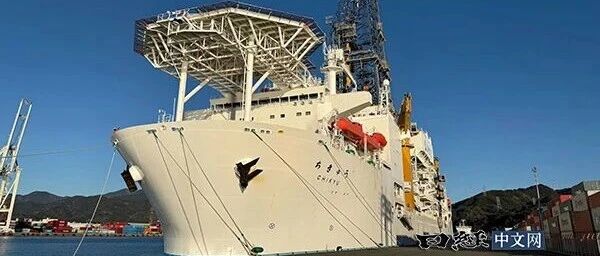
Core Viewpoint - Japan is conducting experimental drilling near Minami-Torishima Island, believed to contain rare earth elements, as part of a strategic innovation initiative by the Cabinet Office [2][4]. Group 1 - The experimental drilling project is part of the "Strategic Innovation Creation Program (SIP)" promoted by the Cabinet Office [4]. - The project utilizes the research vessel "Chikyu," operated by the Japan Agency for Marine-Earth Science and Technology (JAMSTEC), to verify the feasibility of recovering mud from a depth of approximately 6000 meters [4]. - On February 1, the Minister of Education, Culture, Sports, Science and Technology, Yohei Matsumoto, announced via social media that successful retrieval of mud from a depth of 6000 meters has been achieved [2].

日本启动海底稀土试采,力争30年商业化
日经中文网· 2026-01-13 02:23
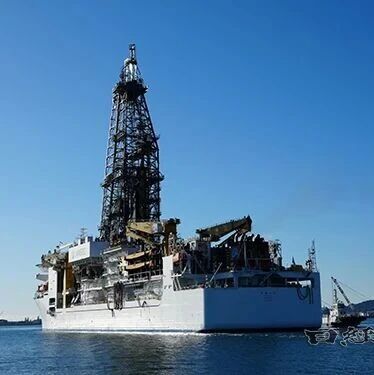
Core Viewpoint - Japan is initiating a project to explore and potentially commercialize rare earth mining in the waters near Minami-Torishima Island, aiming for domestic production to reduce reliance on imports, particularly from China, by around 2030 [2][10]. Group 1: Project Overview - The research vessel "Chikyu" set sail on January 12 to collect rare earth mud from a depth of approximately 6000 meters in Japan's exclusive economic zone (EEZ) [4][7]. - This initiative is part of Japan's "Strategic Innovation Promotion Program (SIP)" aimed at confirming the operational status of recovery equipment and conducting a trial extraction of rare earth mud [8][12]. - The project aims to verify the capability to collect 350 tons of sea mud daily by February 2027, along with assessing the costs of recovery and refining processes [8][10]. Group 2: Rare Earth Elements and Their Importance - High concentrations of rare earth elements such as dysprosium, neodymium, and gadolinium have been found in the seabed mud, which are essential for manufacturing electric vehicle (EV) motors and medical devices [5][7]. - Japan currently sources 63% of its rare earths from China, with heavy rare earths like dysprosium being irreplaceable by other materials [7][10]. Group 3: Economic Implications - Establishing a domestic supply chain for rare earths could significantly benefit Japan's automotive and electronics industries, especially in light of geopolitical tensions affecting imports from China [10][12]. - The potential loss to Japan's economy from a year-long export restriction from China could amount to approximately 2.6 trillion yen, impacting GDP by 0.4% [10]. Group 4: Challenges and Considerations - The cost of extracting rare earth mud near Minami-Torishima is projected to be several times higher than the market price of rare earths produced in China [15]. - The technology for extracting rare earths from seabed mud is still in the research phase, requiring further development for large-scale production [13][15]. - International regulations and environmental considerations may pose challenges to commercial extraction, as the International Seabed Authority has yet to finalize rules for seabed resource development [15].