
把权力关进制度笼子

Search documents
时代专论丨更加科学有效地把权力关进制度笼子
Zhong Yang Ji Wei Guo Jia Jian Wei Wang Zhan· 2026-02-05 00:00
Group 1 - The core viewpoint emphasizes the importance of putting power into a system framework to enhance the effectiveness of governance and supervision mechanisms [2][4][5] - The concept of "putting power in a cage" is crucial for the self-revolution of the Party, ensuring that power operates within institutional boundaries [3][4][6] - The need for a robust institutional framework is highlighted as essential for preventing corruption and ensuring that power is exercised in a regulated manner [5][6][12] Group 2 - The implementation of strict institutional measures is a key characteristic of the Party's governance strategy since the 18th National Congress [5][11] - The Party has developed a series of regulations and guidelines aimed at curbing corruption and ensuring accountability among its members [10][12] - The emphasis on the integration of technology in monitoring power operations is seen as a significant advancement in ensuring transparency and accountability [16][17] Group 3 - The upcoming "15th Five-Year Plan" period is identified as a critical time for economic and social development, necessitating strict adherence to Party leadership and governance principles [7][8][11] - The Party's commitment to self-revolution and governance reform is underscored as a means to address both internal and external challenges [11][12][17] - The focus on enhancing the effectiveness of institutional frameworks is aimed at fostering a culture of accountability and preventing the abuse of power [13][14][15]

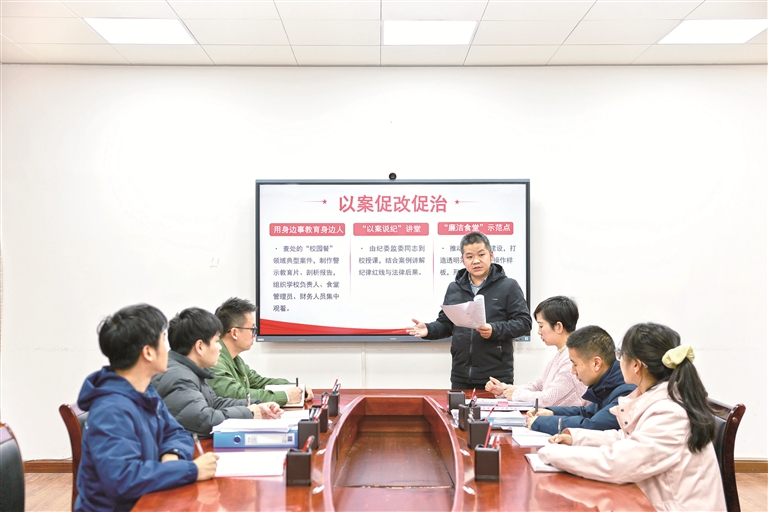
以更高标准更实举措推进全面从严治党——二十届中央纪委五次全会在甘肃省纪检监察系统引发热烈反响
Xin Lang Cai Jing· 2026-01-18 01:55
Group 1 - The core message emphasizes the ongoing commitment to strict governance within the Communist Party of China, highlighting the importance of self-revolution and the need for continuous efforts in this direction [1][4] - The Central Commission for Discipline Inspection's fifth plenary session calls for a unified approach to align thoughts and actions with the central leadership's accurate assessments and scientific deployments regarding the current situation and tasks [1][2] - Local disciplinary inspection and supervision agencies are urged to implement political supervision as a primary responsibility, focusing on the accurate execution of key tasks during the "14th Five-Year Plan" period [2][3] Group 2 - The meeting stresses the need to strengthen institutional governance and ensure that power is exercised within a regulatory framework, enhancing the effectiveness of power management [3][5] - There is a call for a collaborative effort across learning, improvement, and execution to eliminate the conditions that foster corruption, with a focus on enhancing legal and disciplinary awareness among party members [3][5] - The importance of maintaining a high-pressure stance against corruption is reiterated, with a focus on systemic rectification and the integration of various supervisory functions to enhance overall effectiveness [5][6]
更加科学有效地把权力关进制度笼子——访北京科技大学马克思主义学院院长宋伟
Xin Lang Cai Jing· 2026-01-16 19:06
Core Viewpoint - The emphasis on "putting power into the cage of the system" reflects the relationship between power operation and system improvement, which is crucial for strengthening the mechanism to prevent corruption in the context of strict party governance [1][2]. Group 1: System Development and Implementation - The implementation of the Central Eight Regulations has significantly transformed party conduct and governance, marking a successful practice of institutional power management [2]. - The continuous improvement of relevant regulations, such as the "Chinese Communist Party's Code of Conduct" and "Disciplinary Regulations," has further standardized power operations and reinforced the rule of law within the party [2][3]. - The establishment of a comprehensive and effective institutional system has played a vital role in regulating power operations and enhancing supervision [2][3]. Group 2: Strengthening Institutional Execution - Since the introduction of the Central Eight Regulations in December 2012, there has been a consistent effort to strengthen the supervision of institutional execution, with monthly reports on violations being published for 147 consecutive months [3]. - The importance of leadership, particularly the role of key figures, in executing regulations is highlighted, as their failure to lead by example can lead to negative consequences for political ecology and business environments [4][5]. - Equal adherence to regulations by all members, without exceptions or privileges, is emphasized as essential for effective governance [5]. Group 3: Transparency and Accountability - Continuous supervision of power operations is necessary to ensure that power is used for the benefit of the people, with an emphasis on increasing transparency in party and government affairs [6][7]. - The need for accountability and responsibility in enforcing regulations is underscored, with a focus on punishing violations to maintain the integrity of the system [6][7]. - The call for a scientific and effective approach to confining power within institutional frameworks is seen as a critical direction for future governance efforts [7].
制度治权、依规用权
Xin Lang Cai Jing· 2026-01-16 18:01
Core Viewpoint - The central theme emphasizes the importance of institutional reform within the Party to effectively manage power and prevent corruption, as highlighted by Xi Jinping's remarks on the necessity of putting power into a "cage of systems" [1][4]. Group 1: Institutional Development - Strengthening the theoretical research and macro design of internal regulations is crucial to avoid the "cow pen catching cats" phenomenon, ensuring that regulations are practical and effective in the context of strict governance [2]. - Since the 18th National Congress, the Party has focused on establishing a comprehensive and effective regulatory system, with Xi Jinping announcing the formation of a relatively complete internal regulatory framework by 2021 [2]. Group 2: Execution of Regulations - The effectiveness of regulations lies in their execution; the "paper cage prohibiting tigers" refers to regulations that appear complete but lack enforcement, leading to a breakdown in compliance [3]. - Xi Jinping stresses that while formulating regulations is important, the emphasis must be on their implementation, as neglecting enforcement can lead to a "broken window effect" [3]. Group 3: Accountability and Transparency - The need for equal treatment under regulations is highlighted, with a call to eliminate "dark doors" and "skylights," ensuring that rules are clear and strictly enforced to prevent selective or symbolic compliance [4]. - The recent Central Commission for Discipline Inspection meeting underscored the need to enhance the regulatory framework to meet the higher demands of the 14th Five-Year Plan, reinforcing the importance of institutional governance and transparent power usage [4].
习近平总书记在二十届中央纪委五次全会上的重要讲话引发热烈反响
Yang Shi Xin Wen Ke Hu Duan· 2026-01-16 01:21
Group 1 - The core message emphasizes the significant achievements in strict governance of the Party over the past year, with a strategic deployment to ensure the goals of the "14th Five-Year Plan" are met [1][3] - The importance of adhering to and strengthening the Party's overall leadership is highlighted, with a call for higher standards and more effective measures in promoting strict governance and anti-corruption efforts [3][5] - The necessity of putting power into a system of checks and balances is stressed, focusing on improving institutional regulations and enhancing enforcement to ensure effective governance [11][14] Group 2 - Local officials are urged to implement the General Secretary's directives by fulfilling their supervisory responsibilities and ensuring the implementation of major decisions made by the Party Central Committee [7][24] - The emphasis on selecting loyal and capable officials during local elections is noted, with a focus on maintaining high standards for political integrity and performance [9] - The need for innovative approaches in anti-corruption efforts is discussed, particularly in identifying and addressing new trends and characteristics of corruption at the grassroots level [16][18][20]

更加科学有效地把权力关进制度笼子——论学习贯彻习近平总书记二十届中央纪委五次全会重要讲话精神
Xin Hua She· 2026-01-14 02:19
Group 1 - The core viewpoint emphasizes the importance of institutionalizing power to ensure strict governance within the Communist Party of China, as highlighted by Xi Jinping during the fifth plenary session of the 20th Central Commission for Discipline Inspection [1] - The construction of regulations and systems has been prioritized since the 18th National Congress, resulting in unprecedented numbers of regulations being formulated and revised, showcasing significant achievements [1] - The necessity of enhancing the effectiveness of institutional execution and ensuring that regulations are strictly adhered to is underscored, with a focus on preventing loopholes and ensuring equality before the law [1] Group 2 - The implementation of the Central Eight Regulations has effectively addressed long-standing issues of corruption and misconduct, leading to a significant transformation in party and government conduct [2] - The revised "Regulations on Strict Economy and Opposition to Waste in Party and Government Agencies" aims to combat extravagance and promote a culture of frugality within government institutions [3] - The establishment of a comprehensive regulatory framework, including various guidelines aimed at reducing burdens on grassroots officials and enhancing political work, strengthens the governance capabilities of the Communist Party [3] Group 3 - The emphasis on the execution of regulations is critical, with leaders expected to model compliance and promote transparency in party and government affairs [4] - The role of leadership, particularly that of the "first responsible person," is crucial in ensuring effective implementation of regulations and fostering a culture of accountability among party members [4] - The commitment to institutional governance and adherence to regulations is seen as essential for achieving the goals of modernization in China [4]
更加科学有效地把权力关进制度笼子
Xin Lang Cai Jing· 2026-01-13 21:58
Group 1 - The core viewpoint emphasizes the importance of institutionalizing power to ensure strict governance within the Communist Party of China, as highlighted by Xi Jinping during the fifth plenary session of the 20th Central Commission for Discipline Inspection [1] - The construction of regulations and systems has been prioritized since the 18th National Congress, leading to unprecedented achievements in institutional development [1] - The need for effective enforcement of regulations is stressed, with a focus on making systems both comprehensive and practical, while ensuring equal adherence to rules without exceptions [1][4] Group 2 - The implementation of the Central Eight Regulations has effectively addressed issues of corruption and misconduct, marking a significant shift in party discipline and governance [2] - New regulations aimed at curbing extravagance and waste in party and government agencies are set to be enforced by 2025, promoting a culture of frugality [3] - The importance of leadership accountability in executing regulations is underscored, with a call for leaders to set an example and enhance transparency in governance [4]
坚定不移把全面从严治党向纵深推进
Xin Lang Cai Jing· 2026-01-13 18:48
Group 1 - The core message emphasizes the importance of strict party governance and the need for higher standards and practical measures to ensure the success of the "14th Five-Year Plan" [1][2] - The year 2026 marks the beginning of the "14th Five-Year Plan," and the implementation of major decisions from the Central Committee is crucial for maintaining authority and leadership [2][3] - Political supervision is highlighted as a key mechanism to ensure the implementation of major decisions, with a focus on specific, precise, and regular oversight [2][3] Group 2 - The necessity of institutionalizing power to prevent abuse is underscored, with a call for effective mechanisms to ensure compliance with regulations [4][5] - Emphasis is placed on the importance of executing regulations uniformly and maintaining the authority of the system, ensuring that no one is above the law [6] - The ongoing complexity of the anti-corruption struggle is acknowledged, with a focus on maintaining a high-pressure stance against corruption [6][7] Group 3 - The need for enhanced capabilities in using technology for disciplinary inspection and anti-corruption efforts is stressed, aiming to improve the effectiveness of these initiatives [7] - The role of disciplinary inspection agencies in promoting the party's self-revolution and strict governance is recognized, with a commitment to uphold the party's unity and integrity [7]
人民日报评论员:更加科学有效地把权力关进制度笼子
Xin Hua She· 2026-01-13 16:41
Core Viewpoint - The article emphasizes the importance of institutionalizing power to ensure effective governance and discipline within the Communist Party of China, as highlighted by Xi Jinping's speech at the Fifth Plenary Session of the 20th Central Commission for Discipline Inspection [1]. Group 1: Institutional Framework - The establishment and revision of regulations have been unprecedented since the 18th National Congress, showcasing the Party's commitment to strengthening institutional frameworks [1]. - The focus is on making regulations more specific and actionable to enhance their effectiveness and ensure strict enforcement [1]. Group 2: Addressing Corruption and Misconduct - The implementation of the Central Eight Regulations has successfully addressed long-standing issues of corruption and misconduct, demonstrating the effectiveness of strict regulations [3]. - New regulations, such as the revised "Regulations on Strict Economy and Opposition to Waste in Party and Government Organs," aim to combat extravagance and promote a culture of frugality [4]. Group 3: Leadership and Execution - The success of institutional enforcement relies heavily on the commitment of leadership, particularly the "first person in charge," to model compliance and transparency [5]. - There is a call for increased awareness among party members regarding the importance of regulations as both a constraint and a protective measure [5]. Group 4: Broader Implications - The article suggests that other countries can learn from the Chinese Communist Party's experience in enhancing political discipline and governance through improved institutional frameworks [4]. - The commitment to institutional governance is seen as essential for achieving the goals of Chinese-style modernization [6].
人民日报评论员:更加科学有效地把权力关进制度笼子——论学习贯彻习近平总书记二十届中央纪委五次全会重要讲话精神
Xin Hua She· 2026-01-13 16:38
Group 1 - The core viewpoint emphasizes the importance of institutionalizing power to ensure effective governance and discipline within the Communist Party of China, as highlighted by Xi Jinping's speech at the Fifth Plenary Session of the 20th Central Commission for Discipline Inspection [1][6] - The article discusses the need for a more scientific and effective approach to institutionalize power, focusing on improving the execution of regulations and ensuring they are not overly complex while being effective [1][5] - It stresses the significance of equal enforcement of regulations, with no exceptions or privileges, to ensure that the rules are genuinely adhered to and serve as a deterrent against misconduct [2][4] Group 2 - The implementation of the Central Eight Regulations post-18th National Congress is noted as a significant step in addressing corruption and improving party conduct, leading to a transformation in public perception and party integrity [3][4] - The revised regulations aimed at reducing waste in party and government agencies are set to further tighten controls and promote a culture of frugality, reflecting a shift in mindset among officials [4][5] - The article highlights the necessity for leaders, especially those in key positions, to lead by example in executing regulations, thereby enhancing transparency and accountability within the party [5][6]