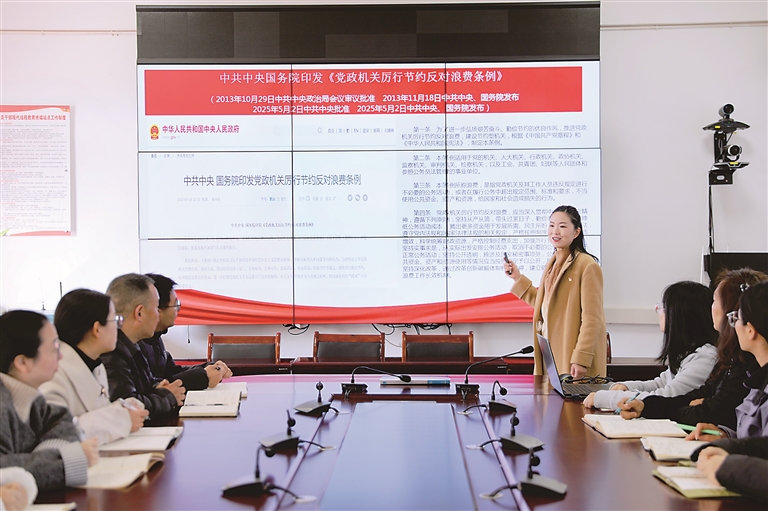
《党政机关厉行节约反对浪费条例》

Search documents
更加科学有效地把权力关进制度笼子——论学习贯彻习近平总书记二十届中央纪委五次全会重要讲话精神
Xin Hua She· 2026-01-14 02:19
Group 1 - The core viewpoint emphasizes the importance of institutionalizing power to ensure strict governance within the Communist Party of China, as highlighted by Xi Jinping during the fifth plenary session of the 20th Central Commission for Discipline Inspection [1] - The construction of regulations and systems has been prioritized since the 18th National Congress, resulting in unprecedented numbers of regulations being formulated and revised, showcasing significant achievements [1] - The necessity of enhancing the effectiveness of institutional execution and ensuring that regulations are strictly adhered to is underscored, with a focus on preventing loopholes and ensuring equality before the law [1] Group 2 - The implementation of the Central Eight Regulations has effectively addressed long-standing issues of corruption and misconduct, leading to a significant transformation in party and government conduct [2] - The revised "Regulations on Strict Economy and Opposition to Waste in Party and Government Agencies" aims to combat extravagance and promote a culture of frugality within government institutions [3] - The establishment of a comprehensive regulatory framework, including various guidelines aimed at reducing burdens on grassroots officials and enhancing political work, strengthens the governance capabilities of the Communist Party [3] Group 3 - The emphasis on the execution of regulations is critical, with leaders expected to model compliance and promote transparency in party and government affairs [4] - The role of leadership, particularly that of the "first responsible person," is crucial in ensuring effective implementation of regulations and fostering a culture of accountability among party members [4] - The commitment to institutional governance and adherence to regulations is seen as essential for achieving the goals of modernization in China [4]
织密扎牢管党治党制度笼子
Zhong Yang Ji Wei Guo Jia Jian Wei Wang Zhan· 2026-01-13 23:46
Core Points - The article emphasizes the importance of institutional governance within the Communist Party of China, highlighting the need to put power into a "system cage" as a key task for strict governance of the Party in the new era [3][4][5] - It discusses the continuous innovation and improvement of the Party's internal regulations and systems under the guidance of Xi Jinping's thoughts, aiming to enhance the Party's leadership and organizational structure [4][5][6] - The article outlines various new regulations and amendments aimed at strengthening the Party's internal governance, including the introduction of the first comprehensive regulation on ideological and political work [6][7][8] Group 1: Institutional Governance - The article states that the Party's self-revolution focuses on institutional governance, which is a distinctive feature of the Party's management and governance [3][4] - It mentions the implementation of the Central Eight Regulations as a starting point for improving Party conduct and governance [3][4] - The article highlights the necessity of integrating legal governance and regulatory governance to create a complementary system [5][6] Group 2: Regulatory Innovations - The article details the issuance of new regulations, such as the "Regulations on the Responsibility System for Ecological Environment Protection" to enhance ecological governance [5][6] - It notes the revision of the "Regulations on Saving and Opposing Waste in Party and Government Agencies" to tighten financial management and resource usage [5][6] - The introduction of the "Regulations on the Discussion and Decision-Making Procedures for Party Member Disciplinary Actions" aims to standardize disciplinary processes within the Party [6][7] Group 3: Strengthening Execution and Supervision - The article emphasizes the need for strict enforcement of regulations and the importance of supervision in ensuring compliance with Party rules [11][12] - It discusses the role of disciplinary inspection agencies in monitoring the implementation of regulations and addressing violations [11][12] - The article highlights the importance of education and training for Party members to enhance their understanding and adherence to regulations [15][19]

更加科学有效地把权力关进制度笼子
Xin Lang Cai Jing· 2026-01-13 21:58
Group 1 - The core viewpoint emphasizes the importance of institutionalizing power to ensure strict governance within the Communist Party of China, as highlighted by Xi Jinping during the fifth plenary session of the 20th Central Commission for Discipline Inspection [1] - The construction of regulations and systems has been prioritized since the 18th National Congress, leading to unprecedented achievements in institutional development [1] - The need for effective enforcement of regulations is stressed, with a focus on making systems both comprehensive and practical, while ensuring equal adherence to rules without exceptions [1][4] Group 2 - The implementation of the Central Eight Regulations has effectively addressed issues of corruption and misconduct, marking a significant shift in party discipline and governance [2] - New regulations aimed at curbing extravagance and waste in party and government agencies are set to be enforced by 2025, promoting a culture of frugality [3] - The importance of leadership accountability in executing regulations is underscored, with a call for leaders to set an example and enhance transparency in governance [4]
人民日报评论员:更加科学有效地把权力关进制度笼子
Xin Hua She· 2026-01-13 16:41
Core Viewpoint - The article emphasizes the importance of institutionalizing power to ensure effective governance and discipline within the Communist Party of China, as highlighted by Xi Jinping's speech at the Fifth Plenary Session of the 20th Central Commission for Discipline Inspection [1]. Group 1: Institutional Framework - The establishment and revision of regulations have been unprecedented since the 18th National Congress, showcasing the Party's commitment to strengthening institutional frameworks [1]. - The focus is on making regulations more specific and actionable to enhance their effectiveness and ensure strict enforcement [1]. Group 2: Addressing Corruption and Misconduct - The implementation of the Central Eight Regulations has successfully addressed long-standing issues of corruption and misconduct, demonstrating the effectiveness of strict regulations [3]. - New regulations, such as the revised "Regulations on Strict Economy and Opposition to Waste in Party and Government Organs," aim to combat extravagance and promote a culture of frugality [4]. Group 3: Leadership and Execution - The success of institutional enforcement relies heavily on the commitment of leadership, particularly the "first person in charge," to model compliance and transparency [5]. - There is a call for increased awareness among party members regarding the importance of regulations as both a constraint and a protective measure [5]. Group 4: Broader Implications - The article suggests that other countries can learn from the Chinese Communist Party's experience in enhancing political discipline and governance through improved institutional frameworks [4]. - The commitment to institutional governance is seen as essential for achieving the goals of Chinese-style modernization [6].
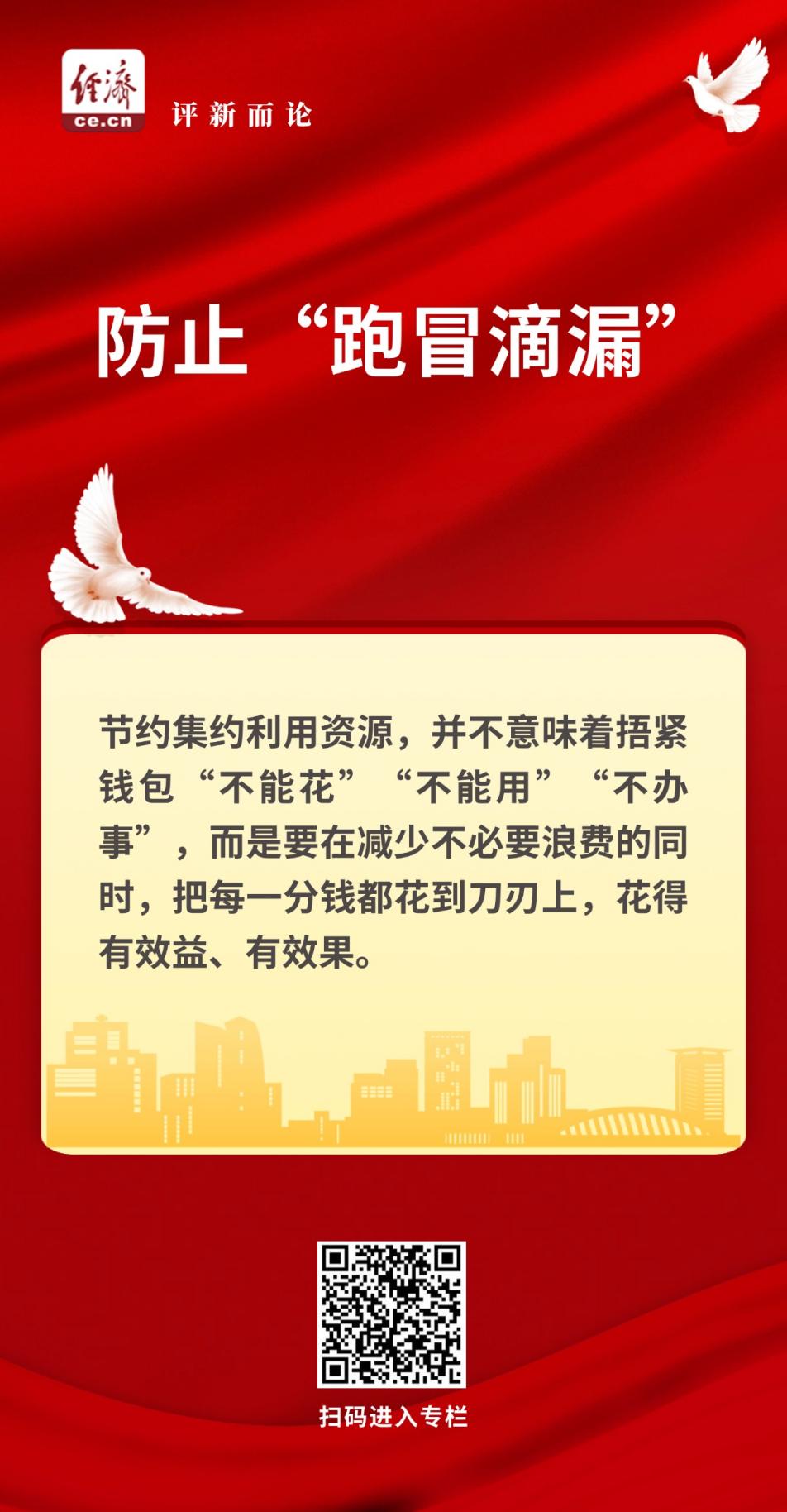
从随手之举抓起,防止宝贵资源“跑冒滴漏”
Zhong Guo Jing Ji Wang· 2025-06-25 23:23
Group 1 - The current ecological environment quality in China is improving, but structural, root, and trend pressures on ecological protection remain unresolved [1] - There is a growing trend of wastefulness among some officials, leading to significant resource wastage, such as excessive use of air conditioning and unnecessary printing [1] - The need for resource conservation and efficient utilization is emphasized due to global resource scarcity and environmental challenges [1] Group 2 - The revised "Regulations on Saving and Opposing Waste in Party and Government Agencies" aims to strengthen resource usage constraints and eliminate extravagance [2] - A series of regulations have been introduced to promote resource conservation, including the "Water Conservation Regulations" and the "Action Plan Against Food Waste" [2] - The focus on resource conservation is intended to lower administrative costs and improve efficiency in government operations [2] Group 3 - Resource conservation requires strict management across all budgetary and procurement processes, with new regulations added to various aspects of financial management [3] - The principle of spending wisely while reducing unnecessary waste is highlighted, ensuring that funds are effectively utilized for beneficial outcomes [3] - By adhering to resource conservation principles, government agencies can redirect more resources towards development and public welfare, contributing to sustainable development [3]
中经评论:防止“跑冒滴漏” 资源利用当立“铁规矩”
Zhong Guo Jing Ji Wang· 2025-06-17 03:14
Core Viewpoint - The article emphasizes the importance of resource conservation and efficient utilization in the context of China's ongoing environmental challenges and the need for sustainable development [5][6]. Group 1: Resource Conservation Policies - In 2013, the Central Committee of the Communist Party and the State Council issued the "Regulations on Strict Economy and Opposition to Waste" which mandates government agencies to enhance resource efficiency and eliminate waste [6]. - The newly revised regulations include phrases like "lead by example in frugality" and "free up more funds for development and public welfare," aiming to strengthen constraints on resource usage [6][7]. Group 2: Implementation and Examples - The article highlights that resource conservation should be integrated into all aspects of budget management, asset procurement, and maintenance, with specific examples from local government practices [7]. - The article notes that resource conservation does not mean cutting all expenditures but rather ensuring that every penny spent is effective and beneficial [7]. Group 3: Societal Impact - By adhering to resource conservation principles, government agencies can redirect financial and material resources towards areas that benefit the public, thus contributing to a resource-saving and environmentally friendly society [7].