
投资连结保险

Search documents
“我的账户给了我一个惊喜”: 投连险“高弹性”从何而来
Zhong Guo Zheng Quan Bao· 2026-01-19 21:06
Core Viewpoint - The article highlights the rising popularity and performance of investment-linked insurance (投连险) products, particularly in the context of a recovering securities market, which has led to significant returns for investors willing to accept higher risks [1][6]. Group 1: Investment Performance - A Guangdong investor reported a two-digit return on an investment-linked insurance product held for just over a month, attributed to the high equity asset allocation in certain investment accounts [1]. - The quantitative enhancement investment account achieved a return of over 45%, while other accounts like aggressive and dividend value accounts exceeded 30% returns [3]. - The net asset value of certain investment accounts has shown significant growth since the market recovery in 2025, with specific examples illustrating substantial increases in unit net values [3]. Group 2: Product Structure and Features - Investment-linked insurance allows policyholders to choose from various investment accounts based on their risk tolerance and return expectations, with options for free fund transfers between accounts [2]. - Different types of investment accounts are available, including aggressive, quantitative enhancement, and stable income accounts, each with distinct risk-return profiles [2]. - The management of these investment accounts is typically handled by insurance asset management institutions, which aim to achieve absolute returns through a mix of equity, fixed income, and liquidity assets [4]. Group 3: Market Trends and Sales - Sales of investment-linked insurance products have shown a recovery trend since 2025, with a reported 16.8% year-on-year increase in new premiums for independent accounts [6]. - The growth in sales is linked to improved capital market conditions and a shift in consumer demand towards higher-yield products following reductions in traditional life insurance interest rates [6]. - The article emphasizes that investment-linked insurance is not suitable for all investors, as it requires a higher risk tolerance and a long-term investment horizon [7]. Group 4: Investment Strategy and Recommendations - The article discusses the integration of quantitative strategies with human judgment in investment practices, highlighting the effectiveness of quantitative models in enhancing returns [5]. - It is suggested that investment-linked insurance products are best suited for investors who can commit to long-term holdings, as they are designed to benefit from market fluctuations over time [7]. - Recommendations include using a systematic investment approach, similar to fund dollar-cost averaging, to mitigate market volatility risks [7].
保险产品年化收益超过40%,什么情况?
Zhong Guo Zheng Quan Bao - Zhong Zheng Wang· 2026-01-16 14:24
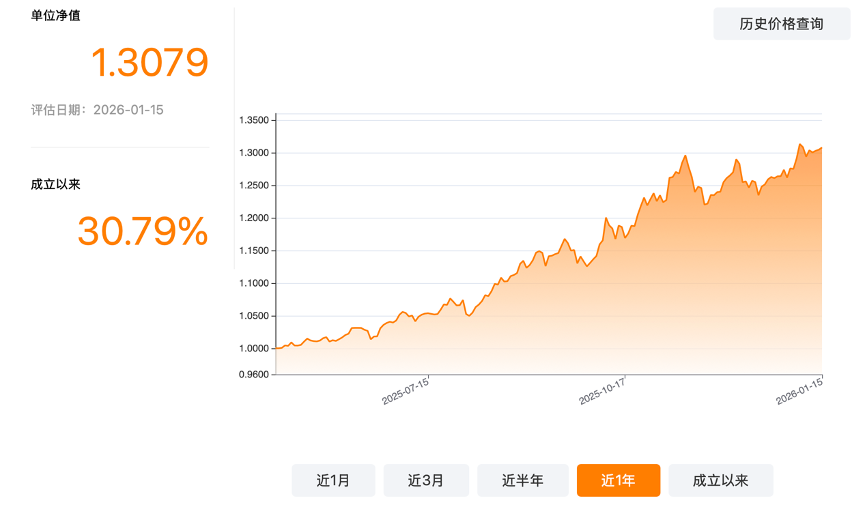
Core Viewpoint - The article discusses the rising popularity and performance of investment-linked insurance products (ILPs), highlighting their high potential returns but also the associated risks of self-borne losses due to market fluctuations [1][7]. Group 1: Product Performance - ILPs have shown significant returns, with one product reporting a nearly 29.1% increase over the past year and an annualized average return of 43.35% [1]. - The net value of a specific ILP product increased from 4.6151 to 7.1794 between January 1, 2025, and January 15, 2026, representing a growth of over 55% [2][8]. - A new product launched in May 2025 has seen a net value increase of over 30% [2][8]. Group 2: Market Trends - The sales of ILPs have shown a recovery trend since 2025, with independent account premiums reaching 18.8 billion yuan in the first eleven months of 2025, marking a year-on-year growth of 16.8%, outpacing the overall life insurance premium growth of 9% during the same period [4][10]. - The recovery is attributed to a favorable capital market and a shift in consumer demand towards higher-yield products following a decrease in guaranteed rates for traditional life insurance [10]. Group 3: Target Investors - ILPs are suitable for investors with high-risk tolerance, long-term holding capability, and some investment experience, as they do not guarantee fixed returns and all profits and losses are borne by the policyholder [5][11]. - Sales personnel tend to recommend more stable products like participating or universal life insurance over ILPs due to their unpredictable nature and lower commission rates [6][11]. - The performance of ILPs is closely linked to the capabilities of the insurance company's investment research and management teams, emphasizing the importance of assessing the insurer's investment competence [6][11].

中国平安人寿保险股份有限公司投资连结保险投资账户2025年年中报告
Shang Hai Zheng Quan Bao· 2025-08-29 20:01
Company Overview - Ping An Life Insurance Company of China, established in 2002, is a key member of Ping An Insurance (Group) Company [4] - The company focuses on providing a full cycle of life insurance products and services, emphasizing customer convenience and cost-effectiveness [4] - In 2024, the company processed a total of 5.232 million claims, amounting to 41.94 billion RMB [4] Business Performance - In 2024, the new business value for life and health insurance reached 28.534 billion RMB, representing a year-on-year growth of 28.8% [4] - The policy continuation rates improved, with a 13-month continuation rate up by 3.6 percentage points and a 25-month continuation rate up by 3.9 percentage points [4] - The agent channel saw a new business value increase of 26.5%, with per capita new business value rising by 43.3% [5] - The bancassurance channel focused on value management, achieving a new business value growth of 62.7% [5] Strategic Initiatives - The company is actively responding to the new "National Ten Measures" by deepening its focus on protection, pension, and wealth markets [6] - The "Insurance + Service" model is being enhanced, with over 21 million customers served in health management and home care services covering 75 cities [6] - The company integrates ESG principles into its development strategy, focusing on sustainable economic, social, and environmental value [6] Awards and Recognition - In 2024, the company received multiple awards, including "Outstanding Life Insurance Company of the Year" and "Best Customer Experience Innovation Insurance Company" [7] Investment Accounts Overview - The company offers various investment-linked insurance accounts, including the Ping An Development Investment Account and the Ping An Fund Investment Account, focusing on different investment strategies [9][13] - The investment accounts are designed to cater to various risk appetites, with features ranging from stable income to aggressive growth [10][14] Financial Performance - As of June 30, 2025, the company reported a net asset value and investment performance across its investment-linked insurance accounts, reflecting its financial health [57][58] - The investment accounts have specific performance benchmarks, with the Ping An Development Investment Account targeting a balanced investment strategy [12][16] Market Outlook - The company anticipates positive returns for equity assets in the second half of 2025, driven by structural investment opportunities in innovation and consumption sectors [52] - The debt market is expected to remain supportive, with a focus on maintaining liquidity while managing growth pressures [53]

中国人寿保险股份有限公司投资连结保险投资账户 2024年年度信息公告
Zhong Guo Zheng Quan Bao· 2025-05-07 21:33
Core Viewpoint - The company provides a detailed overview of its investment-linked insurance products, including the establishment of various investment accounts and their respective investment strategies and performance metrics for the year 2024 [1][6][10]. Group 1: Basic Information - The company has been selling investment-linked insurance products since April 2008, specifically the Guoshou Yufeng Investment-linked Insurance, which includes four investment accounts [1]. - The investment accounts are managed according to regulations set by the China Banking and Insurance Regulatory Commission and include the Guoshou Jinqi Stock Investment Account, Guoshou Selected Value Investment Account, Guoshou Balanced Growth Investment Account, and Guoshou Stable Bond Investment Account [1]. Group 2: Investment Accounts Overview - **Guoshou Jinqi Stock Investment Account**: Established on May 4, 2008, aims for steady asset growth through investments in leading large-cap companies while managing risks [2]. - **Guoshou Selected Value Investment Account**: Also established on May 4, 2008, focuses on constructing a fund portfolio to achieve stable long-term asset growth [3]. - **Guoshou Balanced Growth Investment Account**: Established on May 4, 2008, seeks high investment returns through active asset allocation and selection of valuable investment products [4]. - **Guoshou Stable Bond Investment Account**: Established on May 4, 2008, prioritizes capital safety while pursuing higher returns and maintaining liquidity [5]. Group 3: Financial Performance - The investment accounts reported varying net asset values and performance metrics as of December 31, 2024, with the Guoshou Jinqi Stock Investment Account showing a net value growth rate of -5.01%, while the Guoshou Selected Value Investment Account achieved a growth rate of 13.16% [10][11]. - The overall financial situation as of December 31, 2024, indicates total assets of approximately 37.46 billion RMB across all accounts, with net assets totaling around 35.23 billion RMB [7][14]. Group 4: Market Conditions and Outlook - The bond market in 2024 experienced a decline in yields compared to 2023, with the average yield for 10-year government bonds at 2.22%, down over 50 basis points from the previous year [9]. - The equity market saw significant growth, with the CSI 300 Index rising by 14.68% and the ChiNext 50 Index increasing by 21.07% in 2024, driven by favorable policies and improved market sentiment [10]. - The outlook for 2025 suggests a continued decline in bond yields, with expectations of a gradual recovery in corporate earnings amid ongoing economic uncertainties [13].

友邦优选平衡组合投资账户 二〇二四年年度信息公告
Zhong Guo Zheng Quan Bao - Zhong Zheng Wang· 2025-05-05 13:43
Investment Account Overview - AIA Shanghai Preferred Balanced Investment Account was established in accordance with the regulations of the former China Insurance Regulatory Commission [1] - In 2020, several regional investment accounts were merged into the AIA Shanghai Preferred Balanced Investment Account, which was renamed AIA Preferred Balanced Investment Account, with unchanged asset allocation goals and strategies [2] Investment Strategy and Objectives - The investment account aims for stable investment returns and long-term asset value growth by balancing equity and fixed-income asset allocations while maintaining sufficient liquidity [4] - The investment range includes financial instruments permitted by the National Financial Regulatory Authority, such as publicly issued stocks, securities investment funds, bank deposits, and various types of bonds [4][16] Investment Composition - The total investment in stocks and stock-related securities must be between 30% and 70% [5] - Fixed-income assets must also range from 30% to 70% of the total investment [6] - Specific conditions allow for flexibility in investment composition under certain circumstances, such as low net asset values [6] Performance Overview - The investment return is calculated based on the change in selling price from the previous period [8] - The asset management fee for the investment account is set at an annual rate of 1.5% [9][22] Asset Management and Valuation Principles - The investment account's assets are primarily valued at fair value upon acquisition, with costs calculated using the FIFO method upon sale [10] - Various valuation methods are applied for different asset types, including stocks, bonds, and funds, based on market conditions [11][24] Risk Factors - The investment account is subject to various risks, including market risk, credit risk, and liquidity risk, among others [7][18]
