
抗日英烈

Search documents
海南3名烈士入选第四批著名抗日英烈
Hai Nan Ri Bao· 2025-09-03 01:00
Core Points - The article commemorates the 80th anniversary of the victory in the Chinese People's War of Resistance Against Japanese Aggression and the World Anti-Fascist War, highlighting the announcement of the fourth batch of national-level anti-Japanese memorial facilities and sites, totaling 34 new entries [1] - The Ministry of Veterans Affairs has also released a list of 43 notable anti-Japanese heroes and groups, with three martyrs from Hainan included [1] Summary by Category National-Level Memorials and Sites - A total of 294 national-level anti-Japanese memorial facilities and sites have been established across China [1] - Hainan province has 2 national-level anti-Japanese memorial facilities and sites [1] Notable Anti-Japanese Heroes - The four batches of hero lists include 11 heroes from Hainan [2] - The first batch features notable figures such as Huang Zhenya and Lin Boxi, while subsequent batches include heroes like Tang Huiqia and Han Xianyuan [2] - The average age of these heroes at the time of sacrifice was under 35, reflecting their bravery and dedication [2]
第四批著名抗日英烈、英雄群体名录
Ren Min Ri Bao· 2025-08-29 22:01
Group 1 - The document lists the names and positions of various heroes who sacrificed their lives during the anti-Japanese war, highlighting their contributions to the struggle against aggression [1][3] - The heroes come from diverse backgrounds, including military leaders, educators, and medical personnel, showcasing a wide range of roles in the resistance efforts [1][3] - The timeline of sacrifices spans from 1904 to 1945, indicating a prolonged period of conflict and dedication to the cause [1][3] Group 2 - The document emphasizes the importance of remembering these heroes as part of national history and identity, reflecting on their sacrifices for future generations [1][3] - It serves as a reminder of the collective effort and unity among different groups in the fight against foreign invasion [1][3] - The inclusion of both military and civilian figures illustrates the broad impact of the war on society and the various ways individuals contributed to the resistance [1][3]
郁达夫长孙追忆祖父:牺牲在异国的抗日英烈 埋骨处成谜
Zhong Guo Xin Wen Wang· 2025-08-29 09:29
Core Viewpoint - The article highlights the legacy of Yu Dafu, a Chinese writer and anti-Japanese martyr, emphasizing his contributions to the anti-Japanese war and his tragic fate in a foreign land [3][12]. Group 1: Background and Contributions - Yu Dafu, originally named Yu Wen, was a modern writer from Fuyang, Zhejiang, who studied in Japan and became a prominent literary figure [6]. - He was a founding member of the Creation Society and published significant works that impacted the literary scene, including the short story collection "Chunlun" [6]. - During the Second Sino-Japanese War, Yu Dafu actively participated in anti-Japanese activities, serving as a war correspondent and editor for various publications [8][9]. Group 2: Legacy and Recognition - In 1952, the People's Government recognized Yu Dafu as a revolutionary martyr, and in 2014, he was included in the first batch of notable anti-Japanese heroes [3][5]. - His identity in the hero list is noted as the chairman of the Singapore Cultural Anti-Japanese Federation, reflecting his leadership in the overseas Chinese community [5]. - The Yu Dafu Novel Award, held biennially in Fuyang, has become an important literary award in China, continuing his aesthetic pursuit of literature [12].

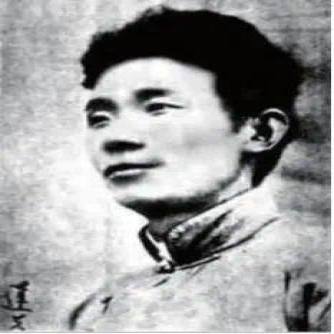
梁希贤:黄河岸边的铁血忠魂(铭记历史 缅怀先烈·抗日英雄)
Ren Min Ri Bao· 2025-07-28 22:30
Core Points - The article highlights the heroic actions of Liang Xixian, a Chinese general who sacrificed his life during the Battle of Zhongtiao Mountain in 1941, emphasizing his commitment to the nation and the impact of his legacy on the local community [1][2][3][4]. Group 1 - Liang Xixian was born in 1898 in Liangjiayuan village, Shaanxi Province, and was influenced by stories of heroes from a young age, leading him to join the military and eventually the Whampoa Military Academy [1][2]. - During the Second Sino-Japanese War, Liang Xixian played a significant role in various battles, including the Battle of Shanghai, and was promoted through the ranks due to his military skills [1][2]. - In 1941, despite being ill, Liang chose to remain with his troops during the Japanese offensive, demonstrating his leadership and dedication to his soldiers [2][3]. Group 2 - The article describes the strategic importance of the Zhongtiao Mountain area during the war, where Japanese forces posed a significant threat to the safety of the rear lines of the Chinese military [2]. - Liang Xixian's unit, the New 27th Division, faced overwhelming odds during the battle, ultimately leading to a desperate situation where he ordered a retreat and chose to jump into the Yellow River to avoid capture [3]. - The legacy of Liang Xixian has been preserved through memorials and efforts by local officials to collect his artifacts and stories, highlighting the importance of remembering national heroes [4].