
招投标领域系统整治

Search documents
西藏紧盯招投标领域突出问题系统整治顽瘴痼疾
Zhong Yang Ji Wei Guo Jia Jian Wei Wang Zhan· 2026-01-06 00:13
Group 1 - The core focus of the news is the systematic rectification and supervision of issues in the bidding and tendering sector in Tibet Autonomous Region, aiming to address corruption and improve the political environment [1][2][4] - The Tibet Autonomous Region's Discipline Inspection and Supervision Commission is utilizing resources from recent typical cases to analyze common issues and conduct field research in key areas with concentrated power and resources [1][2] - Major problems identified in the bidding sector include interference by officials in project bidding for personal gain and corruption fostered by bidding agencies, attributed to systemic deficiencies and outdated regulatory measures [1][2] Group 2 - The commission emphasizes a problem-oriented approach throughout the rectification process, focusing on both individual cases and systemic governance, while urging local departments to conduct self-inspections and establish problem tracking systems [2][3] - A three-tiered supervision mechanism has been established to enhance oversight, involving collaboration between district, city, and county levels, and integrating various supervisory functions to form a cohesive oversight effort [2][3] - The commission is intensifying the investigation of violations in the bidding sector, targeting key positions and areas, and has implemented measures to create a credit evaluation system to blacklist entities involved in illegal activities [3][4]
学纪知纪明纪守纪丨深化招投标领域系统整治
Zhong Yang Ji Wei Guo Jia Jian Wei Wang Zhan· 2025-12-10 00:18
Core Viewpoint - The article emphasizes the importance of systematic governance in the engineering construction bidding and tendering sector in Chongqing's Hechuan District, focusing on addressing responsibility, work style, and corruption issues to enhance the business environment [2]. Group 1: Systematic Governance in Bidding - The bidding and tendering market is a crucial part of the national unified market and high-standard market system, receiving significant attention from the central government [2]. - The 20th Central Commission for Discipline Inspection's fourth plenary session highlighted the need for systematic governance in areas with concentrated power, funds, and resources, such as bidding and tendering [2]. - The article invites discussions on identifying key points for systematic governance and practical measures for investigating bidding-related cases [2]. Group 2: Key Focus Areas for Supervision - The article outlines the need to focus on five key stages of the bidding process: bidding, tendering, opening, evaluation, and awarding, ensuring targeted supervision and enforcement [5]. - It emphasizes the importance of monitoring specific issues at each stage, such as unreasonable conditions in bidding, collusion among bidders, and lack of transparency in evaluations [5]. - The governance approach includes a comprehensive review of the entire bidding process, from pre-bid to post-bid stages, to identify and mitigate risks [5]. Group 3: Responsibilities and Areas of Focus - The article discusses the need to focus on three responsibilities: the main responsibility of the bidding entity, regulatory responsibility of supervisory departments, and the supervisory responsibility of disciplinary inspection agencies [6]. - It highlights three key areas for governance: engineering construction, government procurement, and rural revitalization, stressing the need for thorough oversight in these sectors [7]. - The focus on three categories of personnel—party leaders, evaluation experts, and bidding agencies—aims to identify and address misconduct and corruption within the bidding process [7]. Group 4: Practical Measures for Case Investigation - The article outlines practical measures for investigating bidding-related cases, including expanding channels for discovering issues and focusing on key individuals and areas [8]. - It emphasizes the importance of adhering to legal standards and improving the quality of case handling, particularly in addressing new and hidden forms of corruption [9]. - The article advocates for a multi-faceted approach to enhance the effectiveness of investigations, including collaboration with various departments and leveraging technology for data analysis [10]. Group 5: Continuous Improvement and Systematic Governance - The article stresses the need for continuous improvement in governance practices, advocating for a holistic approach to address the root causes of issues in the bidding sector [11]. - It calls for targeted supervision and the establishment of clear responsibilities for bidding entities and regulatory bodies to prevent misconduct [12]. - The article concludes with a call for comprehensive governance reforms to create a favorable environment for the bidding market, ensuring transparency and accountability [15].

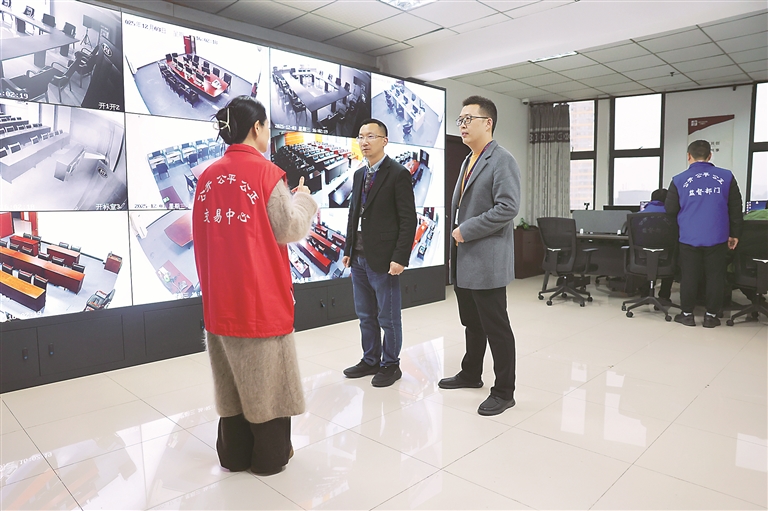
河南打好深入查、精准改、长效治“组合拳”净化招投标领域政治生态
Zhong Yang Ji Wei Guo Jia Jian Wei Wang Zhan· 2025-11-10 23:59
Core Points - The article emphasizes the need for deepening anti-corruption efforts in key areas such as bidding and tendering, with a focus on severing corrupt ties between government and business [1] - The Henan Provincial Commission for Discipline Inspection and Supervision is implementing a comprehensive approach to address issues in the bidding sector, including strict enforcement, regulatory optimization, and innovative mechanisms [1][2] Group 1: Anti-Corruption Measures - The Henan Provincial Commission is prioritizing the systematic rectification of prominent issues in the bidding sector, focusing on responsibility implementation, daily supervision, and mechanism operation [2][3] - A collaborative governance structure has been established, involving various departments such as public security, auditing, and finance, to enhance oversight and accountability [3][4] Group 2: Key Actions and Strategies - The Commission has outlined ten key tasks and fourteen specific measures to combat corruption in the bidding process, ensuring strict adherence to laws and regulations [3][6] - A closed-loop supervision system has been created to enhance information sharing and cooperation among different departments, facilitating a more effective response to corruption [4][5] Group 3: Use of Technology - The integration of information technology has been highlighted as a crucial tool in enhancing the effectiveness of supervision in the bidding sector, with platforms developed for real-time monitoring and anomaly detection [7][11] - The use of data analysis tools has enabled the identification of suspicious activities in bidding projects, improving the efficiency of investigations [7][8] Group 4: Reform Initiatives - The "evaluation and determination separation" reform has been implemented to reduce risks of personal bias in the bidding process, leading to significant cost savings in public projects [9][10][14] - The establishment of a blacklist system for bidding agencies aims to enhance credit management and prevent power abuse [10][11] Group 5: Outcomes and Future Directions - As of now, 304 cases of violations in the bidding sector have been reported, with numerous recommendations made to improve institutional frameworks [8] - The Commission plans to continue exploring the use of artificial intelligence and big data to further enhance the integrity of the bidding environment [11][13]