控制权集中

Search documents
【锋行链盟】港交所IPO员工持股平台设计流程及核心要点
Sou Hu Cai Jing· 2025-10-25 13:39
Design Process Overview - The design of the Employee Share Ownership Plan (ESOP) for the Hong Kong Stock Exchange (HKEX) IPO involves five main stages: preliminary planning, structural design, compliance review, establishment and implementation, and post-listing management [2][7]. Structural Design - The choice of legal entity and registration location for the ESOP significantly impacts tax costs, control, and regulatory compliance. Common structures include Limited Partnerships (LP) or corporate entities, with LPs being preferred due to "tax transparency" [3][5]. Compliance Requirements - The ESOP must comply with HKEX and regulatory requirements, including the Listing Rules, which stipulate that the total ESOP shares cannot exceed 10% of the company's issued share capital unless a waiver is granted [4][8]. Strategic Positioning - The core objectives of the ESOP include attracting talent, binding key teams, reducing cash compensation pressure, and enhancing corporate governance. The selection of participants must adhere to the principle of "reasonableness" [5][7]. Scale and Proportion - The total scale of the ESOP is typically set between 5% to 15% of the total share capital before listing, with individual participant holdings generally not exceeding 1% to avoid excessive dilution [5][8]. Funding Sources - Employees usually contribute their own funds, but the company may provide loans under specific conditions. The interest rates on loans must be reasonable and not affect the employees' repayment ability [5][8]. Entity Type Selection - Employees as shareholders must pay corporate income tax (16.5% in Hong Kong) and personal income tax on dividends/capital gains, which may lead to double taxation issues. The choice between LP and corporate structures depends on the need for independent legal status or complex financing [5][8]. Documentation and Internal Approval - Core agreements must be drafted, including the ESOP agreement and Limited Partnership Agreement (if applicable), outlining participant conditions, funding methods, share calculations, lock-up periods, exit mechanisms, and breach handling [6][8]. Ongoing Management - Post-listing, the ESOP must be managed effectively, including annual disclosures of changes in participation, share transfers, and compliance with HKEX requirements [8][10]. Valuation and Tax Optimization - The entry price for the ESOP must be fair to avoid being perceived as "benefit transfer" to employees. Tax optimization strategies should be employed to minimize tax burdens on both the employees and the platform [9][10]. Control Arrangements - Founders or designated management companies typically act as General Partners (GP) to maintain control over the platform, ensuring that employee shareholding does not excessively dilute control [10]. Information Disclosure - Comprehensive disclosure of the ESOP's key information, including purpose, scale, participant criteria, valuation methods, lock-up periods, and exit mechanisms, is required in the prospectus and ongoing reports to maintain investor confidence [10].


毛利率逐年走低、实控人夫妇控制权集中,天富龙IPO上会迎考
Bei Jing Shang Bao· 2025-04-21 12:40
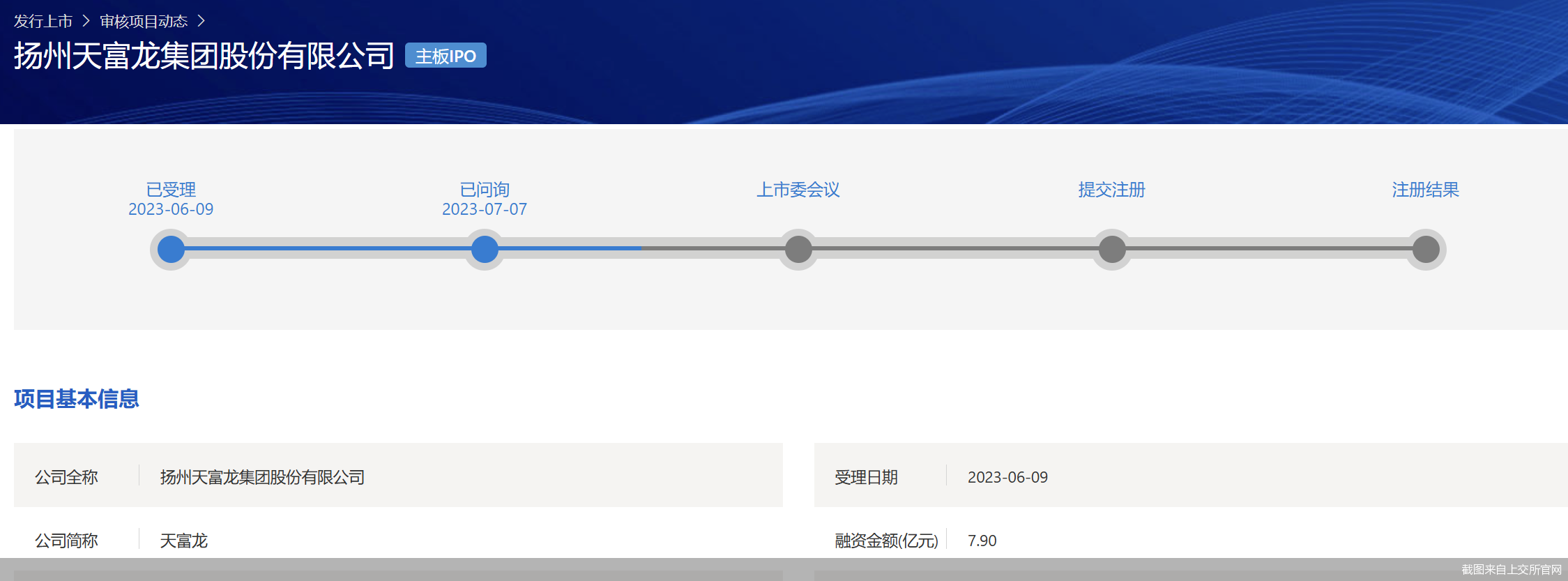
在问询阶段排队逾一年半后,扬州天富龙集团股份有限公司(以下简称"天富龙")终于迎来冲A的下一关键节点。根据安排,公司沪市主板IPO将于4月23日 上会迎考。闯关IPO背后,报告期内,天富龙实现净利逐年增长,然而公司主营业务毛利率与综合毛利率却均接连下降。另外,公司控制权高度集中,实控 人朱大庆、陈慧夫妇合计控制超九成公司表决权。 毛利率逐年走低 根据安排,上交所上市审核委员会定于4月23日召开2025年第15次上市审核委员会审议会议,审核天富龙的首发事项。 据了解,天富龙以差别化涤纶短纤维的研发、生产和销售为主营业务,产品布局由再生有色涤纶短纤维,拓展至差别化复合纤维及聚酯新材料,覆盖 以"人"为核心的商务、出行、家居、健康护理、衣着等场景。公司沪市主板IPO于2023年6月9日获得受理,当年7月7日进入问询阶段。 业绩表现方面,报告期内,天富龙营收、净利均实现接连增长。财务数据显示,2022—2024年,天富龙实现营业收入分别约为25.76亿元、33.36亿元、38.41 亿元;对应实现归属净利润分别约为3.58亿元、4.31亿元、4.54亿元。 在招股书中,天富龙表示,受原油、再生PET等价格波动、常规类 ...