化学纤维制造业

Search documents
万凯新材,5000吨生物基聚酯PEF项目备案
DT新材料· 2026-03-29 16:05
Core Viewpoint - The article emphasizes the strategic investment by Wankai New Materials in the development of bio-based polyester PEF, highlighting its potential as a next-generation material that aligns with global carbon neutrality trends and addresses the increasing demand for sustainable packaging solutions [5][9][12]. Group 1: Project Overview - Wankai New Materials has officially filed for a pilot project to produce 5,000 tons of bio-based polyester PEF, with a total investment of 59.945 million yuan, expected to commence construction in March 2026 and be completed by September 2027 [5]. - PEF is recognized for its superior gas barrier properties compared to traditional petroleum-based PET, making it suitable for sensitive beverage packaging [7][8]. Group 2: Market and Policy Context - The approval of PEF for food contact materials by the National Health Commission marks a significant step towards its commercial viability, allowing it to be used in food packaging and catering products [11]. - The Chinese government's 14th Five-Year Plan includes bio-based materials as a key area for development, indicating strong policy support for the industry [13]. Group 3: Industry Implications - Wankai's investment in PEF technology positions the company to capitalize on the growing demand for sustainable materials, driven by major global brands committing to carbon neutrality by 2030-2050 [14]. - The establishment of a closed-loop recycling system through partnerships, such as with Carbios for enzymatic recycling of PET, enhances Wankai's competitive edge in the bio-based materials market [12]. Group 4: Future Outlook - The year 2026 is pivotal as it aligns with national goals for reducing carbon emissions per unit of GDP, positioning bio-based materials like PEF as essential for achieving these targets [13]. - The increasing urgency for brands to green their supply chains transforms the demand for sustainable materials from an option to a necessity, with PEF emerging as a preferred choice for high-performance packaging [14].

皖维高新(600063):PVA新材料布局逐步迎来兑现期
HTSC· 2026-03-20 12:50
Investment Rating - The report maintains an "Accumulate" rating for the company [6]. Core Views - The company achieved a revenue of 8.01 billion RMB in 2025, a slight decrease of 0.2% year-on-year, while the net profit attributable to shareholders increased by 17% to 430 million RMB [1][6]. - The PVA industry is experiencing a favorable competitive landscape, and the company's products, including PVA optical films and automotive-grade PVB films, are entering a growth phase [1][6]. Summary by Sections Financial Performance - In 2025, the company reported a net profit of 430 million RMB, with a year-on-year increase of 17%, and a non-recurring net profit of 370 million RMB, up 16% [1][6]. - The fourth quarter saw a significant decline in net profit, down 68% year-on-year and 56% quarter-on-quarter, amounting to 54 million RMB [1][2]. - The company plans to distribute a total dividend of 41 million RMB by the end of 2025, which, combined with share buybacks, represents 48% of the annual net profit [1][6]. PVA Sales and Market Position - The company achieved a PVA sales volume of 267,000 tons in 2025, reflecting a year-on-year increase of 28%, with revenue rising by 16% to 2.62 billion RMB [2]. - The fourth quarter PVA sales volume was 74,000 tons, up 28% year-on-year and 10% quarter-on-quarter, with revenue of 660 million RMB, a 7% increase year-on-year [2]. - The company’s optical film sales volume increased by 42% year-on-year to 6.4 million square meters, with revenue growing by 34% to 72 million RMB [2]. Industry Outlook - As of March 16, the average price of PVA was 1.62 RMB/ton, up 47% since the beginning of the year, with a significant improvement in the price spread between PVA and its raw material [3]. - The company is expected to benefit from the tightening supply of overseas PVA due to rising costs, positioning it to expand its global market share [3]. New Projects and Expansion - The company has initiated trial operations for several new PVA material projects and plans to expand its optical film production capacity by 30 million square meters [4]. - A capital increase of 3 billion RMB is planned to fund the construction of a new facility for 200,000 tons of ethylene-based PVA and the new optical film project [4]. Profit Forecast and Valuation - The profit forecast for 2026-2028 remains stable, with expected net profits of 690 million RMB, 810 million RMB, and 950 million RMB, respectively [5]. - The target price is set at 7.59 RMB, based on a 23x PE ratio for 2026, maintaining the "Accumulate" rating [5].

油价上涨对中国通胀与宏观政策影响分析
Guo Tai Jun An Qi Huo· 2026-03-10 05:41
1. Report Industry Investment Rating - No information provided in the report. 2. Core Viewpoints of the Report - Based on historical data from 2005 to 2026, the crude oil price has a significant impact on China's PPI trend, with a correlation coefficient of 0.78, while its impact on CPI is much weaker, with a correlation coefficient of only 0.21 [1]. - If the oil price remains at the current high level, China's PPI year - on - year may turn positive rapidly in March. If the geopolitical conflict pushes the average oil price to $100 - 150 per barrel, the PPI year - on - year is expected to climb to the range of 2.3% - 6.7% [1]. - Two scenarios of oil price changes are discussed to analyze the future macro - policy directions: when the oil price continues to rise, the focus of macro - regulation should shift from demand - side stimulation to supply - side cost relief and structural optimization; when the oil price rises and then falls, the policy will focus on boosting effective domestic demand [2][3]. 3. Summary by Relevant Catalogs 3.1 Comparison of the Impact of Crude Oil Price on PPI and CPI - The industries related to the crude oil chain account for about 14% of the PPI. Although the weight is not large, the price fluctuation is significant, and its marginal contribution to PPI cannot be underestimated [7]. - From 2005 to 2026, the correlation coefficient between Brent crude oil price year - on - year and China's PPI year - on - year is about 0.78, showing a strong correlation. The correlation coefficient between CPI and oil price is only 0.21, indicating a weak positive correlation. The transmission of oil price to CPI has a time lag, and food price fluctuations, especially pork price, have a greater impact on CPI [7]. 3.2 Preliminary Calculation of the Impact of Oil Price on China's PPI - Based on the price changes of the five major PPI sectors (coal, oil, non - ferrous metals, ferrous metals, and chemicals) as of March 6 (oil price at $83, a 12.3% year - on - year increase), it is estimated that the PPI in March will be 0.09%, turning positive year - on - year for the first time since October 2022, and the annual average PPI will be 0.68% [10]. - According to the regression calculation of PPI year - on - year and Brent oil price year - on - year since 2005, a 10% increase in oil price will lead to an approximate 0.66 - percentage - point increase in China's PPI. If the average future crude oil price rises to $100 - $150 per barrel, the corresponding PPI reading will rise to 2.3% - 6.7% [11]. 3.3 Impact of "Re - inflation" on Macro - policy Scenario 1: Continuous rise in crude oil price and significant increase in domestic and foreign inflation pressure - The sharp rise in oil price will have a profound impact on the global economy and monetary policy. Externally, external demand may be further suppressed, and the Fed's interest - rate hikes will push up the US dollar index, causing spill - over depreciation pressure on the RMB. Domestically, the economy is still affected by debt reduction and the deep adjustment of the real estate market, and the input - type inflation pressure may drive up prices but damage residents' consumption ability. In this context, the risk of "stagflation" may be significantly greater than that of "inflation" [2][15]. - Facing the structural problem of "inflation" upstream and "coldness" downstream, the core idea of macro - regulation should shift from demand - side stimulation to supply - side cost relief and structural optimization. Fiscal policy will play a key role, and tax policies for some enterprises may be relaxed. Monetary policy mainly plays a role in coordinated easing, and the use of re - loans, re - discounts, and some targeted structural monetary policy tools may be more active, while the space for comprehensive reserve requirement ratio cuts and interest - rate cuts may be restricted [16][17]. Scenario 2: Crude oil price rises and then falls, and the policy still focuses on boosting effective domestic demand - Based on the current commodity prices, the PPI in April may turn positive to over 1%, and the PPI for the whole year will still maintain a moderate increase. The policy will focus on boosting domestic consumption and investment demand. Fiscal policy will ensure the expenditure intensity, and monetary policy will continue the moderately loose tone. The possibility of flexibly using structural monetary policy tools is greater than that of comprehensive reserve requirement ratio cuts and interest - rate cuts [3][18].
油价上涨如何影响我国通胀走势?
Western Securities· 2026-03-08 12:47
1. Report Industry Investment Rating No information about the report industry investment rating is provided in the content. 2. Core Views of the Report - Due to the continuous geopolitical conflicts in the Middle East, international crude oil prices have soared again. The Strait of Hormuz, the world's most crucial oil chokepoint, has almost come to a standstill due to the US - Iran conflict, leading to a continuous rise in international oil prices. WTI and Brent crude oil have recorded their largest weekly increases since 1983 and 1991 respectively [1][11]. - A 10% increase in oil prices may push up the PPI by about 0.4 percentage points. Crude oil, as a basic production material, is widely used in the upstream, mid - stream, and downstream industrial chains. The relevant industries account for about 12.4% of the PPI [1][12]. - The actual impact of oil prices on China's inflation depends on how the conflict develops. Bloomberg Economics has made three scenario analyses: cease - fire (medium - high probability), continuous war (medium - high probability), and regime change in Iran (low probability). Different scenarios will have different impacts on China's PPI [2][18]. - The bond market may remain volatile. It is recommended to moderately extend the duration when there are adjustments. The bond supply shock trading may come to an end. The probability of interest rate decline is higher from the Two Sessions to the Politburo meeting in April. However, after the 10 - year Treasury bond rate breaks below 1.80%, the market is cautious, waiting for the increase in interest rate cut expectations [2][21]. 3. Summary According to Relevant Catalogs 3.1 Review Summary and Bond Market Outlook - This week, the bond market successively traded risk appetite and expectations of the Two Sessions. Yields remained volatile overall, with short - end performance stronger than long - end. The yields of 10Y and 30Y Treasury bonds both rose by 1bp [10]. - International oil prices soared due to the Middle East geopolitical conflicts. As of Friday's close, WTI crude oil futures rose by more than 36% this week, and Brent crude oil futures rose by about 29% [11]. 3.2 Bond Market Review 3.2.1 Funding Situation - The central bank had a net withdrawal of funds, and funding rates declined. From March 2nd to March 6th, the central bank's open - market net withdrawal was 136.34 billion yuan. R007 and DR007 decreased by 2bp and 9bp respectively compared with February 28th [22][24]. 3.2.2 Secondary Market Trends - Yields remained volatile this week, with short - end performance being strong. Except for 10Y and 30Y, the yields of other key - term Treasury bonds declined. Except for the 50Y - 30Y spread, other key - term Treasury bond spreads widened [31]. 3.2.3 Bond Market Sentiment - As of March 6th, the weekly turnover rate of 30Y Treasury bonds rebounded to 31%, the 50Y - 30Y Treasury bond spread narrowed by 2bp compared with February 28th, and the 30Y - 10Y Treasury bond spread widened by 0.3bp to 50bp. The inter - bank leverage ratio rose to 107.7%, and the median duration of medium - and long - term pure bond funds increased by 0.03 years to 2.56 years. The implied tax rate of 10 - year CDB bonds narrowed [35][39]. 3.2.4 Bond Supply - This week, the net financing of interest - rate bonds decreased. The net financing of Treasury bonds changed from net financing to net repayment, the net financing of local government bonds increased, and the net repayment of policy - financial bonds decreased. Next week, the issuance scale of Treasury bonds will increase, while the issuance scale of local government bonds will decrease. This week, inter - bank certificates of deposit changed from net repayment to net financing, and the average issuance rate continued to decline [49][53]. 3.3 Economic Data - In February, the manufacturing PMI declined seasonally, and the export sector was under pressure. Since March, travel has been stronger than the Spring Festival seasonality, and industrial production has improved marginally. Real - estate transactions, consumption, export, and industrial production indicators have shown different trends [57]. 3.4 Overseas Bond Market - The US non - farm payrolls data in February was disappointing. The 2Y and 10Y US Treasury bond rates both rose by 18bp. The 10Y - 2Y US Treasury bond spread remained flat at 59bp. European bond markets declined, the Chinese bond market rose, and the South Korean bond market declined. Emerging - market bond markets also declined [65][66]. 3.5 Major Asset Classes - The CSI 300 index adjusted this week. The Nanhua Crude Oil Index rose significantly by 31%, the US dollar index rose, while the Nanhua Live Pig Index and Shanghai Copper declined. The performance of major asset classes this week was: crude oil > US dollar > rebar > Chinese bonds > Shanghai gold > Chinese - funded US dollar bonds > CSI 300 > convertible bonds > Shanghai copper > live pigs > CSI 1000 [70]. 3.6 Bond Market Calendar - The calendar from March 9th to March 13th, 2026, includes information on liquidity投放 and maturity, government bond supply, fundamental data, and important domestic and international events [76].
打破MXD6国产化困境,七彩化学邀您共聚先进尼龙产业创新与应用开发大会!
DT新材料· 2026-03-03 16:29
Core Viewpoint - MXD6 (polyhexamethylene adipamide) is a semi-aromatic nylon that offers superior strength, elasticity, and lower water absorption compared to conventional nylons, making it ideal for lightweight applications. It is significantly more cost-effective than PEEK materials while maintaining similar mechanical properties [2][3]. Group 1: Product Characteristics - MXD6 has a processing temperature range of 280-300℃, which is lower than PEEK's 360-400℃, resulting in reduced equipment requirements and energy consumption [2]. - The material ensures structural components remain lightweight and rigid while providing excellent dimensional stability, making it suitable for applications in automotive lightweighting and robotics [2]. - MXD6 demonstrates outstanding gas barrier properties and resistance to boiling, making it widely applicable in high-end packaging materials [3]. Group 2: Market Applications - In the automotive sector, MXD6 can be used for structural components, engine peripheral parts, and oil line sleeves, aligning with the industry's shift towards lightweight materials [4]. - In the renewable energy sector, it is primarily applied in interior components and sealing parts for energy storage devices, enhancing safety and lightweight upgrades [4]. - The packaging industry benefits from MXD6 in beverage bottles, food packaging films, and pharmaceutical barrier packaging, effectively extending product shelf life [4]. Group 3: Production and Supply Chain - Historically, the core raw materials for MXD6, such as MXDA and its precursor IPN, have been monopolized by overseas companies, limiting domestic production due to supply stability and cost pressures. This situation is changing fundamentally [3]. - In September 2024, Qicai Chemical announced the successful trial production of its 5000-ton MXD6 project, becoming the only special nylon polymer factory in China to adopt continuous production technology [3]. Group 4: Strategic Partnerships and Market Recognition - By 2025, Qicai Chemical's MXD6 has gained significant recognition from major domestic and international clients, establishing strategic cooperation intentions with several industry leaders, laying a solid foundation for future market expansion [4]. Group 5: Industry Events - The "2026 Advanced Nylon Industry Innovation and Application Development Conference" will be held on March 19-20, 2026, in Guangzhou, featuring a presentation on MXD6 applications and market analysis by Yang Shaohui, General Manager of Qicai Chemical's Nylon Division [5].
10年来首亏!尼龙龙头,出售/收购两大公司,加速转“正”
DT新材料· 2026-02-28 16:06
Core Viewpoint - The company, Shenma Co., is restructuring its investments to enhance its financial health and focus on the nylon new materials industry, potentially preparing for a listing in Hong Kong [2][10]. Group 1: Acquisition and Financial Performance - Shenma Co. plans to acquire a 45.13% stake in Henan Shenma Puli Materials Co., Ltd. for approximately 237.41 million yuan, aiming to improve its performance [2]. - The acquisition is expected to enhance the company's earnings, with Puli Materials projected to generate profits of 29.97 million yuan in 2023, 12.54 million yuan in 2024, and 30.41 million yuan in 2025 [2]. - The company is also divesting its 49% stake in Henan Shouheng New Materials Co., Ltd. due to its ongoing losses, which are expected to reach 128.34 million yuan in 2025 [5][8]. Group 2: Market Conditions and Product Development - Puli Materials produces high-performance nylon 6 chips with an annual capacity of 300,000 tons, benefiting from rising prices in the chemical market, particularly for caprolactam [3]. - The company is expanding its product line, having developed various differentiated nylon 6 chips and copolymer products [3]. - Shenma Co. is also establishing a new company in Ningxia to focus on high-value nylon 66 products, which are expected to be a key area for future growth [11][12]. Group 3: Financial Projections and Strategic Moves - Shenma Co. anticipates a net loss of approximately 149 million yuan for the year 2025, marking its first loss in a decade [8]. - The company is expected to improve its financial statements by the end of 2026 due to the strategic acquisition and divestment actions [9]. - Shenma Co. is extending the timelines for its nylon chemical projects, indicating a need for further optimization and upgrades [12].


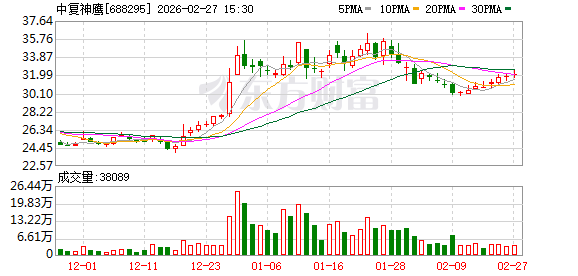
中复神鹰(688295.SH):2025年度净利润9665.82万元,扭亏为盈
Ge Long Hui A P P· 2026-02-27 15:56
Core Viewpoint - Zhongfu Shenying (688295.SH) reported a significant turnaround in its financial performance for the fiscal year 2025, achieving a revenue of 2.195 billion yuan, a year-on-year increase of 40.97%, and a net profit attributable to shareholders of 96.6582 million yuan, marking a return to profitability [1] Group 1: Financial Performance - The company achieved operating revenue of 2.1953956 billion yuan in 2025, reflecting a 40.97% year-on-year growth [1] - The net profit attributable to the parent company's shareholders was 96.6582 million yuan, indicating a return to profitability [1] - The net profit attributable to the parent company after deducting non-recurring gains and losses was 69.1363 million yuan, also showing a return to profitability [1] Group 2: Key Drivers of Performance - The turnaround in performance was driven by three main factors: 1. Market-side improvements through optimized product structure and expansion into aerospace, wind power, high-end sports, and pressure vessel applications, leading to significant growth in sales revenue and profitability [1] 2. Production-side focus on technology-driven cost reduction and efficiency improvements, leveraging large-scale production and process optimization to effectively lower unit production costs [1] 3. Management-side enhancements through refined management practices that improved efficiency and effectively controlled expenses, further solidifying the profit foundation [1]

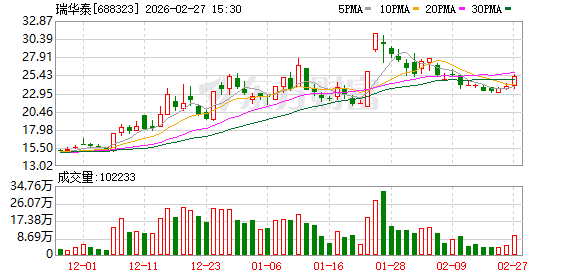
瑞华泰:2025年度业绩快报公告
Zheng Quan Ri Bao· 2026-02-27 14:20
Group 1 - The company, Ruihua Tai, announced that it achieved an operating revenue of 386.73 million yuan in 2025, representing a year-on-year growth of 14.06% [2] - The net profit attributable to the parent company's owners was -87.62 million yuan, indicating an increase in losses by 30.34 million yuan compared to the previous year [2]

中复神鹰:2025年度业绩快报公告
Zheng Quan Ri Bao· 2026-02-27 13:12
Group 1 - The company Zhongfu Shenying announced that it achieved an operating revenue of 2,195.40 million yuan for the year 2025, representing a year-on-year growth of 40.97% [2] - The company reported a net profit attributable to the parent company of 96.66 million yuan, marking a turnaround from a loss to profitability [2]
同益中:2025年度业绩快报公告
Zheng Quan Ri Bao· 2026-02-27 13:12
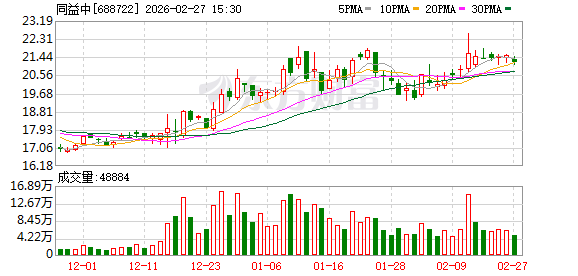
Group 1 - The company reported a total operating revenue of 976.51 million yuan for the year 2025, representing a year-on-year increase of 50.38% [2] - The net profit attributable to the owners of the parent company was 109.60 million yuan, which reflects a year-on-year decrease of 15.82% [2]