
政府采购异常低价问题

Search documents
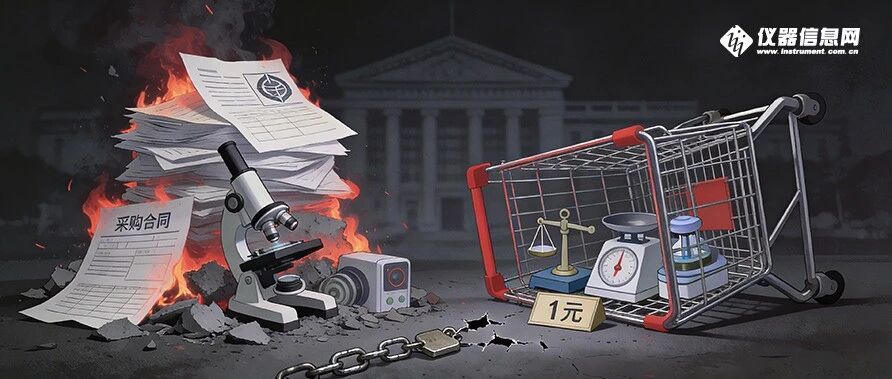
临沂再现1元测序仪中标,三问“野火烧不尽”的仪器政采市场
仪器信息网· 2026-02-26 09:29
Core Viewpoint - The article highlights the persistent issue of abnormally low bidding in government procurement, particularly in the scientific instrument sector, despite the introduction of policies aimed at addressing this problem [2][14][15]. Group 1: Policy and Market Context - In early 2026, the Ministry of Finance released policies targeting abnormal low-price bidding in government procurement, aiming to promote a healthy market order [15][17]. - The policies include provisions for reviewing abnormal low bids and holding evaluators legally accountable if they fail to conduct proper reviews [17][21]. Group 2: Case Studies of Abnormal Bidding - A procurement project for a gene sequencer at Linyi Maternal and Child Health Hospital saw a bid of 1 yuan for a device with a price limit of 50,000 yuan, with the majority of costs attributed to consumables [6][11]. - Another case involved a fully automatic blood cell analyzer at Fuzhou First General Hospital, which was awarded at 1,000 yuan against a limit of 183,000 yuan, raising concerns about the legitimacy of the bidding process [11][12]. Group 3: Questions Raised - The article raises critical questions regarding the implementation of policies, the adequacy of regulatory oversight, and whether the review processes for abnormal bids are scientifically sound and transparent [14][18][20]. - It questions the clarity of penalties for bidders who engage in low-price bidding and whether existing regulations are sufficient to deter such practices [21][22]. Group 4: Implications for the Industry - The ongoing low-price bidding practices could undermine the market, driving out quality suppliers and harming the development of domestic scientific instrument manufacturers, particularly small and specialized firms [25][26].

整治政府采购领域“内卷式”竞争,财政部发文
Sou Hu Cai Jing· 2026-01-27 09:24
Core Viewpoint - The notification aims to address the issue of abnormally low pricing in government procurement, promoting a market order characterized by quality and fair competition [3][7]. Group 1: Strengthening Demand Management - Procurement entities must establish clear and reasonable procurement demands based on actual needs, market supply, and industry development, setting a maximum price limit for supplier competition [1][3]. - The procurement process should consider lifecycle costs, requiring suppliers to quote for operational, maintenance, and disposal costs within the contract [1][3]. Group 2: Enhancing Abnormal Low Price Review - Procurement entities must initiate an abnormal low price review if bids are below 50% of the average bid from compliant suppliers, below 50% of the second-lowest bid, or below 45% of the maximum price limit [3][4]. - Suppliers must provide written explanations and necessary documentation to justify their pricing if their bids trigger the review process [5][6]. Group 3: Strengthening Contract Performance and Acceptance Management - Procurement entities are responsible for organizing contract performance evaluations, focusing on suppliers who won bids despite triggering the low price review [7]. - Measures should be taken to ensure compliance with contract terms, including phased assessments and payments for projects that can be implemented in stages [7]. Group 4: Implementation Timeline - The notification will take effect from February 1, 2026 [8].
整治政府采购领域“内卷式”竞争!财政部推动解决异常低价问题
Sou Hu Cai Jing· 2026-01-27 08:31
Group 1 - The Ministry of Finance has issued a notice to address the issue of "involution" competition in government procurement, specifically targeting the problem of abnormally low pricing [1] - The notice emphasizes the need for procurement entities to establish clear and reasonable procurement requirements and maximum price limits, taking into account factors such as technology, cost-effectiveness, and competition [2] - It is required that procurement documents include lifecycle cost considerations, with suppliers providing quotes for operational, maintenance, upgrade, and disposal costs within the agreed timeframe [2] Group 2 - The notice outlines specific circumstances under which the review process for abnormally low bids must be initiated, mandating that reasons for review, opinions, and results be documented in the evaluation report [2] - Procurement entities are instructed to closely monitor the performance and actual fulfillment of contracts by suppliers who win bids despite triggering the low-price review process [3] - For projects that can be implemented in phases, a phased assessment, acceptance, and payment approach is to be adopted to ensure timely tracking of supplier performance [3]
探寻政府采购异常低价问题的根治路径
Xin Lang Cai Jing· 2026-01-27 02:17
Core Viewpoint - The Ministry of Finance has issued a notification to address the issue of "abnormally low prices" in government procurement, aiming to establish a market order characterized by quality and fair pricing, thereby promoting high-quality development in government procurement [2]. Preemptive Measures - The notification clarifies the basis for setting maximum prices and procurement packages, using factors such as historical bidding data, market supply, and industry cost standards as references [3]. - It introduces a life-cycle cost concept to ensure that procurement packages are reasonably divided, avoiding overly large projects that lead to insufficient competition [3]. - The notification specifies the range of equipment with high consumable usage, including copying, printing, experimental, and medical devices, to enhance management and control costs [4]. Monitoring Measures - The notification establishes four conditions that trigger the review of abnormally low prices, allowing the evaluation committee to exercise discretion based on professional judgment [6]. - It grants procurement entities the authority to raise the threshold for triggering reviews of abnormally low bids, with a maximum increase of 65%, to adapt to varying project conditions [7]. - Suppliers are required to provide explanations for their bids within a reasonable timeframe, generally not less than 30 minutes, along with necessary documentation to justify their pricing [8]. - The notification outlines reference factors for determining the reasonableness of supplier bids, including similar project prices and industry standards [9]. Accountability Measures - The notification mandates that evaluation experts are held accountable for not conducting reviews of abnormally low bids, with legal consequences for non-compliance [10]. - It emphasizes the procurement entity's responsibility for contract acceptance, requiring detailed verification of compliance with technical and business requirements [11].
推动解决政府采购异常低价问题
Jin Rong Shi Bao· 2026-01-27 02:09
Core Viewpoint - The Ministry of Finance has issued a notification to address the issue of "abnormally low prices" in government procurement, aiming to establish a market order characterized by quality and fair competition, effective from February 1, 2026 [1][2]. Group 1: Strengthening Demand Management - Government procurement entities are required to develop scientific and clear procurement demands based on actual needs, considering market supply, industry development, and pricing standards [1]. - Procurement entities should set reasonable maximum prices and consider factors such as technology, cost-effectiveness, and competition when structuring procurement packages [1]. Group 2: Enhancing Low Price Review - The notification emphasizes the need for rigorous examination of abnormally low bids, with fiscal departments responsible for guiding and supervising evaluation experts [1]. - Legal accountability will be enforced on evaluation experts who fail to conduct proper reviews of low-price bids [1]. Group 3: Improving Performance Acceptance Management - Procurement entities must ensure compliance with performance acceptance responsibilities, including verifying adherence to technical and business requirements [2]. - Special attention should be given to suppliers who win bids despite triggering low-price review procedures, focusing on their commitment and actual performance [2]. Group 4: Organizational Leadership and Supervision - All departments and regions are urged to recognize the significance of addressing low-price issues, enhancing organizational leadership, and ensuring effective supervision and guidance [2]. - Detailed measures should be developed to ensure the implementation of the notification's requirements [2].
整治政府采购领域“内卷式”竞争 财政部推动解决异常低价问题
Xin Hua Wang· 2026-01-26 23:32
Group 1 - The Ministry of Finance has issued a notice to address "involution" competition in government procurement, emphasizing the need to resolve issues related to abnormally low pricing [1] - The notice requires procurement entities to establish clear and reasonable procurement demands and set maximum price limits based on work needs, considering factors like technology and cost-effectiveness [1] - It suggests the introduction of a life-cycle cost concept, requiring suppliers to quote costs for operation, maintenance, upgrades, and disposal within the procurement documents [1] Group 2 - The notice outlines specific circumstances under which the review process for abnormally low bids must be initiated, mandating documentation of the reasons and results in the evaluation report [2] - It emphasizes the importance of managing the performance and actual fulfillment of contracts by suppliers who win bids despite triggering the low-price review process [2] - For projects that can be implemented in phases, the notice mandates phased assessments, verifications, and payments to monitor supplier performance closely [2]
财政部推动解决异常低价问题
Sou Hu Cai Jing· 2026-01-26 22:37
Group 1 - The Ministry of Finance has issued a notice to address "involution" competition in government procurement, emphasizing the need to resolve issues related to abnormally low pricing [1] - Procurement entities are required to establish clear and reasonable procurement demands, set maximum price limits, and consider factors such as technology and cost-effectiveness [1] - The notice encourages the introduction of a life-cycle cost concept in procurement documents, requiring suppliers to quote costs for operation, maintenance, upgrades, and disposal within the agreed timeframe [1] Group 2 - The notice outlines specific circumstances under which the review process for abnormally low bids must be initiated, including the requirement to document reasons and results in the evaluation report [2] - It mandates that procurement entities focus on the performance and actual fulfillment of contracts by suppliers who win bids despite triggering the low-price review process [2] - For projects that can be implemented in phases, the notice stipulates phased assessments, acceptances, and payments to monitor supplier performance effectively [2]
财政部发文整治“内卷式”竞争,自2月1日起严查政府采购异常低价
Sou Hu Cai Jing· 2026-01-26 09:03
Core Viewpoint - The Ministry of Finance has issued a notification to address the issue of abnormally low bids in government procurement, which will take effect on February 1, 2026. The notification aims to enhance the review process for such bids to ensure quality and fair competition in the market [1]. Group 1: Strengthening Government Procurement Management - Procurement entities must establish clear and reasonable procurement demands based on market conditions, including similar project bid information and industry cost standards [4][5]. - The highest price limit for procurement projects should be set based on the project budget if not otherwise specified [4]. - Procurement documents should require suppliers to quote costs for operational, maintenance, and disposal expenses over the contract period [4]. Group 2: Enhancing Review of Abnormally Low Bids - The notification specifies conditions under which a review of abnormally low bids must be initiated, including bids below 50% of the average bid from compliant suppliers or below 45% of the maximum project price [6][7]. - Procurement entities can adjust the thresholds for initiating reviews but cannot exceed 65% [6]. - Suppliers must provide written explanations and necessary documentation to justify their pricing if their bids trigger a review [7]. Group 3: Improving Contract Performance and Acceptance Management - Procurement entities are responsible for conducting performance acceptance checks, focusing on suppliers who win contracts despite triggering low bid reviews [9]. - Measures should be taken to ensure compliance with contract terms, including phased assessments and payments for projects that can be implemented in stages [9]. - The notification emphasizes the importance of addressing low bid issues and calls for enhanced supervision and guidance from financial departments [9].

1元中标百万项目成历史
第一财经· 2026-01-22 02:09
Core Viewpoint - The article discusses the issue of abnormally low bidding in government procurement, highlighting the negative impact on fairness and project quality, and introduces a new notification from the Ministry of Finance aimed at addressing this problem [3][4]. Group 1: Government Procurement Issues - Abnormally low bids have been a recurring issue in government procurement, leading to concerns about fairness and project quality [3]. - Examples include instances where bids are significantly below cost, such as a hospital procurement project where bids were as low as 1 yuan or 1000 yuan against a budget of several million [3]. Group 2: New Notification Measures - The Ministry of Finance's notification aims to strengthen the review of abnormally low bids by establishing specific criteria for when a review should be initiated [4][5]. - The notification outlines four scenarios that trigger a review, including bids below 50% of the average bid from compliant suppliers and bids below 45% of the maximum project price [5]. Group 3: Enhanced Review Standards - The notification allows procurement officials to raise the thresholds for initiating low bid reviews, with a maximum increase of up to 65% [6]. - This means that if the threshold is raised, the criteria for triggering a review become stricter, potentially leading to more rigorous scrutiny of low bids [6]. Group 4: Responsibilities of Review Committees - Upon initiating a review, the evaluation committee must require suppliers to justify their bids with detailed cost breakdowns and supporting documentation within a reasonable timeframe [6][7]. - If suppliers fail to provide adequate justification, their bids may be deemed invalid [7]. Group 5: Accountability of Evaluation Experts - The notification emphasizes the responsibility of evaluation experts, stating that failure to conduct proper reviews can lead to legal consequences for the experts involved [7].

关于推动解决政府采购异常低价问题的通知
Sou Hu Cai Jing· 2026-01-22 01:51
Core Viewpoint - The notification aims to address the issue of "involution" in government procurement by establishing a market order that promotes quality and fair competition, specifically targeting the problem of abnormally low pricing in procurement processes [2][4]. Group 1: Strengthening Demand Management - Procurement entities are required to formulate clear and scientifically based procurement demands, considering market conditions and industry standards, and to set reasonable maximum prices for suppliers [2][4]. - The introduction of a life-cycle cost concept is encouraged, where suppliers must quote costs for operation, maintenance, and disposal within the procurement documents [2][4]. Group 2: Enhancing Abnormal Low Price Review - Procurement entities must initiate an abnormal low price review if bids are significantly below average or the maximum price, with specific thresholds set at 50% of the average bid or 45% of the maximum price [4][5]. - Suppliers must provide written explanations and cost breakdowns if their bids trigger the review, with a minimum response time of 30 minutes [5][6]. Group 3: Strengthening Contract Performance and Acceptance Management - Procurement entities are responsible for organizing contract performance evaluations, focusing on suppliers who win bids despite triggering low price reviews [7]. - Measures such as phased assessments and payments are recommended for projects that can be implemented in stages, ensuring timely monitoring of supplier performance [7]. Group 4: Implementation and Oversight - The notification will take effect from February 1, 2026, and emphasizes the importance of addressing low pricing issues through enhanced supervision and guidance from financial departments [8][9].